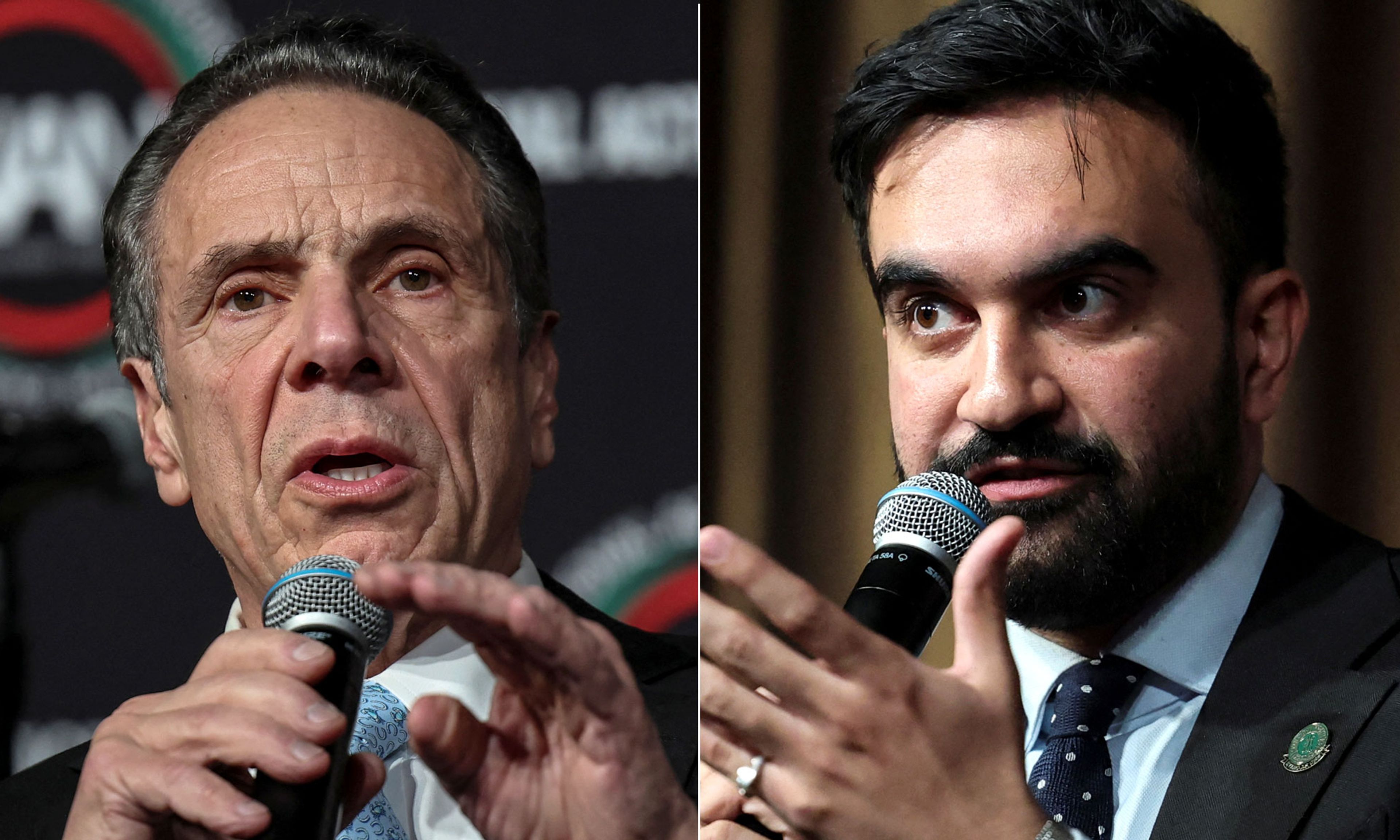
Today’s Democratic Party primary will most likely decide who will be the next mayor of New York City. If polls are correct, it is a two-person race between former governor Andrew Cuomo and State Assemblyman Zohran Mamdani. The race has been getting tighter in recent weeks. The city’s arcane ranked-choice voting rules add a layer of unpredictability to the results. Cuomo appears to be the favorite to win, leading many to wonder how a man who resigned as governor under a cloud of scandal fewer than four years ago now finds himself favored to become the next mayor of New York.
Cuomo has positioned himself slightly to the right of Mamdani, a self-styled Democratic Socialist from Queens and ally of Alexandra Ocasio-Cortez. The 33-year-old Mamdani is pro-Palestinian, pro–defund the police, supports rent freezes, and favors expanding city services and raising taxes. The prospect of a Mamdani mayoralty is so grim that even the New York Times editorial page urged its liberal readers not to give him any of their votes on their ranked-choice ballots. Mamdani, the editorial stated, “offers an agenda that remains alluring among elite progressives but has proved damaging to city life.” It added: “His agenda reads like a turbocharged version of Mr. de Blasio’s dismaying mayoralty.”





Comments