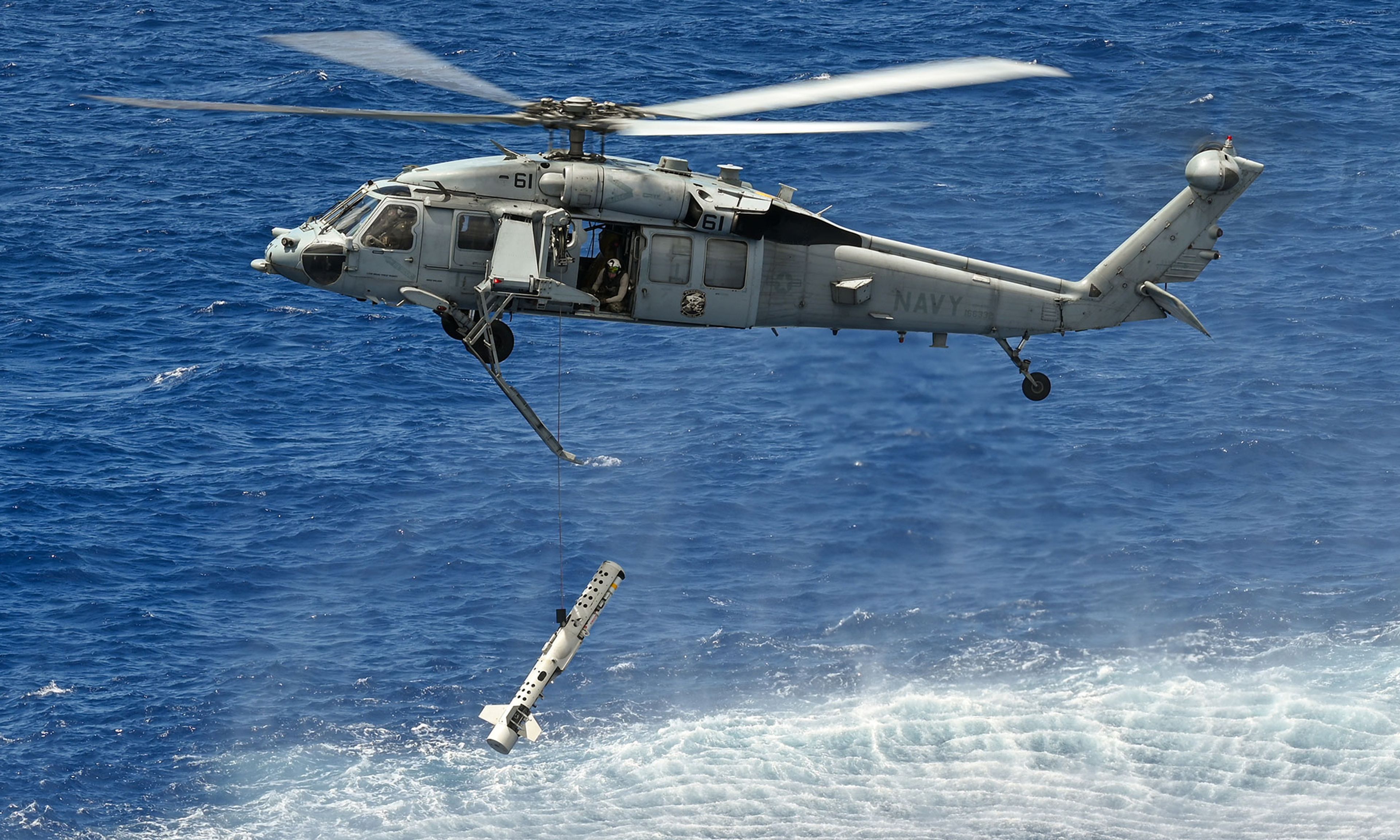
Sea mines in naval warfare are “both obscure and controversial,” as Weapons That Wait, a 1991 treatise on mine warfare, put it. So the waterborne weapons attract considerable public attention when used. In the case of current U.S. military operations against the Islamist regime in Iran, much of that focus has been critical of the U.S. ability to open the Strait of Hormuz to commercial traffic after regime officials — whose forces possess several thousand sea mines — announced “closure” of the strait.
The reported lack of U.S. mine warfare capability and capacity — such as images of minesweeping vessels from the Middle East (CENTCOM) returning to the U.S. in the lead-up to the U.S.-Israeli operations in Iran — has been roundly criticized in many outlets. Despite these assertions, decommissioning and retiring the aging Avenger-class mine countermeasures ships (MCMs) in favor of unmanned systems operated from littoral combat ships (LCS) and the air was the right choice. This is not unique to the U.S., either; European and other allied mine countermeasure fleets are facing similar obsolescence.




Comments