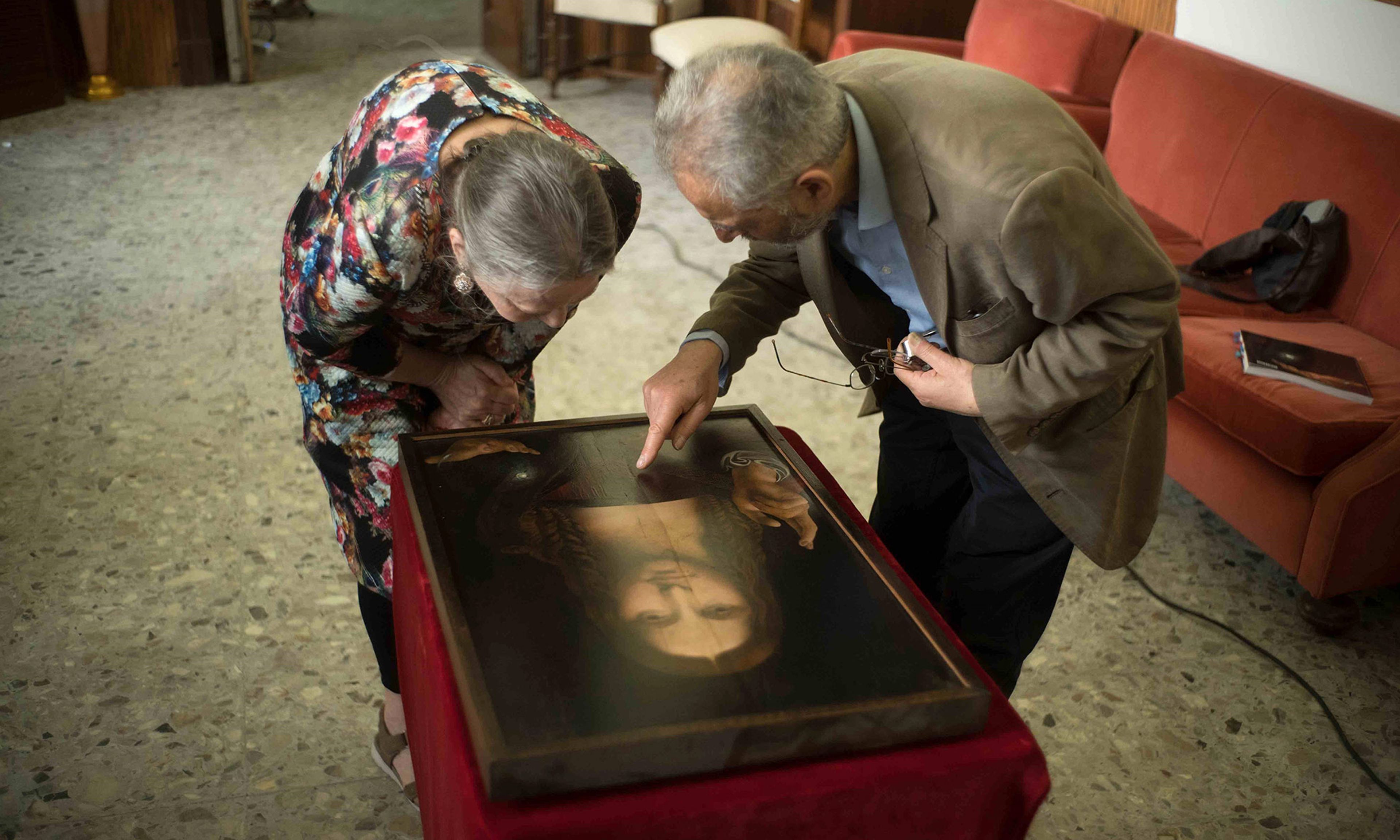
How did a painting that earlier this century was hanging over some guy’s stairwell in Louisiana, and sold for a pittance 16 years ago, become acclaimed as both the last and the lost Leonardo? Why is it now worth $450 million? Willful self-deception seems to have happened at several junctures. People want to have a transcendent experience. And they’re desperately attracted to fame. In the documentary The Lost Leonardo, art historian Frank Zöllner predicts that in a few decades the art world will be saying, “How could these idiots of the early 21st century see this as a Leonardo painting?”
Structured like a mystery tale, and steeped in skepticism, the doc directed by Andreas Koefoed scrutinizes the money trail that brought the supposed masterpiece Salvator Mundi to such fame that in 2017 it sold at auction to Saudi Arabia’s ruler Mohammad Bin Salman for $450 million. The previous record was $180 million; this is the most valuable painting on earth. And yet there isn’t a single solid reason to think it’s actually a Leonardo. There are several reasons to think it isn’t.





Comments