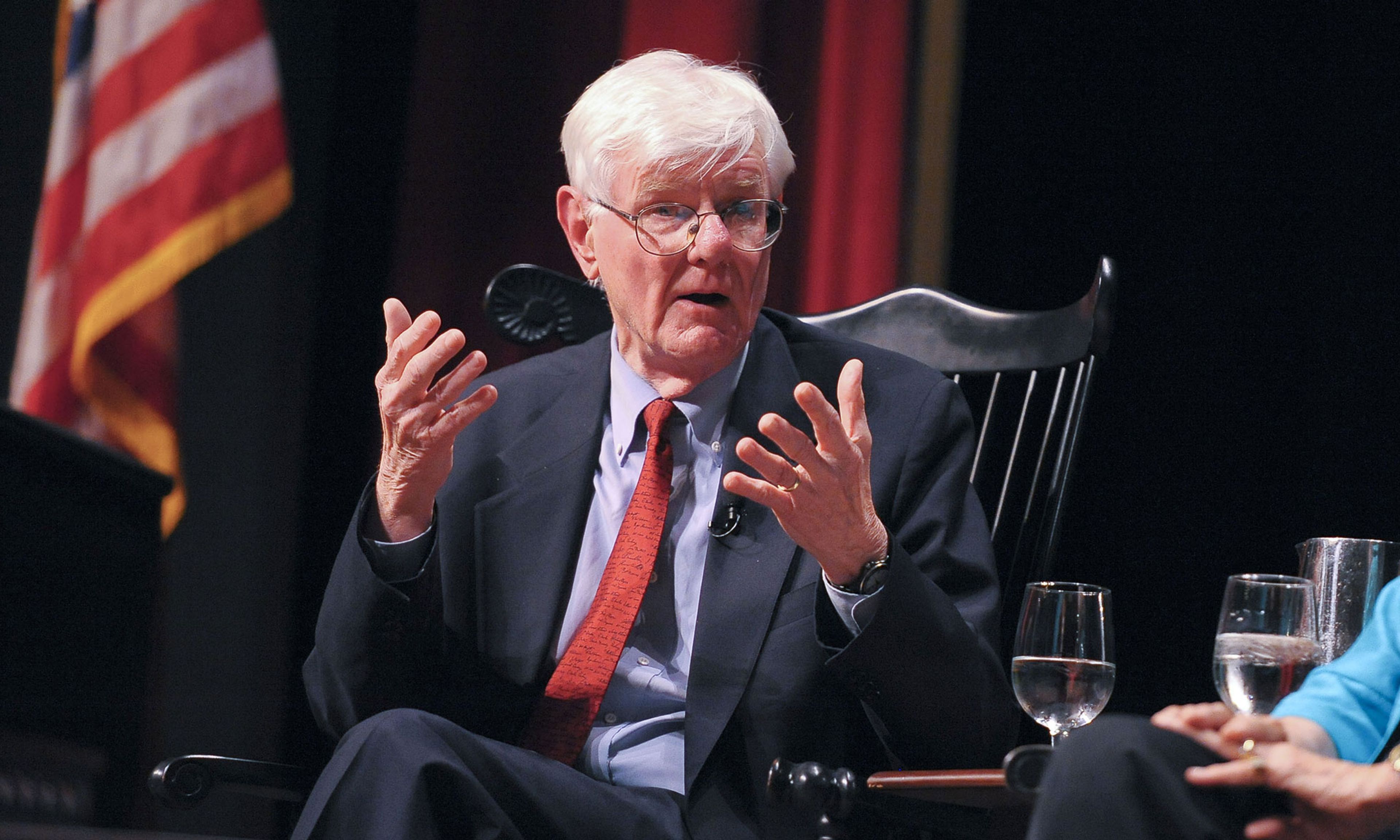
The past six months have not been good to American historians. On Christmas Day, we lost the eminent Daniel Walker Howe, whose books were my nominees for accompaniment to a desert island. Six weeks later, we lost the pioneering Lincolnian, Gabor Boritt. And now, the list has been lengthened to include Gordon Wood, the victim of a parking-lot accident less than a month before the 250th anniversary of the American Revolution he did so much to celebrate as the greatest event of modern world history.
The honors and plaudits he won are the Everests of American historical writing: the Bancroft Prize in 1970 for The Creation of the American Republic, the Pulitzer Prize in 1992 for The Radicalism of the American Revolution (and nearly a second Pulitzer for Empire of Liberty in 2009) — even a line in the 1997 movie Good Will Hunting. As a graduate student at the University of Pennsylvania, Creation was one of the urtexts I was expected to admire and to master, and especially for its description of how Americans developed their own domestic revolutionary ideology (and applied it through their Revolutionary state constitutions).





Comments