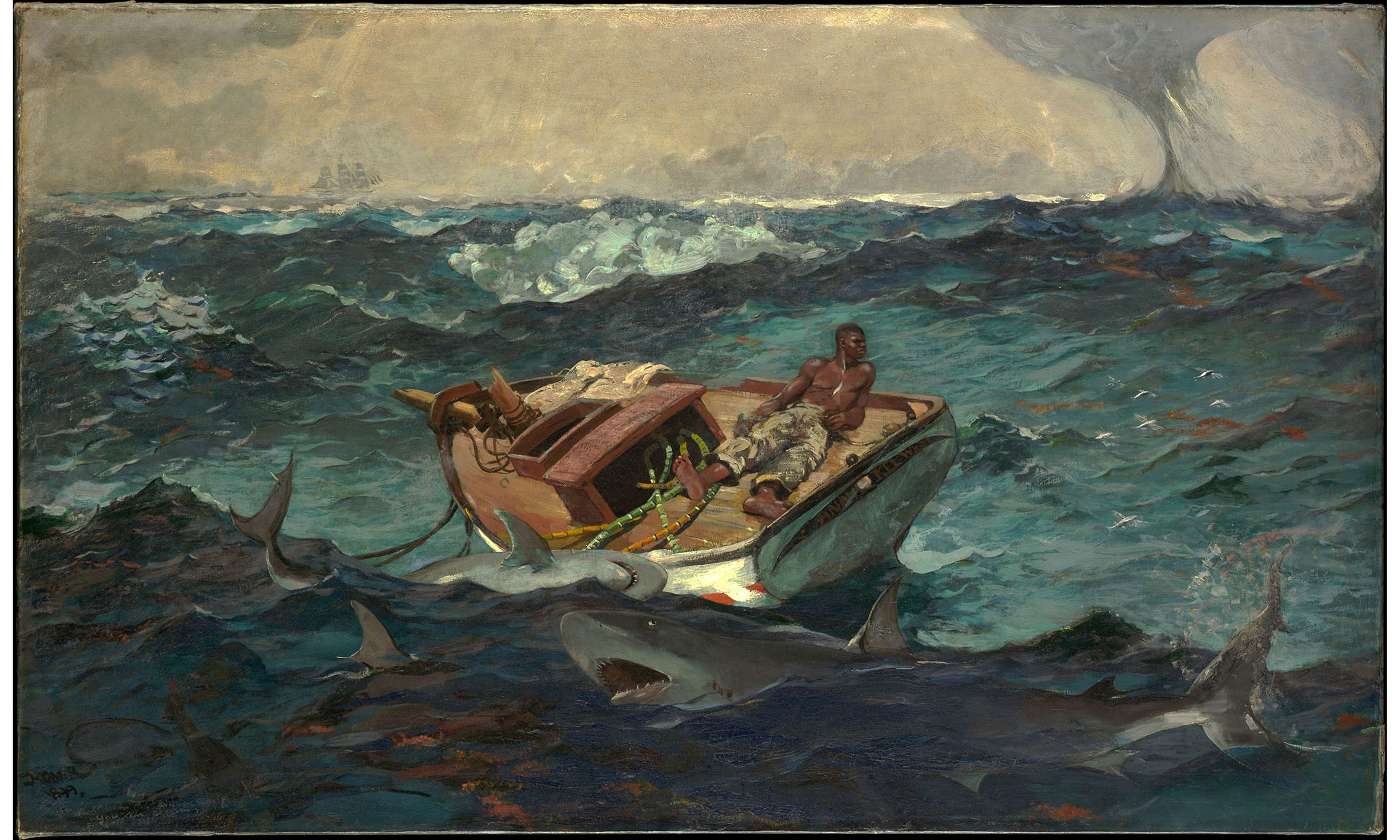
I saw Winslow Homer: Crosscurrents at the Metropolitan Museum of Art this week, on the very day it closed. It’s a survey of Homer’s career, and it had so many wonderful things. Aside from this, it’s pointless, unless drawing a crowd is the Met’s purpose these days, and it’s incoherent. It’s an abuse of the Met’s stature, which means its borrowing power. Homer (1836–1910), like every great artist, is forever solicitous of new takes. Crosscurrents flirts with one or two but, given it’s more or less a seascape show, never takes the plunge. Intellectually, it’s a failure.
Today and Saturday, I’ll write on Crosscurrents. I was the director of one museum, the Addison Gallery, with lots of Homer watercolors and three exceptional paintings, and the curator of American art at the Clark, which owns ten Homer paintings and a group of watercolors. Homer studies and Thomas Eakins studies are still the anchors of advanced American art-history study, so Homer is a language common to all specialists in the field.

Comments