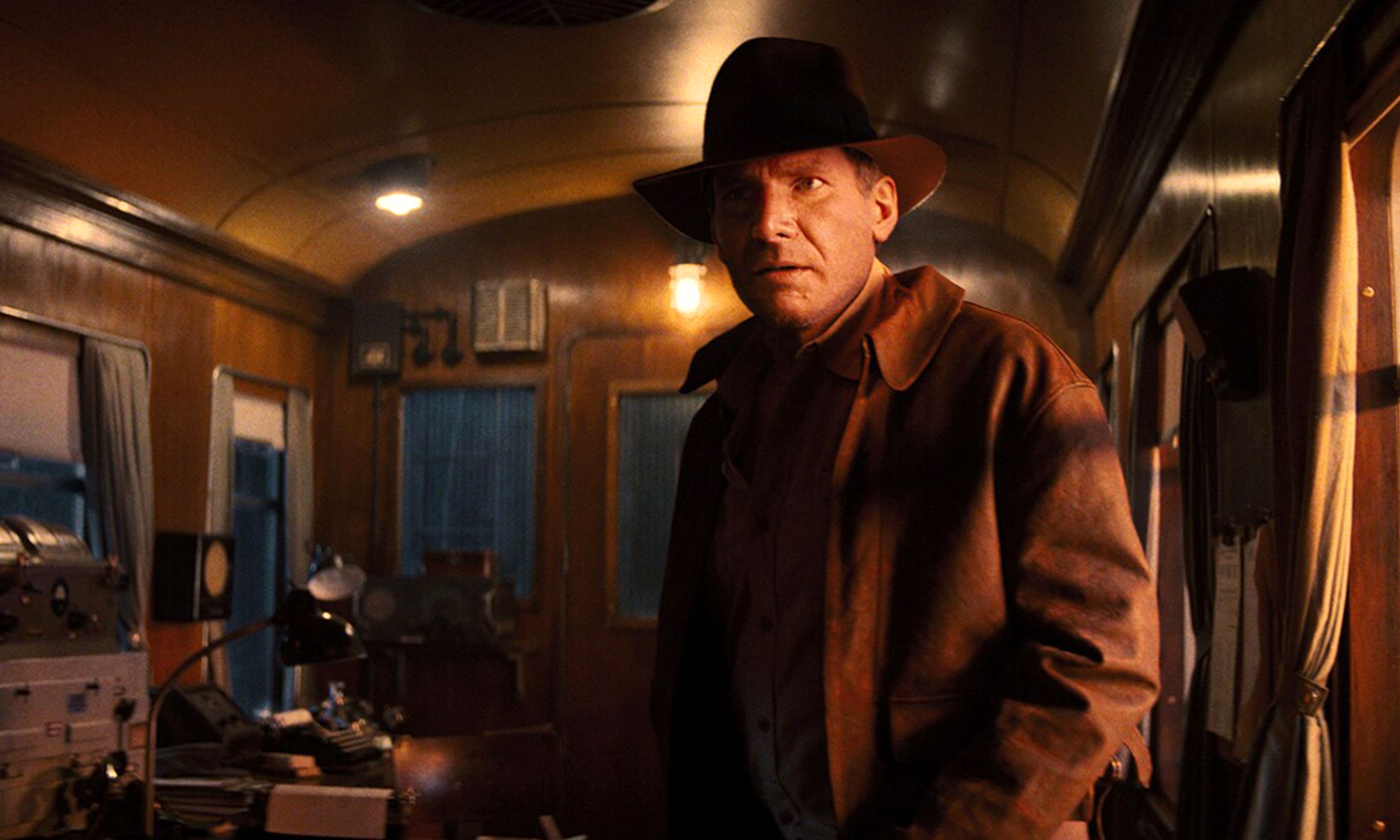
The first time we see the face of Indiana Jones in Indiana Jones and the Dial of Destiny, he is more or less as he appeared in the first three movies. Modern technology now can restore actors to their past selves, allowing a long prologue set in World War II. But then Indy speaks. And the voice that emerges is not that of Harrison Ford from 1981, 1983, or 1989; it is, discordantly, his voice today, tumbling gravelly out of a digitally de-aged face.
This is the first of many moments in the latest — and, one hopes, the last — Indiana Jones film in which an attempt to revive the past falls flat, an apt characterization for the enterprise as a whole. The odds were stacked against it to begin with. Ford’s age (nearly 80 at filming) was an obstacle, though apparently not an insurmountable one. 2008’s Kingdom of the Crystal Skull had left a sour taste in the mouths of many fans, giving us, in one infamous scene, a new term (“nuking the fridge”) for “jumping the shark.” And nowadays, audiences are increasingly wary of long-awaited sequels, revivals, and reboots. Though such properties can (and do) still make money, enough have been misfires that they must now overcome innate skepticism. Which is not to say that such skepticism — for which there has emerged a kind of market of its own, prejudging and even predestining all such ventures as automatic despoliations — is always justified. See last summer’s Top Gun: Maverick for a counterexample.




Comments