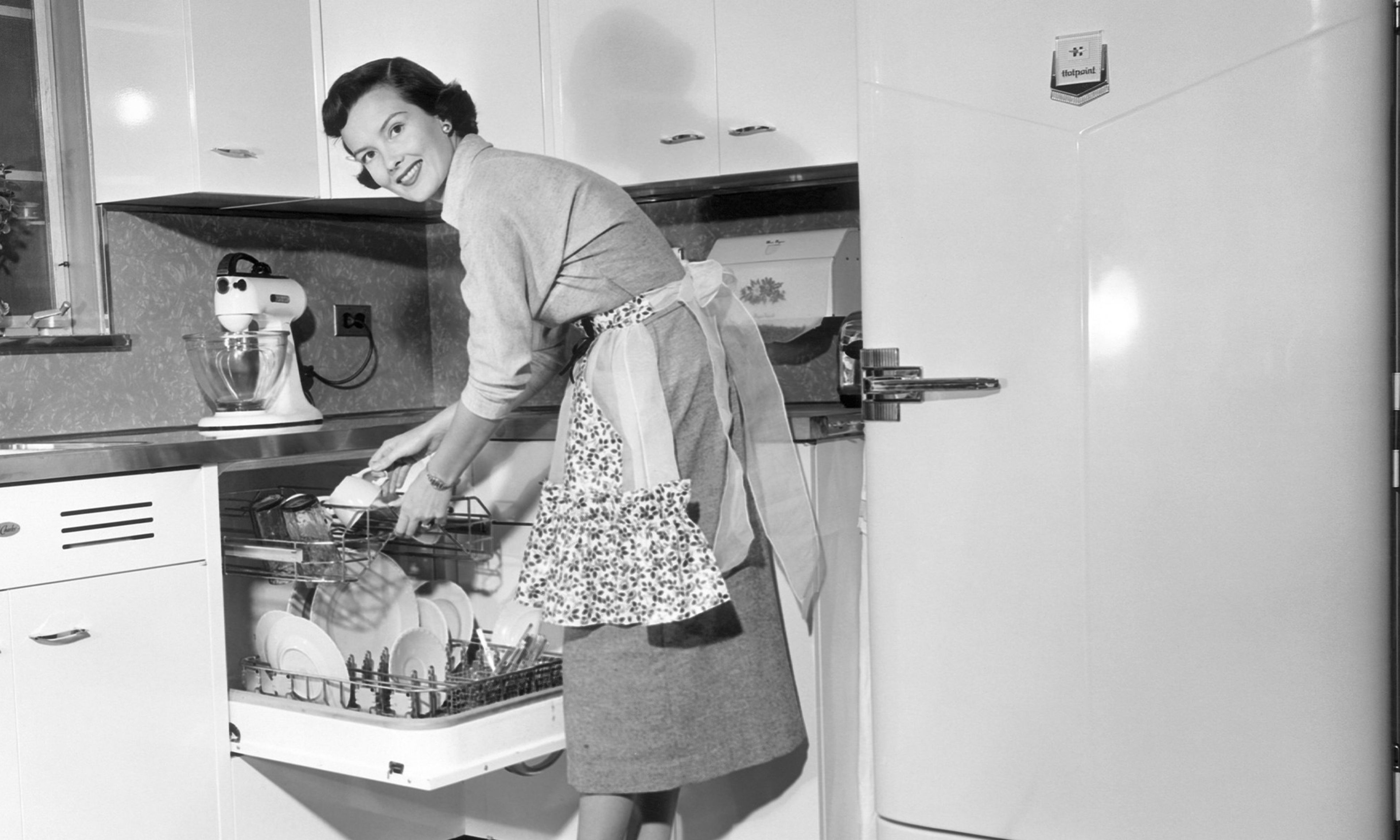
‘Almost every woman sees herself as a good home-maker. Before marriage she pictures herself in a dream house or flat; a charming hostess, clever housewife and adorable sweetheart all in one,” begins an advice manual first published in 1949, How to Run Your Home Without Help, by Kay Smallshaw, who is perhaps best known for her role as an editor of Good Housekeeping magazine. I flipped through the opening pages at one of my favorite bookshops, Persephone Books in Bath, which publishes and reprints seemingly forgotten works (novels, poetry collections, cookbooks, short stories, gardening manuals, and so on), mostly by British women from the mid-20th century. Each book I have purchased there has supplied insightful social commentary about a rapidly changing country devastated by two wars. I wondered, How much do I — an unmarried 25-year-old woman with a full-time job — have in common with a 1950s housewife, and what can I learn from her? So I bought it.
Smallshaw addresses an audience of (mostly married) women adjusting to domestic roles in postwar Britain: “This book is mainly for the newcomer to running a home” at a time when “labour is scarce” and therefore “brains must have full play” for keeping hearth and home. The chapters address virtually every question, even as granular as moth prevention, that might trouble an inexperienced housewife.


Comments