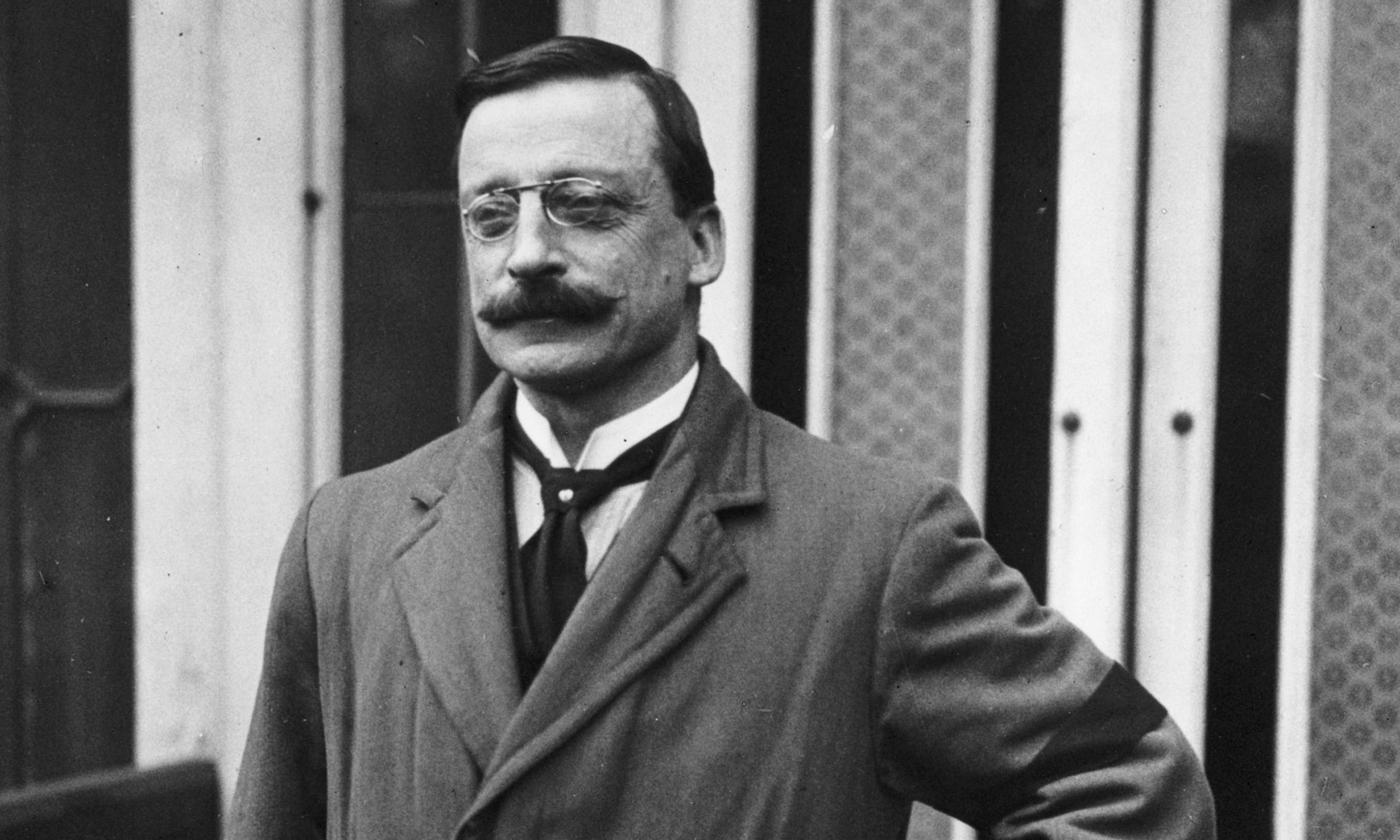
Every time a progressive journalist complains that the government should regulate what we say on social media, every time an NGO produces a report about the threat that “misinformation” poses to democracy, every time I remember when the government demanded that social-media companies de-boost, erase, or grant the CDC a right of reply to our Facebook posts during the pandemic, my mind turns to a certain revolutionary Irishman and one of the most energetically creative opponents of censorship imaginable.
Arthur Griffith was born in Dublin in 1871, the son of a printer. Like many of his later peers in the Irish revolutionary movement, he was educated by the Christian Brothers and became at first an ardent cultural nationalist, joining the Gaelic League, which existed to preserve and revive the Irish language. He would go on to bequeath to Irish politics the two-word name of his party that has existed in many forms ever since: Sinn Féin, the Irish phrase meaning roughly: We, ourselves.



Comments