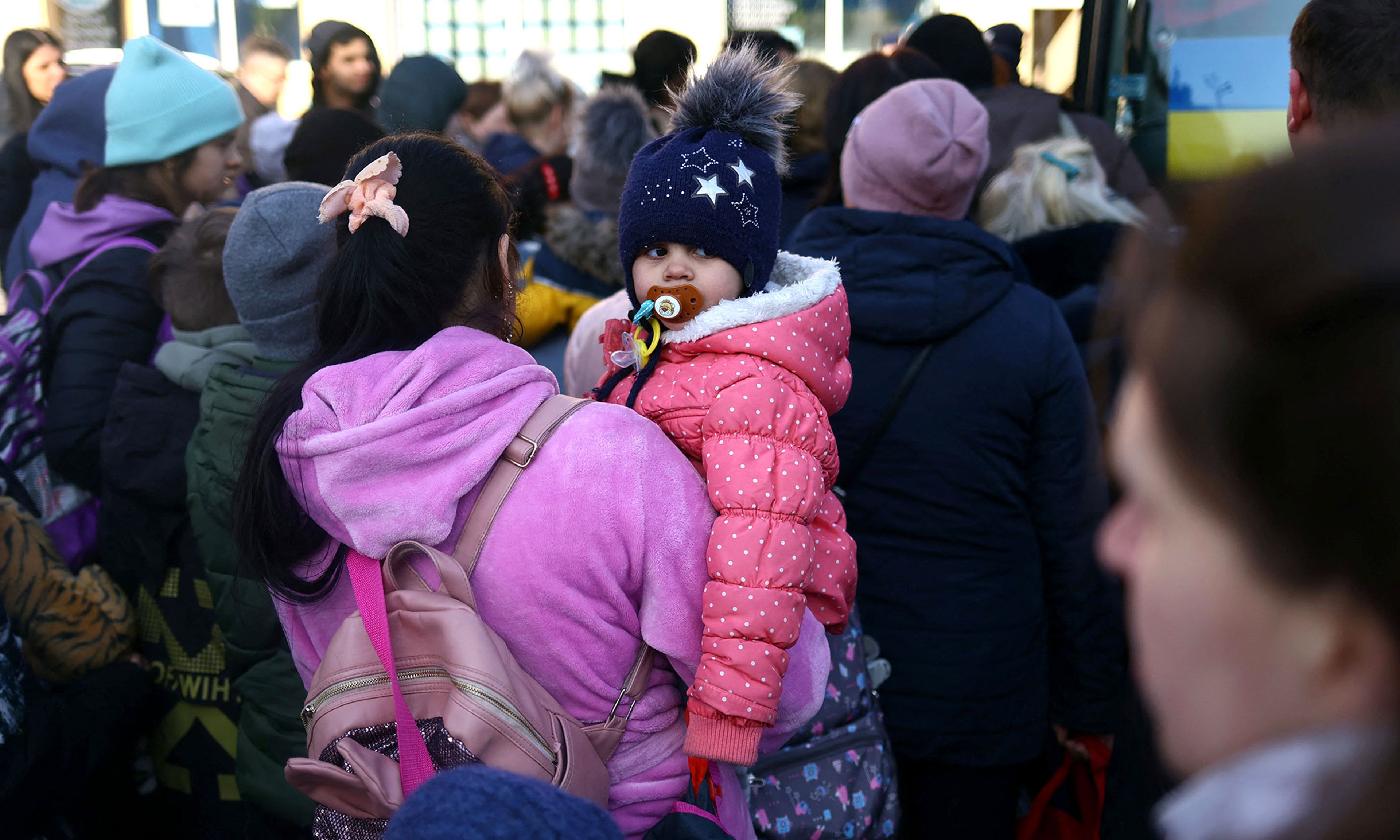
Millions of Ukrainian refugees are on the move across Europe and have been received by neighboring countries with open arms. Even Hungary, usually criticized for its hostility toward asylum seekers, has been generous in response. American and European commentators have remarked on how shocking it is to see a war in a “civilized” country, affecting people “like us.” To some observers, such as H. A. Hellyer, writing for the Washington Post, this is evidence of “racist biases in Western media and politics.”
Hellyer argues that treating Ukrainian refugees with more sympathy than what we show toward Syrians or Somalians sends the message that “it’s much worse when White Europeans suffer than when it’s Arabs or other non-White people.” Nikole Hannah-Jones has similarly complained about the “supremacy around the media coverage.” While it’s true that there’s a disparity in treatment, and even that this is objectively unfair, to claim that racism is the reason is to misunderstand a fundamental aspect of human nature. The motivation in helping Ukrainians over others is not skin color; it’s a natural sense of solidarity with those who seem most similar and familiar.




Comments