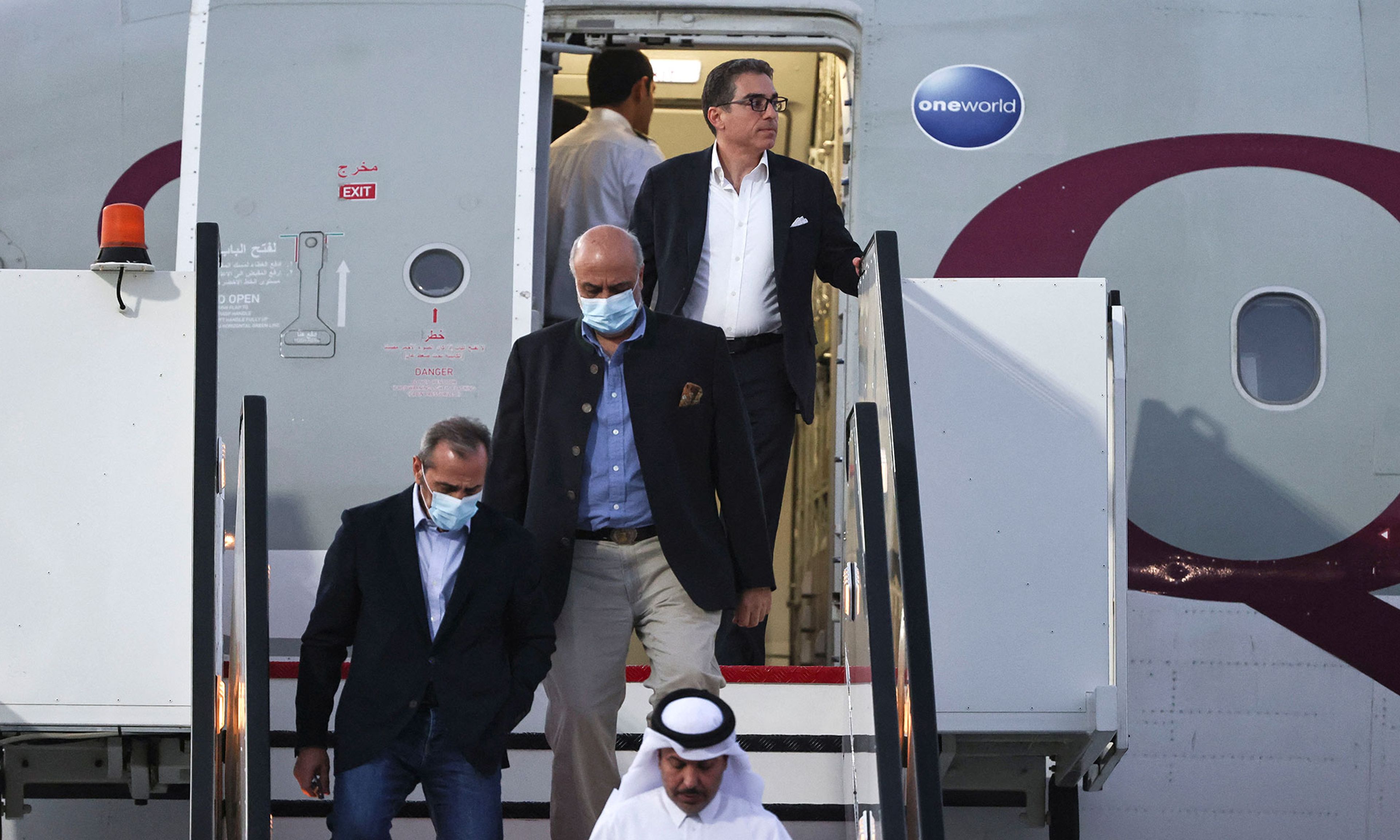
No matter how you spin it, Biden’s deal with Iran to gain the release of five U.S. citizens held as hostages was a blunder. The terrorism-sponsoring regime will reportedly gain access, all told, to $15.5 billion — a doozy of a number. In a Washington Post interview, Brett McGurk, the National Security Council’s coordinator for the Middle East and North Africa, promised that “the funds will be spent only on a limited category of humanitarian trade: food, medicine and agricultural products. That’s it.” Although the Islamic Republic was ordered (told? asked?) to use the funds for humanitarian purposes only, it does not take a scholar to determine that such promises are as empty as a can of air. Even if Iran were to oblige U.S. requests, that would still free up $15 billion for Tehran to spend on nefarious ends.
The natural question that stems from the deal: After that slam dunk, what will stop Iran from doing this again? On Monday a Wall Street Journal editorial asked, “What about the Next American Hostages?,” observing that Iran has more reasons now than ever to seize American citizens in Iran. Senator Tom Cotton, who has been vocal about the Biden administration’s mishandling of the situation from the get-go, echoed the WSJ’s concerns: “Now that the ayatollahs know they can get billions of dollars and Iranian agents back in exchange for hostages, what will stop them from taking more American hostages? Absolutely nothing.”




Comments