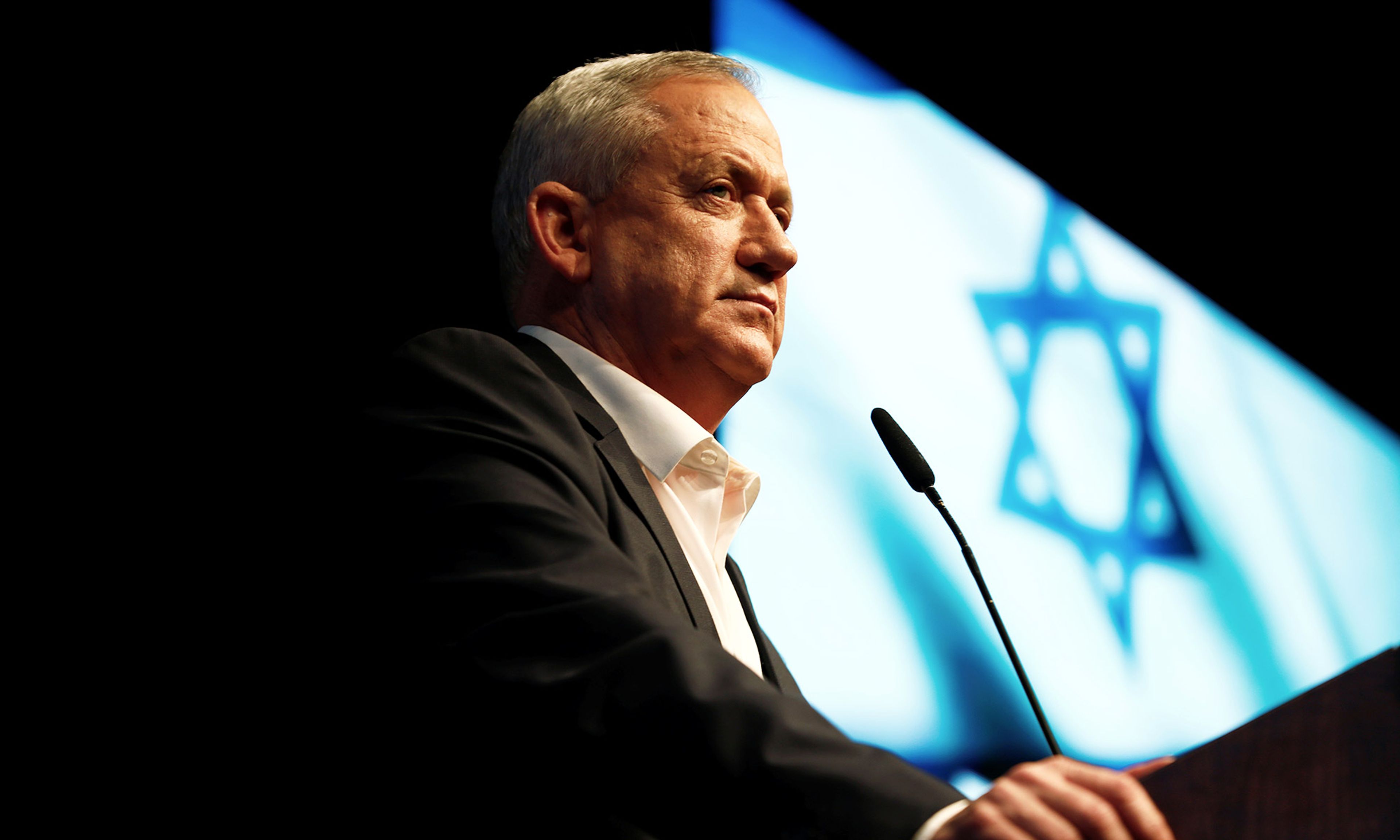
The “emergency unity government” hashed out by Israeli prime minister Benjamin Netanyahu and his chief rival Benny Gantz was signed just before the start of Israel’s Holocaust Memorial Day, leaving no time for a planned press conference. Instead, the two men released a photograph in which each sits at a table, the coalition agreement between them. Neither looks elated.
After three national elections and over 17 months of political deadlock, Israel finally has the outline of a government, although Gantz and Netanyahu seem slightly disappointed at the result. (Technically, lawmakers must take several more procedural steps to formalize the government, with a deadline of May 7.) Why did it take so long? In part, the deadlock was caused by political fractures within both the right-wing and left-wing camps. The right could not win a parliamentary majority without small secular parties whose representatives object to Netanyahu as corrupt and resent the continued influence of Israel’s ultra-Orthodox parties on matters of religion and state. The Left is, in reality, less a philosophically unified movement and more a collection of parties from the secular right to the anti-Zionist left unified only by hatred of Netanyahu.



Comments