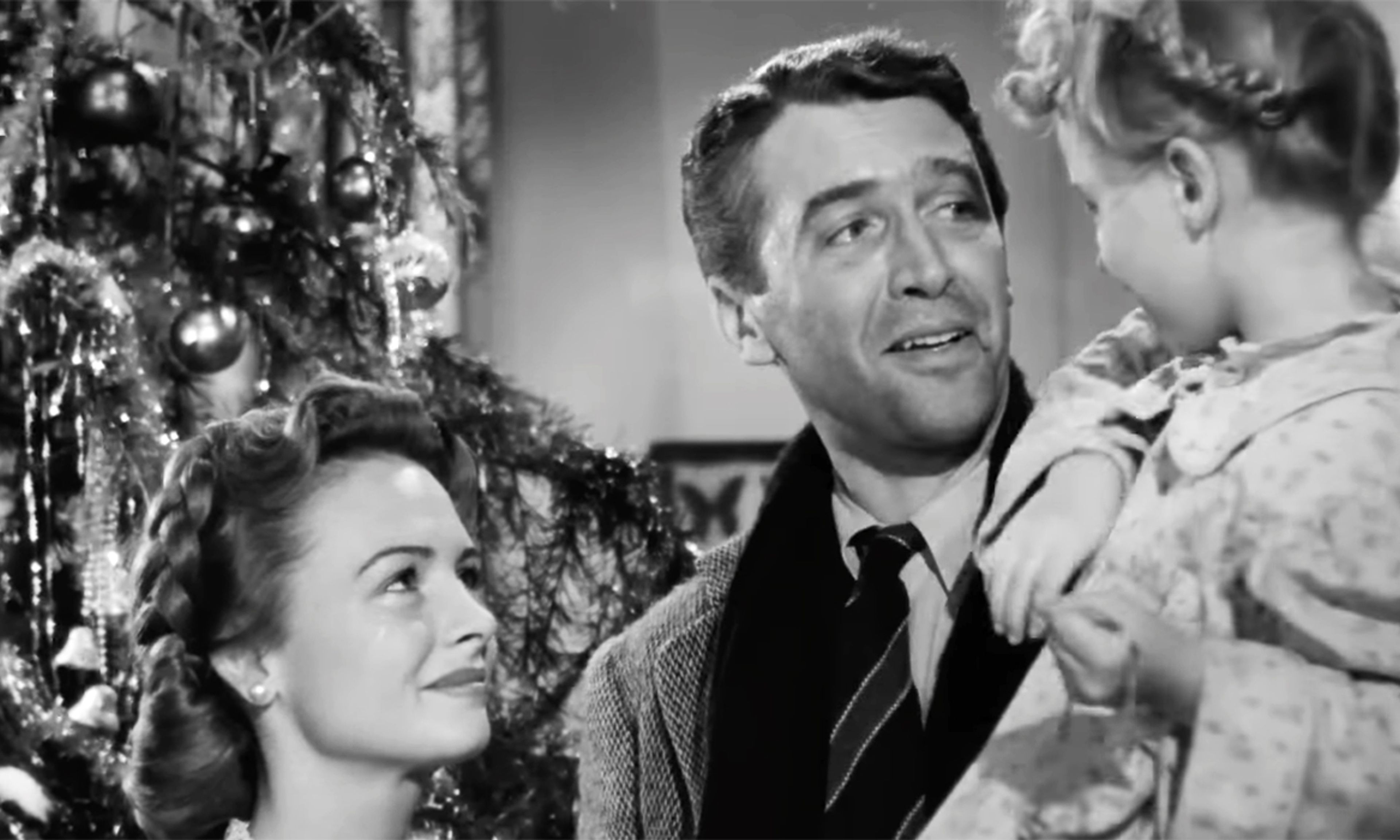
Frank Capra’s 1946 film It’s a Wonderful Life has become a cultural touchstone. Underappreciated in its original release, the Jimmy Stewart and Donna Reed Christmas masterpiece gained new life when its copyright expired. Thanks to repeated yuletide airings, the story of George Bailey (Stewart) is now so familiar and so beloved that it barely needs recounting: A man of frustrated ambition constantly thwarted in his desire to leave his small upstate New York town is, after a series of personal misfortunes, on the brink of taking his own life. Then, on Christmas Eve, a guardian angel visits him to prove how truly wonderful his life has been by showing him a world in which he was never born.
Some may think It’s a Wonderful Life is cheesy (“Capra-corn,” as some belittled the director’s sentimentality). Others might even (wrongly) think it is now somehow problematic. But count me among the millions annually drawn in by its heartfelt message, its stirring performances, and its fully realized fictional setting of Bedford Falls. The tributes to It’s a Wonderful Life include more than just its cultural pervasiveness. The town of Seneca Falls, which inspired Bedford Falls, holds a festival annually in the movie’s honor.




Comments