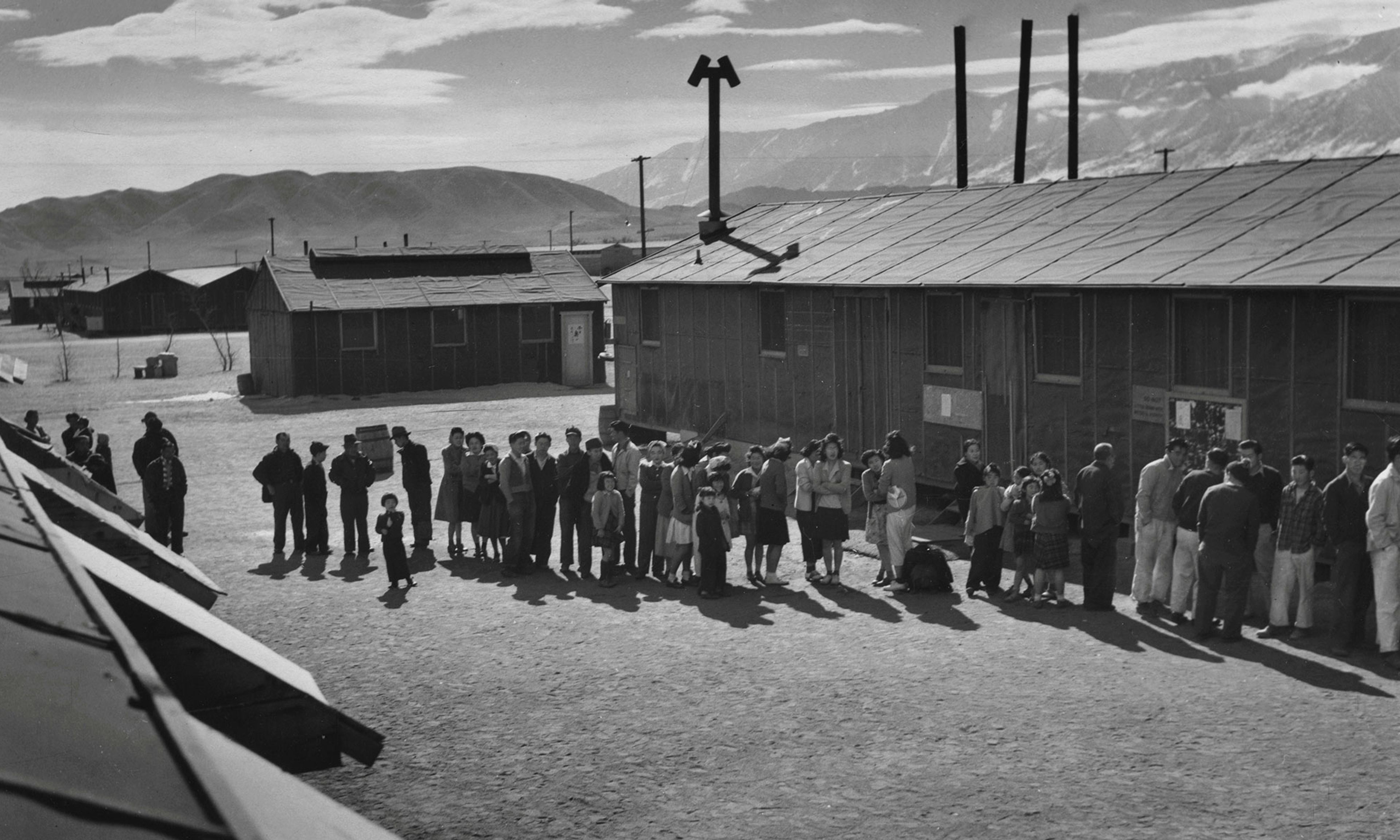
Marion Takehara, born in Los Angeles in 1925, was a student in high school when Japanese airplanes bombed Pearl Harbor on December 7, 1941. “That’s when everything changed,” she said more than 80 years later.
On February 19, 1942, President Franklin Roosevelt signed Executive Order 9066. The legalistic text of his order is almost indecipherable: “I hereby authorize and direct the Secretary of War . . . to prescribe military areas in such places and of such extent as he or the appropriate Military Commander may determine, from which any or all persons may be excluded, and with respect to which, the right of any person to enter, remain in, or leave shall be subject to whatever restrictions the Secretary of War or the appropriate Military Commander may impose in his discretion.” Roosevelt had to torture the language to obfuscate what he was really doing: ordering the mass imprisonment of innocent Americans.




Comments