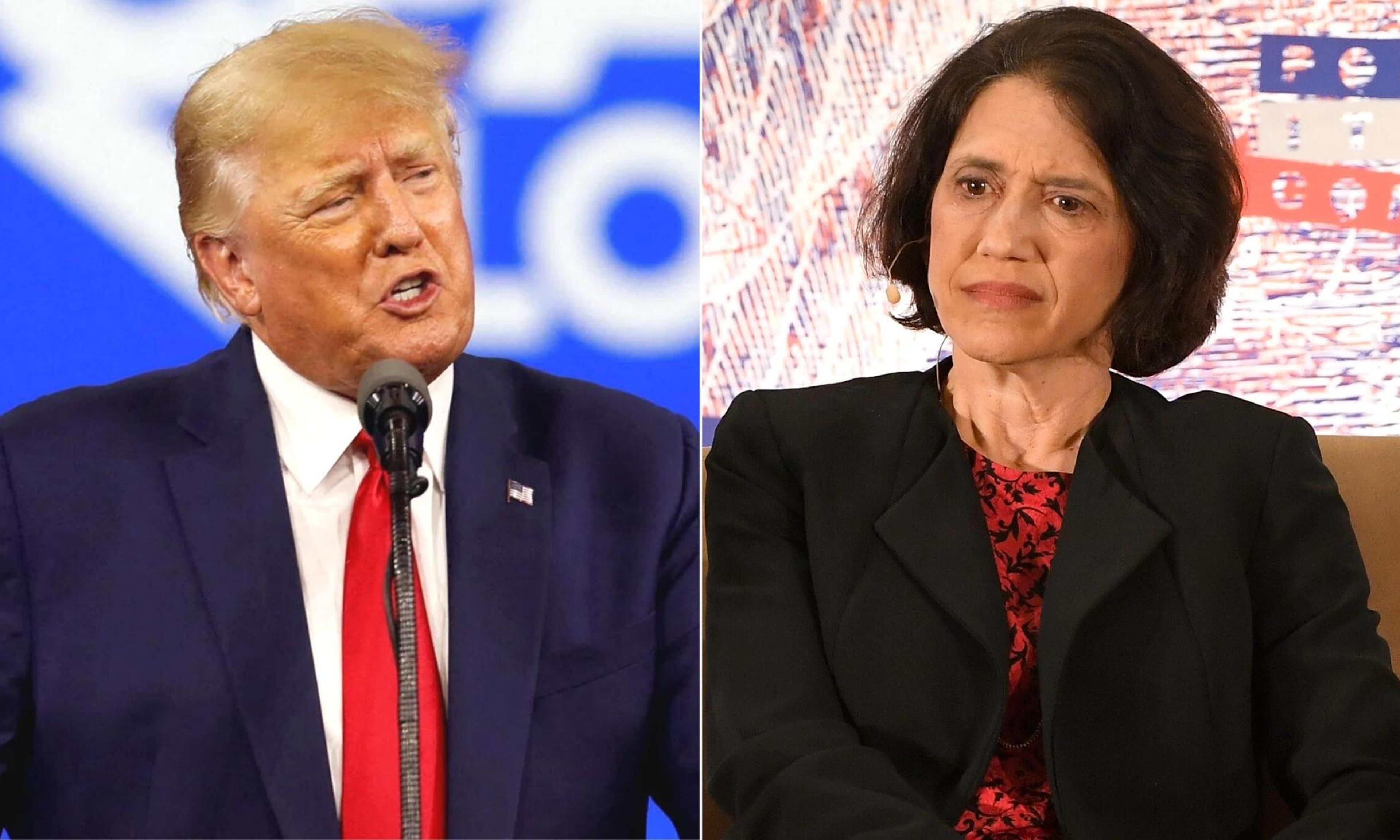
In the Washington Post, Jennifer Rubin fires up her cacophonous lawnmower and points it squarely at the presumptions that underpin the Fifth Amendment. Donald Trump, Rubin writes, “has every right to avoid self-incrimination” by remaining silent during his various entanglements with the authorities, but, if he chooses to do so, he should be punished for it by the voters. Hell, Rubin suggests, the electorate ought to apply that rule to all politicians, whose silence during legal proceedings ought to be construed as “putting themselves above the interests of the country.” “Taking the Fifth,” Rubin concludes, “should disqualify a politician from taking office.”
There is, of course, no way to prevent voters from assuming anything within the privacy of their own minds. But, as a cultural preference, the principle that Rubin is advancing here is illiberal, grotesque, irrational, short-sighted, and transparently self-serving. Legally speaking, the Fifth Amendment right against self-incrimination can be tricky to interpret and superintend; I do not, for example, believe that the Supreme Court was correct when it ruled in 1965 that the Fifth Amendment prohibits judges in criminal trials from turning “the silence of the accused into evidence against him,” even if I’m enthusiastic about the result of that ruling as a practical matter. But, socially, good ideas do not need to be mandated in the Constitution to be worthwhile, and the American fondness for a robust right against self-incrimination is, indeed, worthwhile. Writing for the majority in the case of Griffin v. California, Justice William O. Douglas submitted that those who draw adverse inferences from the invocation of the Fifth Amendment are imposing a “penalty” on the invoker “for exercising a constitutional privilege,” and thereby “cut[ting] down on the privilege by making its assertion costly.” Irrespective of its merits as constitutional law, this concept ought to be chiseled into every statute book, and every heart, in the country.





Comments