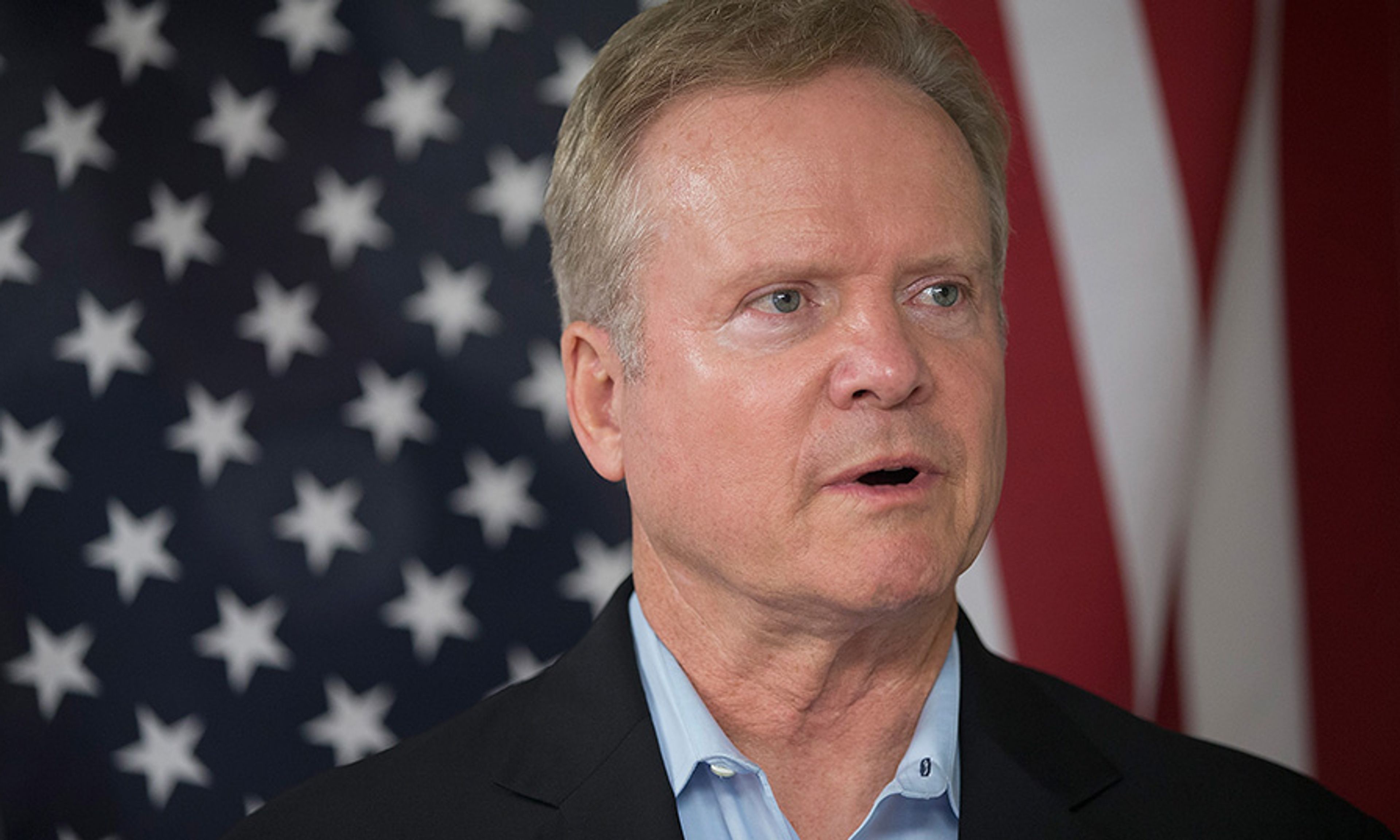
Former Virginia senator Jim Webb abandoned his bid for the Democratic presidential nomination on Tuesday, but left the door open for an independent White House run.
“I fully accept that my views on many issues are not compatible with the power structure and nominating base of the Democratic party,” Webb told reporters at a Washington, D.C. press conference. “That party is filled with millions of dedicated, hard-working Americans. But its hierarchy is not comfortable with many of the policies I have laid forth, and frankly I am not that comfortable with many of theirs.”
The former senator and Vietnam veteran at times seemed hopelessly out-of-step with his party’s recent leftward tilt, particularly on gun rights, foreign policy, and race relations. But Webb chose to ignore those disagreements in Tuesday’s speech, instead slamming both parties for pursuing political gamesmanship over practical compromise.
“Americans are disgusted by all this talk of Republicans and Democrats calling each other the enemy instead of reaching across the aisle and finding ways to work together,” he said. It was an implicit shot at Democratic front-runner Hillary Clinton, who included Republicans on the list of her enemies during last week’s debate.
#share#Despite dropping out of the Democratic race, Webb still sounded like a presidential candidate. He waxed apocalyptic about the current state of American politics, lamenting an overpowered executive branch and the outsize political pull of Wall Street. “Our political process is jammed up,” he said. “It needs an honest broker who respects all sides, who understands the complicated nature of how our federal system works, who will communicate a vision for our country’s future here at home and in our foreign policy, who has a proven record of getting things done.”
#related#“I am not going away,” he said. “I am thinking through all my options.”
Webb consistently polled just over 1 percent in Democratic primary polls — ahead of Martin O’Malley and Lincoln Chafee but well behind Joe Biden, Bernie Sanders, and Clinton. Though his record may better appeal to a general electorate, he’s unlikely to prove a serious challenge to the Democratic or Republican nominees. But he could prove a potent, unpredictable spoiler in Virginia, the crucial swing state he calls home.
— Brendan Bordelon is a political reporter for National Review.






Comments