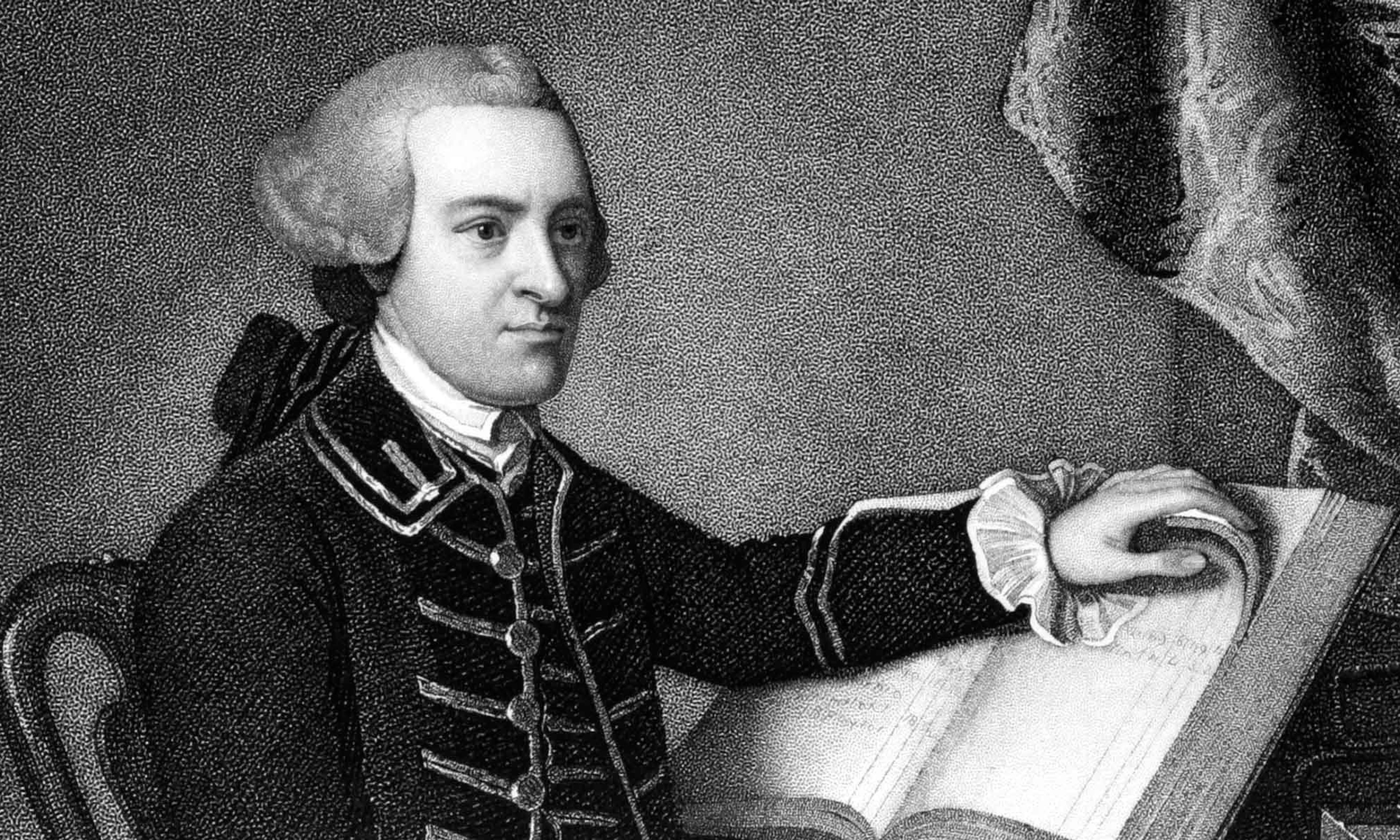
King Hancock: The Radical Influence of a Moderate Founding Father, by Brooke Barbier (Harvard, 320 pages, $29.95)
In the popular American imagination, John Hancock is remembered as little more than a signature. His ostentatious penmanship on the Declaration of Independence is recognized far more widely than any of his political accomplishments, philosophical inclinations, or personal exploits. But in the eyes of Brooke Barbier, a public historian whose work focuses on the American Revolution, Hancock was a man as enterprising and contradictory in nature as the nation he helped found. In her new book, King Hancock, she uses his life as a window into America’s struggle for independence and its subsequent emergence as a self-governing power. More than a simple biography, what Barbier has developed is a rollicking portrait of the entire Revolutionary Era, Hancock placed at its center. She chronicles his life in a style that is thorough yet concise, dedicating equal attention to his psychology and the grand historical episodes in which he was involved. Her thesis is that Hancock was a political moderate who shaped the American Founding by balancing radicalism with restraint — a notion germane to our own age of extreme polarization.




Comments