
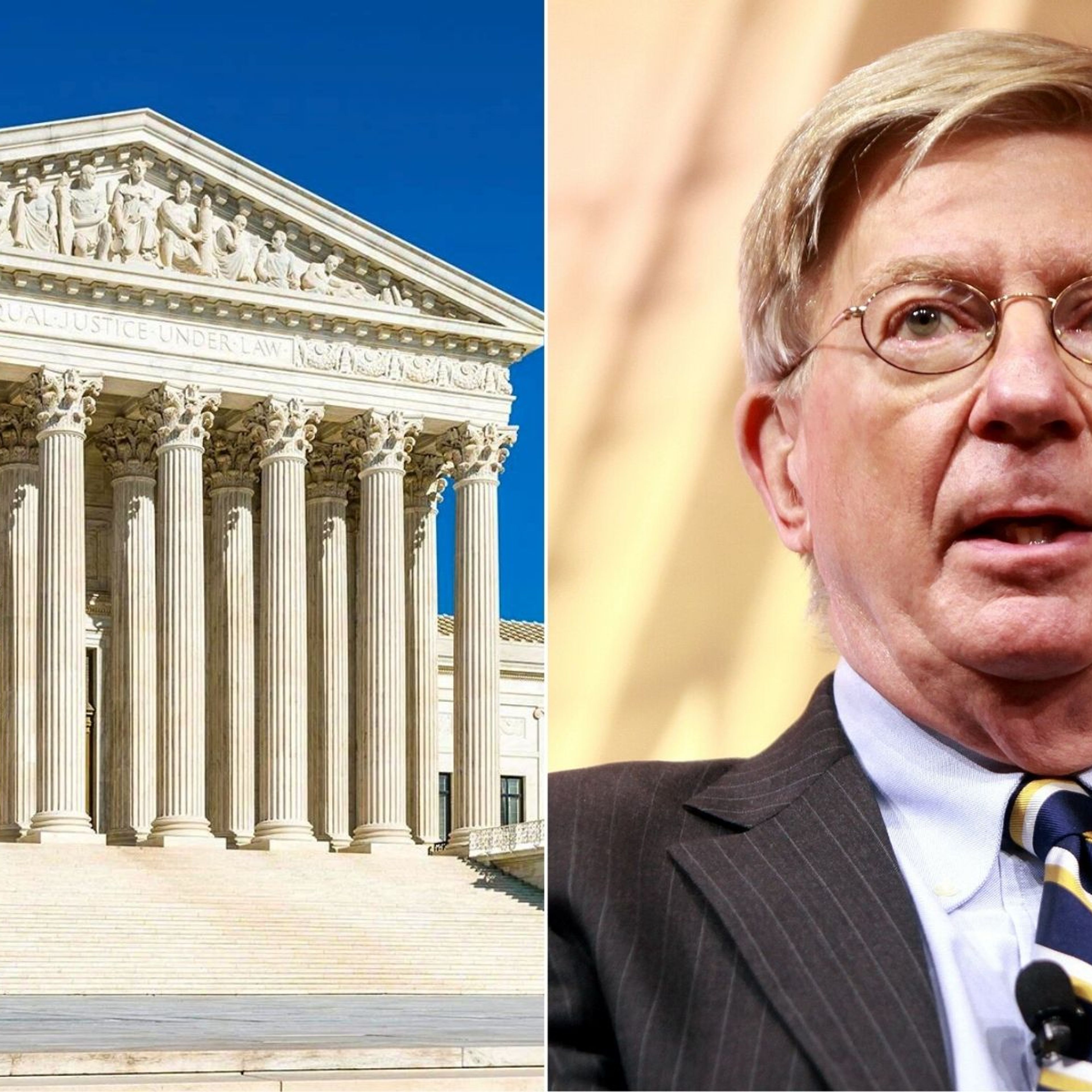
The judicial role is controversial again, this time on the right, with Donald Trump and his allies fuming that the Supreme Court could strike down his “emergency” tariffs. Today is, as Sara Albrecht observes, the 223d anniversary of Marbury v. Madison. Chief Justice John Marshall’s opinion for the Court in that much-celebrated case announced and established the power of judicial review: that in the case of a conflict between an act of Congress and the Constitution, the Court could declare that the statute is unconstitutional and invalid. Marshall’s famous epigram summarized the judicial role: It is “emphatically the province and duty of the judicial department to say what the law is.”
Marshall’s opinion was both cleverly creative and path-breaking in a couple of ways. To start with, it was Marshall who instituted the practice of having the Court issue a single opinion, rather than just have each justice describe his own reasoning; Marshall managed to get the whole Court to sign unanimously onto his grandly worded opinion. He also managed to sidestep a conflict of interest that almost certainly should have prevented him hearing the case.




Comments