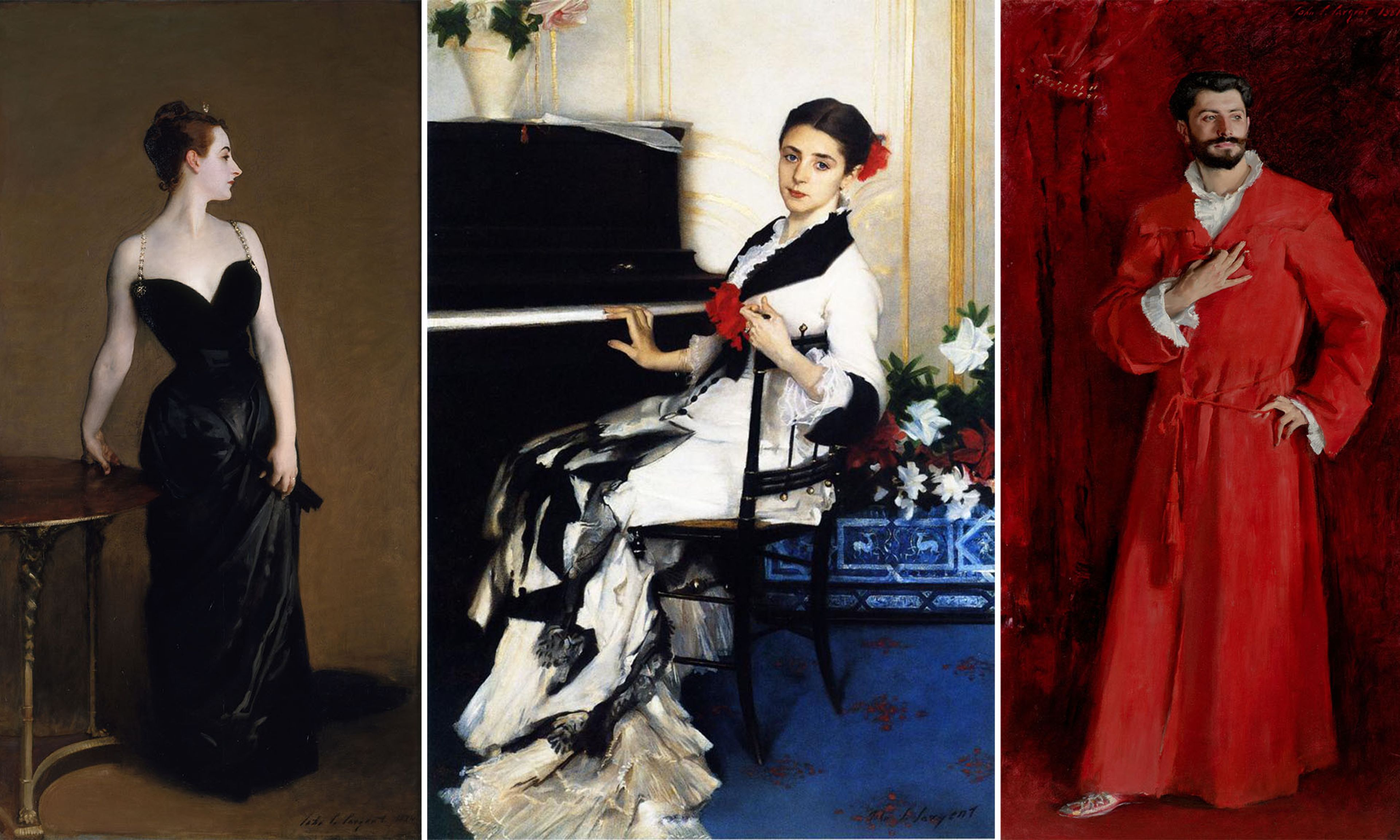
I’m relieved to confess something I’ve believed from my earliest days as an art historian. John Singer Sargent is a great artist. Great not only as in eye-catching, dazzling, eminent, and profound, but also great as in worthy of a spot on art’s Olympus. Yes, he’s famous for portraits, many of British aristocrats, and we all know the saying about the unspeakable pursuing the inedible, coined by Sargent’s friend, Oscar Wilde. Portraits are about style and sparkle, so no portraitist could be a great artist, or so was the assumption during my days as a student. I knew then that this was wrong. Nearly all of Velázquez’s, van Dyck’s, and Hals’s paintings are portraits, as are most of Goya’s, Whistler’s, and Rembrandt’s. And Sargent (1856–1925) did much else besides portraits. His scenes of everyday life — in oil and watercolor — are radiant and seriously modern.
The Met’s new exhibition, Sargent and Paris, convinced me to unbosom myself. At my age, why keep secrets? It’s a splendid exhibition. It’s about Sargent’s savvy and genius as a painter in Paris from the late 1870s, when he was barely out of school, to 1884, when the portrait later called Madame X shocked Paris. It’s also about the lifelong centrality of French culture to Sargent. Though he considered himself an American, Paris was his heart and soul. Sargent died — in London — a hundred years ago last month so, loosely, Sargent and Paris is an anniversary show, though one defining him as the ultimate American in Paris.



Comments