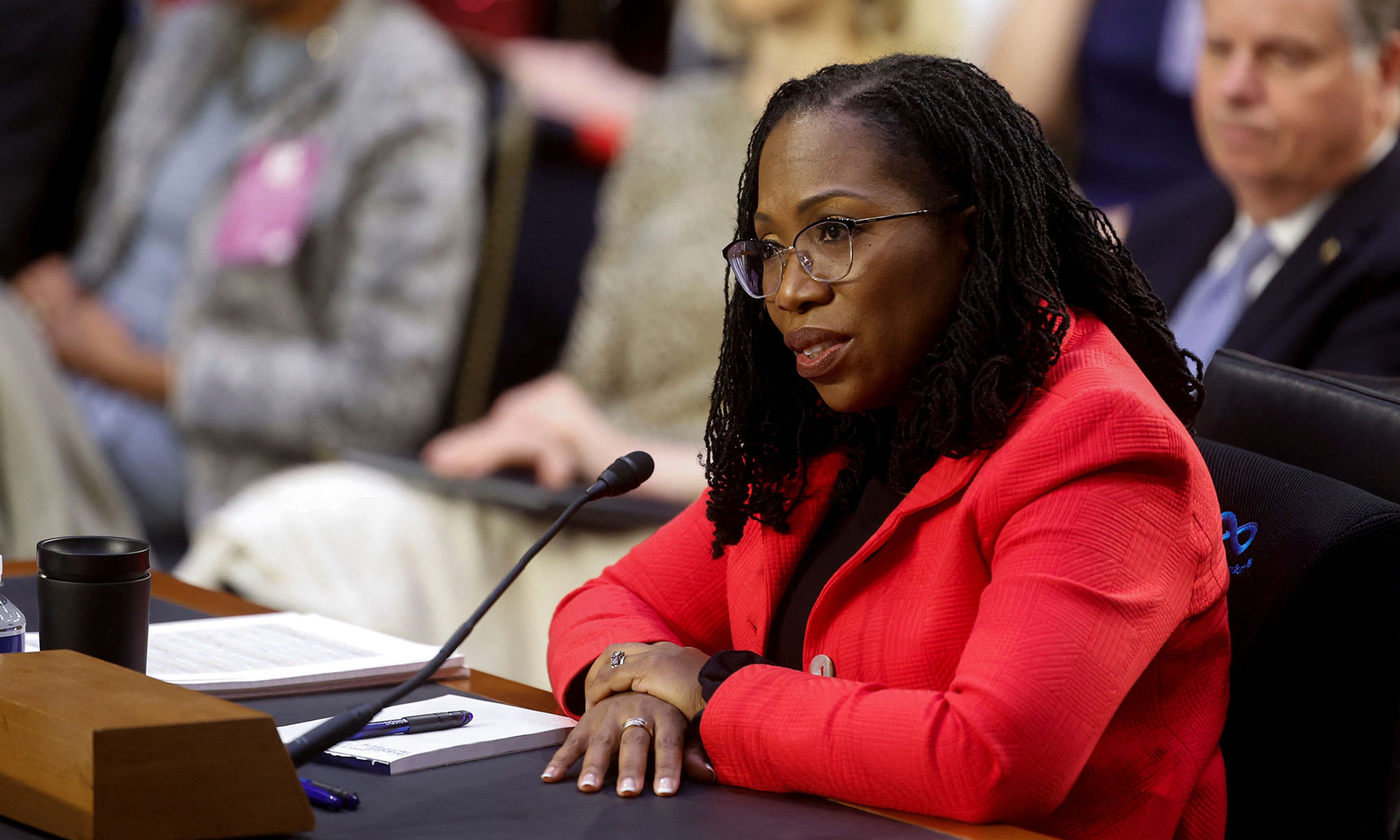
Antonin Scalia may not have lived to reach the promised land, but he won the argument. That is the clear takeaway from the first round of questioning of Judge Ketanji Brown Jackson in her Supreme Court confirmation hearing Tuesday before the Senate Judiciary Committee.
Scalia did not invent constitutional originalism. Edwin Meese and Robert Bork both played important roles in advancing the concept in public, and numerous other scholars worked the vineyards of academia and the judiciary to make the idea intellectually respectable and rigorous. Others such as Clarence Thomas and Amy Coney Barrett have carried the flame of its arguments forward on the Supreme Court since Scalia’s death, sometimes (in the case of Thomas) with more stringency than Scalia himself. But Scalia was its most prominent, insistent, and eloquent exponent from the mid 1980s until his death in 2016. He was originalism’s prophet. Nobody was more identified with the argument than Scalia, who advanced it relentlessly in constitutional law and equally insistently under the label of textualism in approaching statutory law. “We’re all textualists now,” quipped Justice Elena Kagan in 2015.





Comments