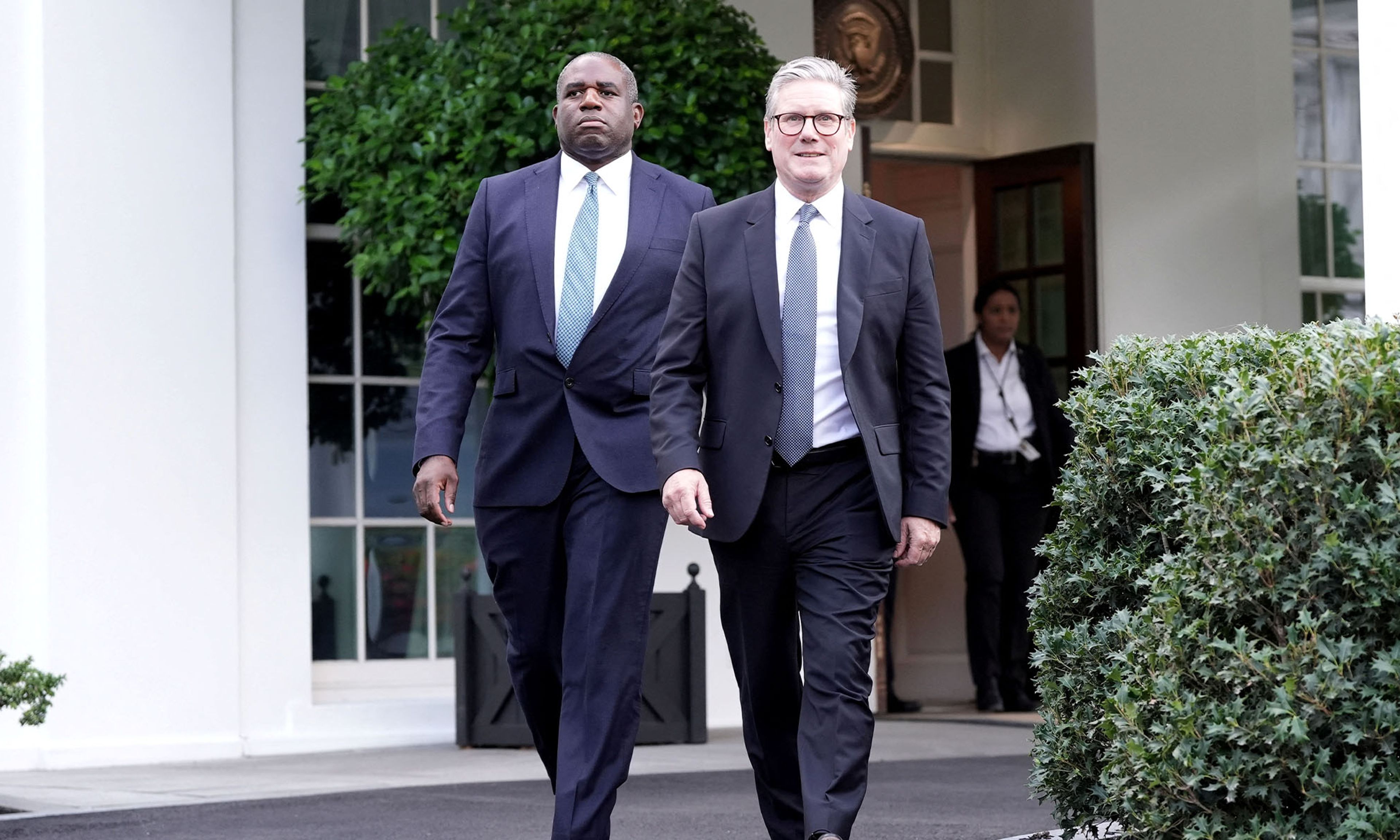
On July 4, the Labour Party won a huge election victory in Britain, entering government for the first time in nearly 15 years with a staggering majority of 174 seats in Parliament. Keir Starmer, the new prime minister, campaigned on a promise to govern differently than the long-standing Conservative government on a wide variety of issues, from climate change and European integration to immigration and economics. Still, one of the most dramatic changes in the first few months of the Labour regime has been in the realm of foreign affairs. Starmer appointed MP David Lammy as Britain’s foreign secretary, making him the second-most-powerful figure in the government. Although the rabid antisemite Jeremy Corbyn has been excised from Labour leadership, the choice of Lammy for the Foreign Office would not have been out of place in a Corbyn government. Lammy’s politics are progressive verging on radical, particularly when it comes to his government brief, foreign policy.
Lammy and Starmer seek to fundamentally alter British foreign and military policy to fit within Labour’s progressive mien, viewing Britain’s long and storied history as a world power as a liability instead of an asset to its standing abroad. Accordingly, the new administration is leaning heavily on diplomacy, retrenchment, and self-abasement to ingratiate itself with those it feels the Tories alienated over the past decade and a half: Islamic fundamentalists, China, Western Europe, and the left wing of the Democratic Party in America. For Labour to accomplish its goal of making British foreign policy more “neutral” and aligned with these favored constituents, it must act less forcefully, embrace moral relativism on the world stage, and affirm the growing elite consensus that its own history as an international power — and its support of America as its successor hegemon — was an oppressive evil perpetrated against the wretched of the earth.




Comments