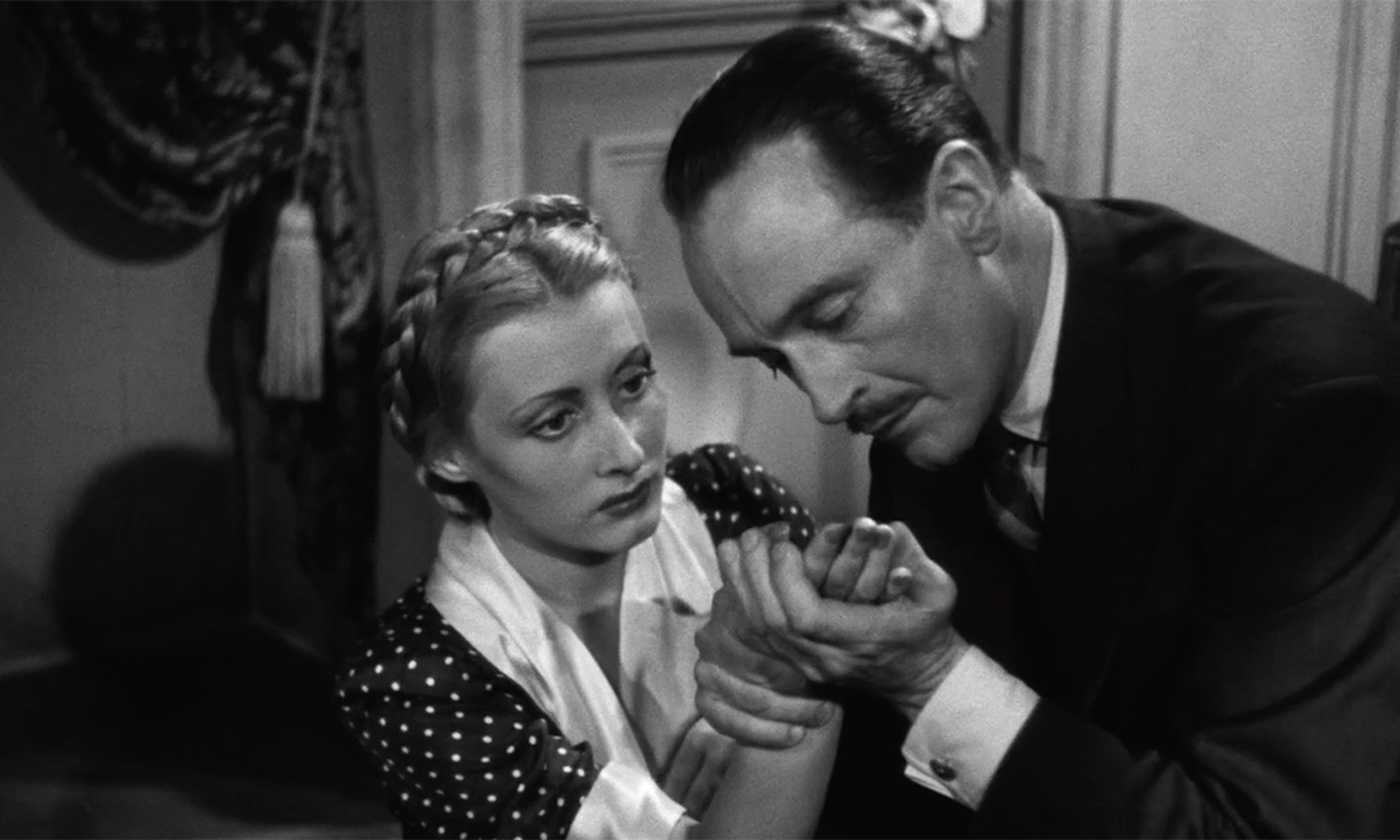
As the American electorate enters a “never again” phase, its hopes are uncertain. And Henri-Georges Clouzot’s Le Corbeau (The Raven) is the movie that captures it all.
Clouzot’s thriller, made during Nazi Germany’s occupation of France, was released in 1943. Its mystery plot about a series of anonymous poison-pen letters sent throughout a small provincial town, unsettling all its citizens, was so recognizable that it became a hit. After the war, some disparaged the film’s insights and alleged it to be a collaborationist metaphor. But Clouzot had an opposite intention: to reveal the dark hearts of citizens who were ready to turn against themselves.
That the first victim of the poison-pen campaign is the local abortionist, Dr. Germain (Pierre Fresnay), exposed the town’s hypocrisy — Dr. Germain being known for cleaning up inconvenient misdeeds. Clouzot doesn’t attack France, he targets French hypocrisy — the moral delusion at the core of his more famous films Wages of Fear and Diabolique. So it’s uncanny that Le Corbeau feels relevant to the post-Covid and post-Biden age when we see that those Americans touting “democracy” in fact, turned against other Americans — with the media’s help in promulgating Fake News equivalents of threatening poison-pen letters. (Consider the anonymous sources of the Russian-collusion/Russian-asset hoaxes.)
Criterion’s Blu-Ray release of Le Corbeau supplies the clarity so lacking in Hollywood’s contemporary trashy output, movies that either ignore the catastrophe of Biden’s Covid years or filmmakers who endorsed its continuation through the failed Kamala Harris presidential campaign. Le Corbeau is a moral-horror film that supplies a perfect metaphor — the moral catharsis we need.
Rediscovering Le Corbeau gives clarity to the nightmare of the Biden regime. Its storytelling features the parochial quality of a national culture that was Clouzot’s specialty — plots that developed home-grown suspicion and cruelty. Clouzot gained a reputation as a French Alfred Hitchcock.
Fear, the emotion that predominates in Le Corbeau, seems familiar — lingering from the tyrannical Covid lockdowns, Stasi-like doxxing, denunciations, and the social antagonism endured through political partisanship.
So far, Hollywood has not been helpful to Americans seeking clarity about the long, national nightmare, but Le Corbeau provides the much-needed understanding. Instead of preaching sappy compassion, Clouzot dares to embrace the misanthropy that refuses sentimental justifications. All the characters — from Dr. Germain, his mistress (Micheline Francey) and her cynical husband (Pierre Larquey), to the town’s crippled, sensual siren (Ginette Leclerc), the officious hospital nurse (Héléna Manson), and the conniving teenage postal clerk (Liliane Maigné) — show mankind at its guiltiest. Occupied France is equal to tyrannized, locked-down, lied-to, hostile America.
It’s ideal that Le Corbeau’s dark vision translates as “The Raven,” arousing our consciousness of Edgar Allan Poe’s 1887 poem “The Raven.” Poe’s great, terrifying symbol, an emblem of lost wandering, absent compassion, and frightful omens, evoked Noah and the Ark and real-life apocalypse. Once a public school mainstay, Poe’s “The Raven” taught students the capacity to handle dread. Clouzot supplied that insight in strong visual terms: Fresnay’s conflicting impiety and righteous anger and so much dissatisfaction and panic among the townsfolk. An extraordinary moment when a Catholic Mass is interrupted by yet another accusatory letter floating down through the vaulting arches epitomizes the psychic damage a nation inflicts upon itself.
In the postwar years, after Le Corbeau’s controversy subsided, François Truffaut defended that its plot “revolved around an epidemic of anonymous letters denouncing abortion, adultery, and various other forms of corruption.” Truffaut, surely responding to the final trapped aviary image of a woman’s desperation, added, “The film seemed to me to be a fairly accurate picture of what I had seen around me during the war and the postwar period — collaboration, denunciation, the black market, hustling, cynicism.” Those words apply to the mysterious, threatening atmosphere and agitated state of mind caused by America’s previous regime.
Why has this column concentrated on the recent releases On the Wandering Paths, Il Grido, and now Le Corbeau? They purge the confusion of our current condition. These grave epiphanies are better than any escapist junk. Next up: Clint Eastwood gives it a try.



Comments