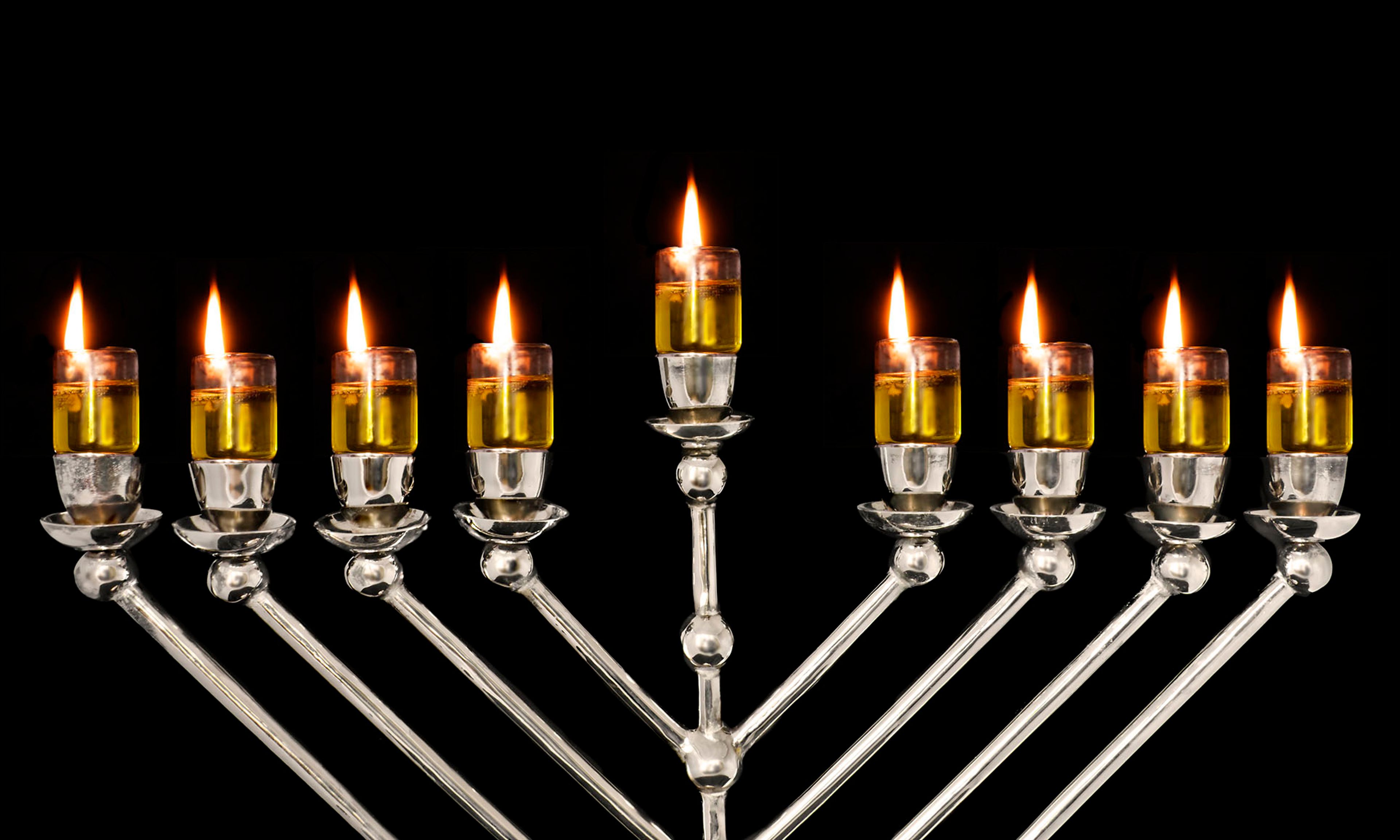
Since the 1970s, when Menachem Schneerson, the chief rabbi of the Lubavitch Hasidic dynasty, popularized Hanukkah to increase the visibility of the American Jewish community while reminding Jews of their heritage, the holiday has been conceived of in the popular imagination as an analog to Christmas. Most Americans know it as a winter festival of lights where Jews light candles and eat latkes and children get presents. But there’s much more to this celebration, whose origins date to the second-century b.c.
Hanukkah memorializes a rebellion by the Maccabees, a group of Jewish zealot insurgents, against the Hellenizing influence of the Seleucid Empire, founded after the death of Alexander the Great, that held suzerainty over Judea. The Maccabees fought ferociously against the Seleucids and their allies, liberating Judea from the yoke of the despotic Antiochus IV. When Jews celebrate Hanukkah, they light a candelabra known as a hanukkiah, a Hanukkah menorah with eight branches and a ninth “leader” candle, to commemorate the miracle of the oil: Legend has it that when the Maccabees recaptured the Temple, which had been defiled, there was only enough pure oil to light the menorah (the lamp kept burning in the holy space) for one day, but it lasted for eight.





Comments