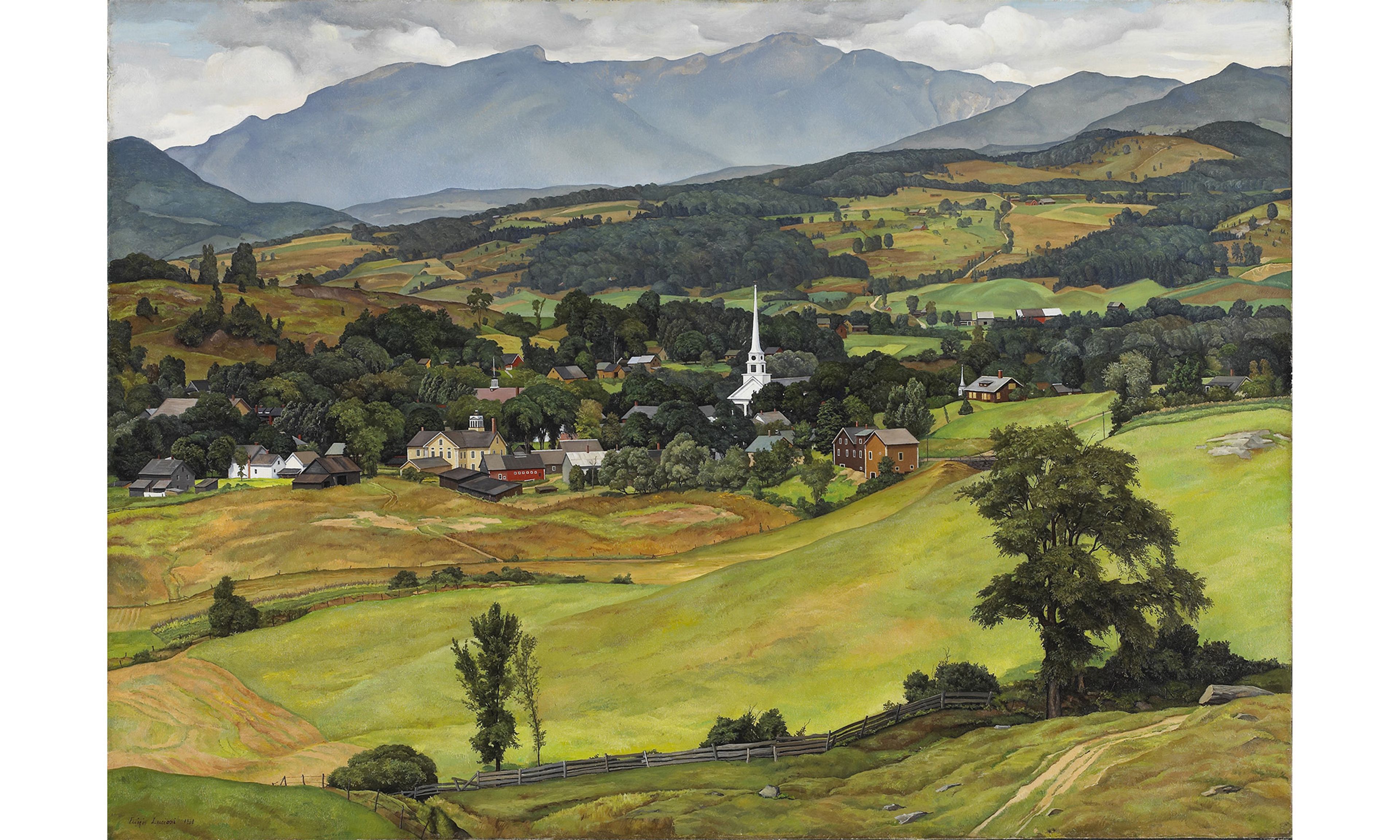
Luigi Lucioni: Modern Light is the new exhibition at the Shelburne Museum saluting Vermont’s painter laureate. Lucioni (1900–1988) was a Modernist and good at landscapes, portraits, and still lifes, though his calling card and bread and butter are quiet views of old Vermont towns set in the mountains, Vermont’s ubiquitous birch trees, and its well-worn red barns. It’s a handsome, lucid, and amenable exhibition as well as a scholarly introduction to Lucioni for people who don’t know him. The Shelburne Museum, both a history and an art museum, always does good shows.
Village of Stowe, from 1931, introduces the exhibition. Stowe’s a famous, chichi ski town now, but ski tourism in Vermont is a post-war proposition. Yes, people skied, but there wasn’t a chair lift until the ’40s. Skiers enjoyed the minute-long thrill slide down part of Mount Mansfield, but then there was the slog up by leg power and then a rope lift. It was for the locals. For others, and that means rich New Yorkers, Stowe was a summer place.


Comments