Washington, D.C. — “When I had my second abortion . . . ”
“My daughter has Down syndrome, and while I was never going to consider it, the pressure from the doctors to end my pregnancy was overwhelming.”
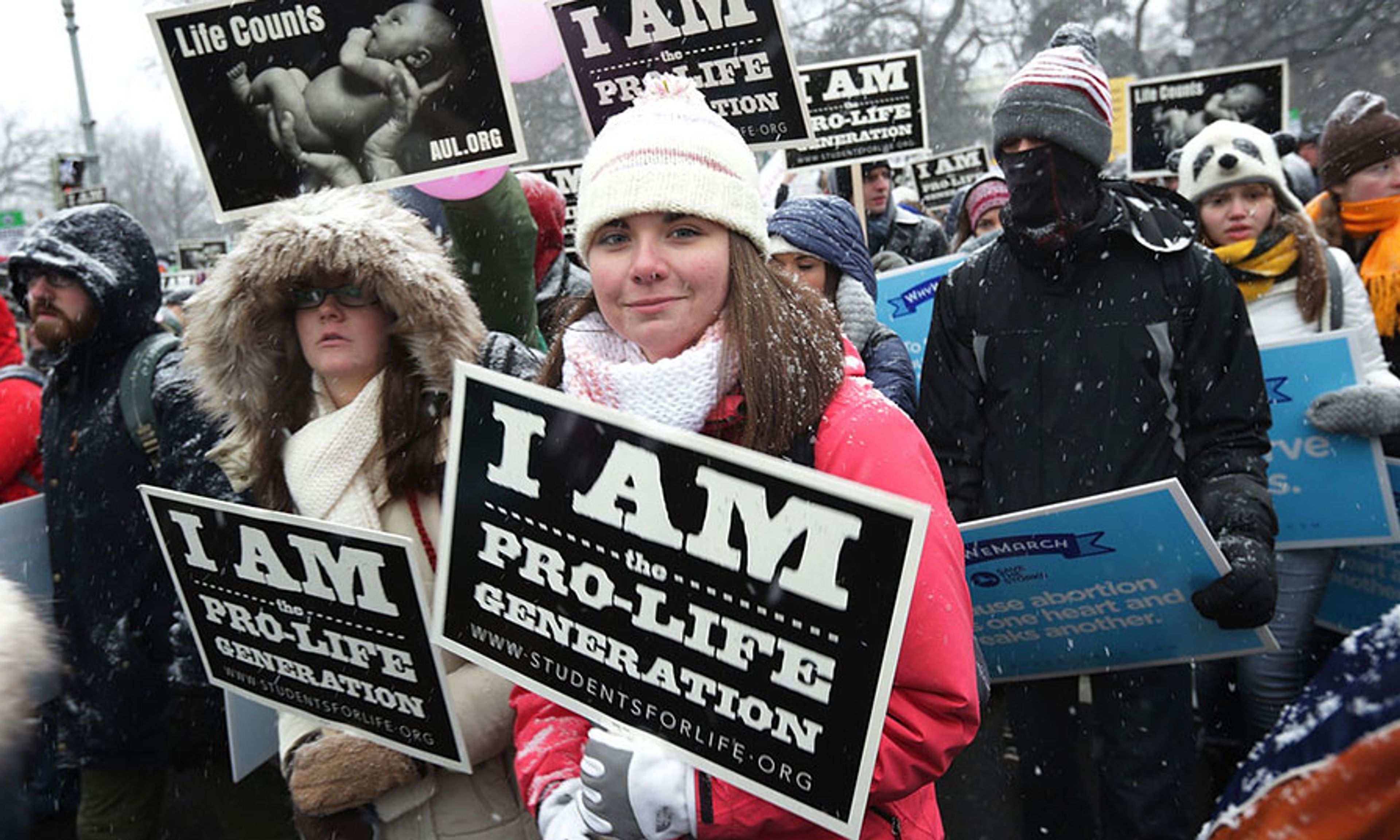
Before the 42nd annual March for Life began on Friday, January 22, a variety of associated activities (education, lobbying, and prayer) happened here, packed with young people and families, despite the impending Snowmageddon on the East Coast. (While some who had planned to travel had to cancel because of the weather, the march went on, even though some of the stalwart witnesses endured long travel delays — including a group of students from the University of Mary in North Dakota with whom I wound up spending 20 hours sitting in the same spot on the Pennsylvania Turnpike.)
The afternoon before the march, people from across the country are gathered around a table for a discussion, hosted by the National Review Institute, about where we are and where we might be going on the topic of the most vulnerable human life. The conversations are intense. And overflowing with gratitude — for lessons learned and gifts received, for opportunities to help people in their most painful moments and throughout their lives. There is hope here.
Earlier in the day, I had hosted a panel at the March for Life’s annual opening conference, during which Miami radiologist Dr. Grazie Christie said a few words about the assisted-suicide debate and the risk of dehumanizing human life through a false sense of what is merciful.
At lunch, a woman named Karen talks about her past in the hope that others might not repeat it. She tells of the regret she feels and the pain it has brought her family. She talks, too, about the choice she didn’t fully have, young and scared, her mother driving her to the appointment. Lizanne talks about her daughter, because she is her gift of joy and Lizanne doesn’t want scared mothers to be deprived of what she has known.
Earlier in the day, former Cosmo author Sue Ellen Browder talked about the freedom that comes in dissociating oneself from abortion advocacy — an interior freedom that the culture of death shackles. The hashtag on Twitter this year for those marching in protest of the Supreme Court’s Roe v. Wade decision is #WhyWeMarch. Browder and the rest of us march against a relativism that dehumanizes.
Relativism is, as it happens, something Pope Francis talks about in his book-length interview, The Name of God Is Mercy. He explains: “Humanity is wounded, deeply wounded. Either it does not know how to cure its wounds or it believes that it’s not possible to cure them. And it’s not just a question of social ills or people wounded by poverty, social exclusion, or one of the many slaveries of the third millennium. Relativism wounds people too: All things seem equal, all things appear the same. Humanity needs mercy and compassion.”
The pro-life movement is often seen as lacking compassion. Even as I sit down at the table with several Sisters of Life — some of the women dedicated to being the arms and hands and heart of Jesus to women and babies and men at their most frightened, vulnerable, and remorseful — the world outside, here in the nation’s capital and throughout society, doesn’t know that people like this exist, ready to love and support and walk with anyone who asks for help, looking for hope.
Abby Johnson, sitting across from me, takes this mercy business even a step further. If you’re looking for something radical in the world, she’s it. She is a former Planned Parenthood clinic director, and she now runs a ministry, And Then There Were None, dedicated to helping people leave the abortion industry.
A few months back, when David Daleiden started releasing his Center for Medical Progress undercover videos of Planned Parenthood — videos chronicling crass financial transactions and discussions of babies’ body parts — I asked Johnson what she thought people might need to hear. As it happens, the Sisters of Life and others say that their post-abortion healing work has been on the increase in these past months. Johnson, sensitive to this, said to me: “I want women and men to know that there is healing from aborting your own child or participating in the abortion industry. We aren’t meant to suffer in silence or suffer alone. We are meant to voice our burdens to others so that they can accompany us on our healing journey.”
She also said: “In this country, we are currently seeing a lot of outrage regarding abortion and the abortion industry. And that’s fine. But we need to remember that there are real people inside those clinics who are worthy of healing and redemption — they deserve a new and better life than the one they are currently living. We don’t need rage in this movement. We need action that is bathed in compassion and mercy. That is what brings about true conversion. We don’t need anger. There is enough anger and hurt inside those abortion-clinic walls. Ours needs to be the voice of hope.”
Abby Johnson will not dehumanize anyone. She knows that people who work in abortion clinics are, well, people, too.
Her hope — and this is where I think she is among the best models of the kind of radical mercy that Pope Francis talks about — extends to those who work in abortion clinics. She doesn’t demonize. She doesn’t assume. She will not dehumanize anyone. She knows that people who work in abortion clinics are, well, people, too. They often are parents, she explains during the National Review Institute lunch I’m hosting. They need to make a living, put food on the table. They haven’t necessarily thought through the good and evil of their job, or, if they have, they may very well think they are on the good side. She doesn’t agree, but she was once in their shoes. She’s happy to help them if they want to get out of this grave business. And she wants them to know that pro-life love extends to them.
Talk about neuralgic issues! But one speaker at the conference described the annual March for Life and the pro-life movement itself as an “army of love.” May it ever be so. And may it inundate a poisoned politics and culture with its love.
— Kathryn Jean Lopez is senior fellow at the National Review Institute and editor-at-large of National Review Online. She is co-author of the new revised and updated edition of How to Defend the Faith without Raising Your Voice (available from Our Sunday Visitor and Amazon). Sign up for her weekly newsletter here. This column is based on one available exclusively through Andrews McMeel Universal’s Newspaper Enterprise Association.



Comments