As the U.S. Senate weighs a 2,074-page health-care “reform” bill, supporters of a government option for medical coverage consider this the finest federal initiative since the Emancipation Proclamation. Yet today’s headlines show government severely bungling its current health-care duties. Expanding Uncle Sam’s medical portfolio is a prescription for fraud, fiscal incompetence, and rampant mismanagement on the clinical frontlines. Fraud devours some $60 billion — or 13.3 percent — of Medicare’s $452 billion budget. “Rather than stealing $100,000 or $200,000,” federal prosecutor Kirk Ogrosky said on October 25’s 60 Minutes, criminals “can steal $100 million.” One thief named “Tony” told CBS’s Steve Kroft that he robbed $20 million from Medicare. It was “real easy,” “Tony” said. “It was like taking candy from a baby.” He registered bogus medical companies, bought stolen doctor and patient ID numbers, and then billed Medicare for phantom wheelchairs, phony artificial limbs, and more. Medicare soon delivered $20,000 to $40,000 electronically into “Tony’s” bank account — daily. Kroft said his findings raise “troubling questions about our government’s ability to manage a medical bureaucracy.” Sen. Charles Grassley (R., Iowa) recently found that Medicare administrators received 30 serious fraud warnings over three years, primarily during the Bush administration, and simply ignored half of them. Medicare failed to investigate complaints that it reimbursed one company for injected drugs “at doses that were not medically feasible,” one letter explained. Rather than the proper $74 per dose, Medicare sent this provider $4,464. Another recent report uncovered $18.1 billion in improper Medicaid payments, or 9.6 percent of that program’s claims. Lacking the “evil and greedy” private insurers’ profit motive, Medicare managers have no incentive to uproot such malfeasance. Medicare staffers rarely are corrupt; but with their pay and promotions not tethered to any bottom line, they have little reason to worry about who gets paid what. Michael McGaughan observed in the November 13 Pantagraph.com that the top 14 health-insurance companies earned aggregated profits of $8.6 billion last year on combined revenues of $275.6 billion, according to the May 4 Fortune. This translates into 3.12 percent in “greedy” profits in the private option versus 13.3 percent fraud in the public option. Greed suddenly looks pretty good. Meanwhile, doctors routinely wait and wait to get paid less and less by Medicaid. According to Athena Health’s PayerView report, North Carolina is the fastest state Medicaid system, paying doctors in 40.6 days. Still, it lags Coventry Health Care, a private insurer and the eighth-fastest of eight “national payers” that Athena measured. Coventry needed 38.5 days to issue checks. (Medicare Part B was ranked fifth among “national payers” at 33.4 days.) Among 14 state Medicaid systems that Athena rated, six take 77.7 to 89.7 days to pay. Medicaid of New York is the biggest deadbeat, averaging 160.9 days (or nearly six months) before whipping out its checkbook. Medicaid systems also reject claims more than do private insurers. While Humana, the No. 1-ranked national payer, has a 5.3 percent denial rate, No. 7 Medicare Part B spurns 8.7 percent of claims. Among Medicaid systems, No. 1 Illinois denies 9.1 percent of its claims. Medicaid of California’s refusal rate is 19.5 percent, while No. 12 New York’s is 34.1 percent. Fourteenth-rated Florida denies 38.8 percent of Medicaid claims. Government reimbursements also trail inflation. In 1997, Medicare paid general surgeons $574 for each complex hemorrhoidectomy. In 2008, that procedure paid $390. This is barely half the $770 needed to equal inflation. “Due to Medicaid’s and Medicare’s low reimbursement values, high denial rates, and delays to reimbursement by the governmental payers, many physicians’ offices are choosing more and more not to accept patients with these payers,” says Dr. Soumi Eachempati, M.D., associate professor of surgery and public health at Manhattan’s Weill Cornell Medical College. Because of these problems and Medicaid and Medicare’s apparent tendency “to hold payments for no apparent reason other than a shortfall of their funds,” Dr. Eachempati says, “myself and many providers are against increasing government intervention in health care.” “At least 20 physician-specialty organizations including the American College of Surgeons have come out in opposition to the current health-reform bills,” Dr. Eachempati told the Republican Governors Association Thursday in Austin, Tex. “Physicians feel that increased government intervention in health care will force them to be even more indentured to Medicaid and Medicare which perpetually appear to be on the verge of collapse. I personally know multiple physicians who suffered through a freeze on Medicare payments last summer as the state of Virginia ran out of Medicare funds.” The government option also impedes distribution of the swine-flu vaccine. Washington has injected little more than confusion into this situation. According to early promises, 120 million doses were to be deployed by mid-October. Now, only 30 million doses will be on hand, but not until late November. “I think we led expectations of availability to be higher than they have been,” Assistant Surgeon General Anne Schuchat told the Senate Homeland Security Committee on Tuesday. “That, I think, can lead to frustration.” Committee chairman Joseph Lieberman (I., Conn.) said, “I worry that we are undermining confidence, generally, in the public-health system.” Sen. Susan Collins (R., Me.) scolded Health and Human Services Secretary Kathleen Sebelius for offering senators “generalizations and non-answers” on this vital matter. The government option in medicine speeds taxpayer dollars into the hands of crooks, stalls payments to honest doctors, and stymies Americans desperate for swine-flu shots. Imagine how much more the government option could accomplish with a trillion dollars and an appetite for one-sixth of the U.S. economy. — Deroy Murdock is a New York-based columnist with the Scripps Howard News Service and a media fellow with the Hoover Institution.
Medicare: A Glimpse of the Future?
The government option in health is already a miserable failure.
Share this story
About the Author
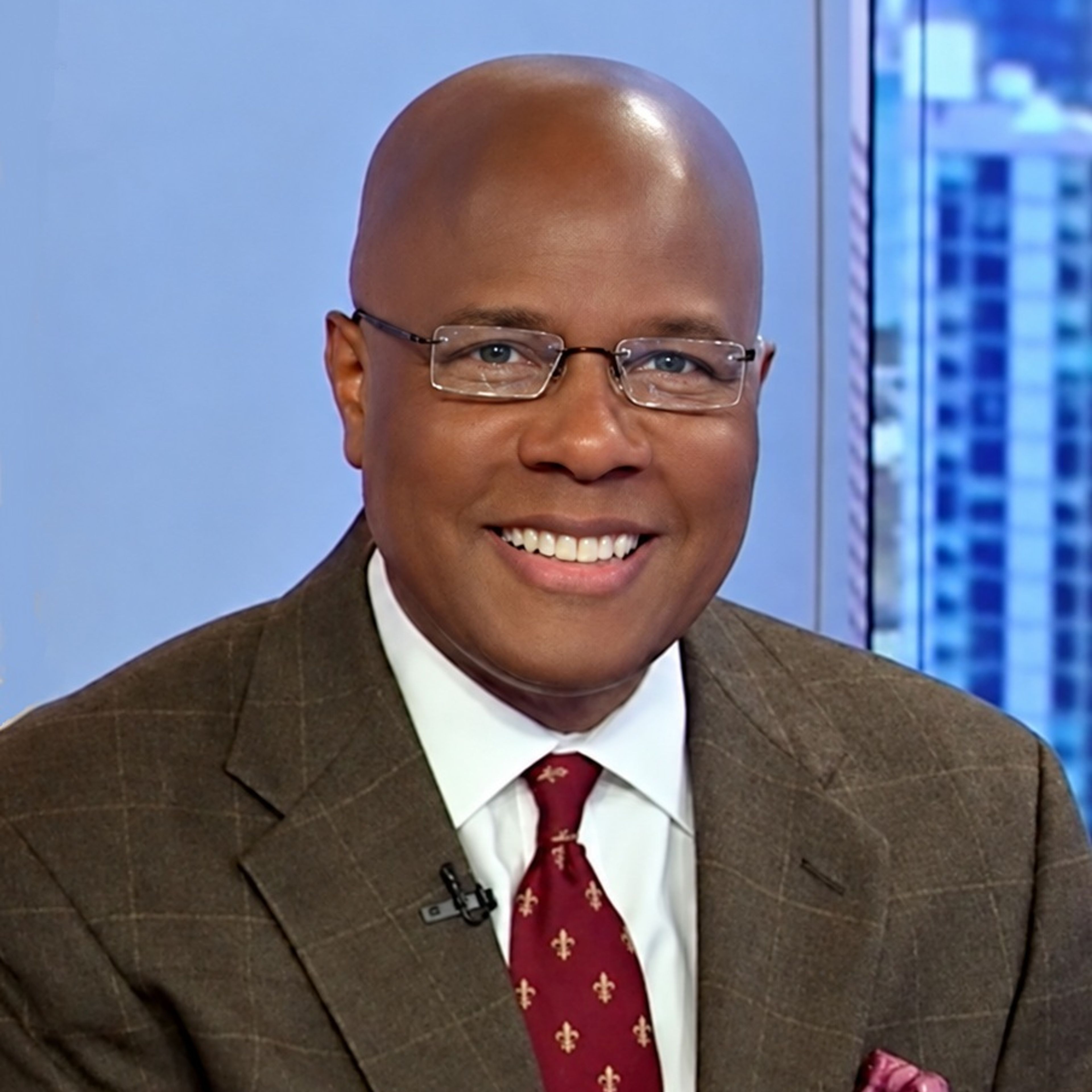
Deroy Murdock is a Manhattan-based Fox News contributor and political commentor.
Advertisement
Advertisement





Comments