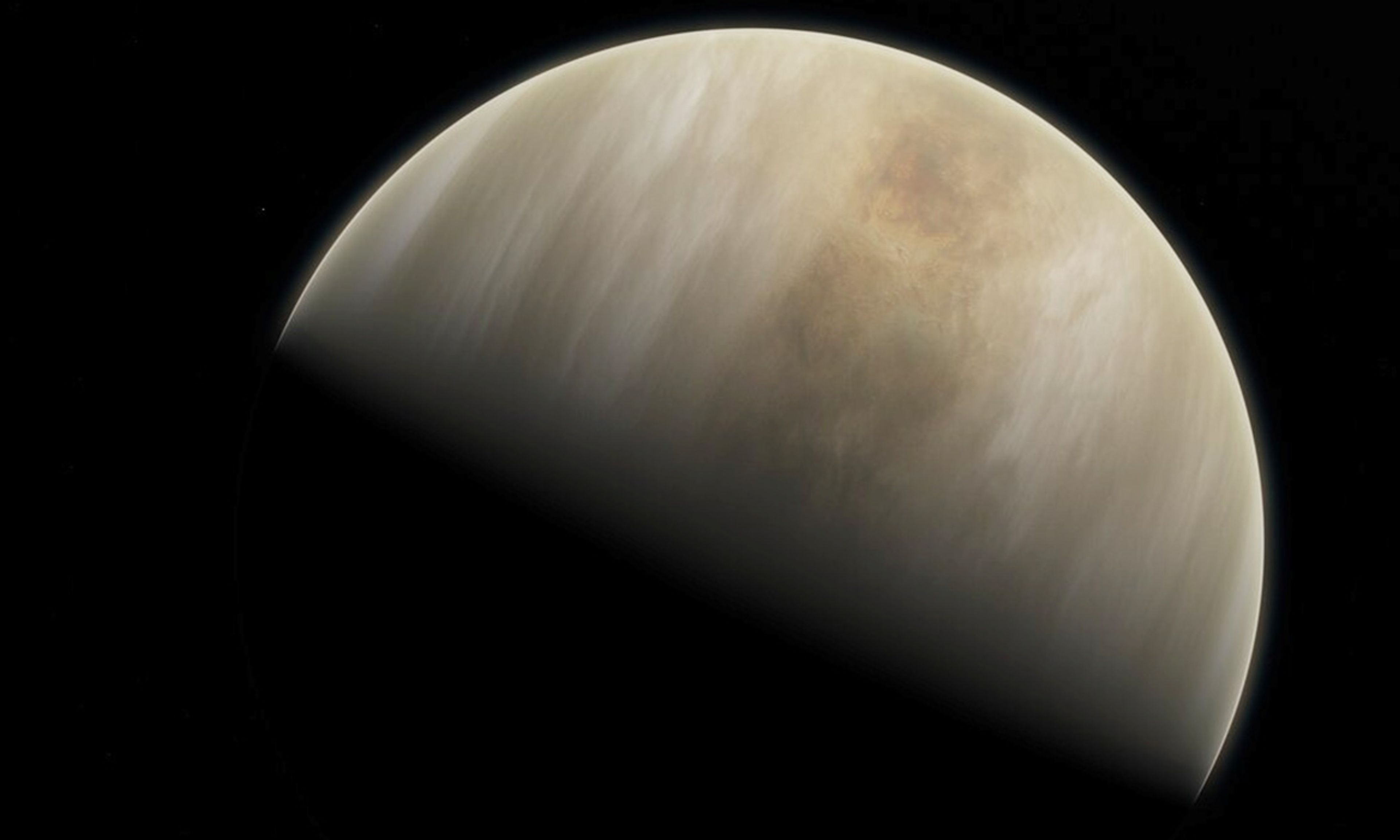
On September 17 a group of scientists using Earth-based telescopes announced that they had detected phosphine in the atmosphere of Venus. On Earth, phosphine is almost always produced by microbial activity. While geological processes are known that can, in principle, produce phosphine, the concentrations of the gas found on Venus, while small, were nevertheless much too high to be attributable to such sources. So how could the phosphine hove gotten there? The simplest explanation is life.
But how is that possible? Venus is nearly a twin for Earth in size and 30 percent closer to the Sun. Because it is closer it is warmer, but if solar distance were the sole consideration, the planet’s temperature would be expected to average about 60°C, with more clement climates near the poles. Thus, through the 1950s, many writers envisioned Venus as a world of steaming jungles, perhaps abounding with creatures comparable to the giant amphibians and reptiles that adorned Earth during its warmer prehistoric past. This glorious picture, however, was ruined forever when NASA’s Mariner 2 probe flew by Venus in 1962 and took measurements showing the planet’s surface temperature to be about 450°C — hot enough to melt lead. Apparently Venus’s thick carbon dioxide atmosphere was doing much more than hiding the planet’s surface from our view. It was creating a “greenhouse effect,” trapping heat beneath its blanket of clouds, with the result being a planet far too hot for life.





Comments