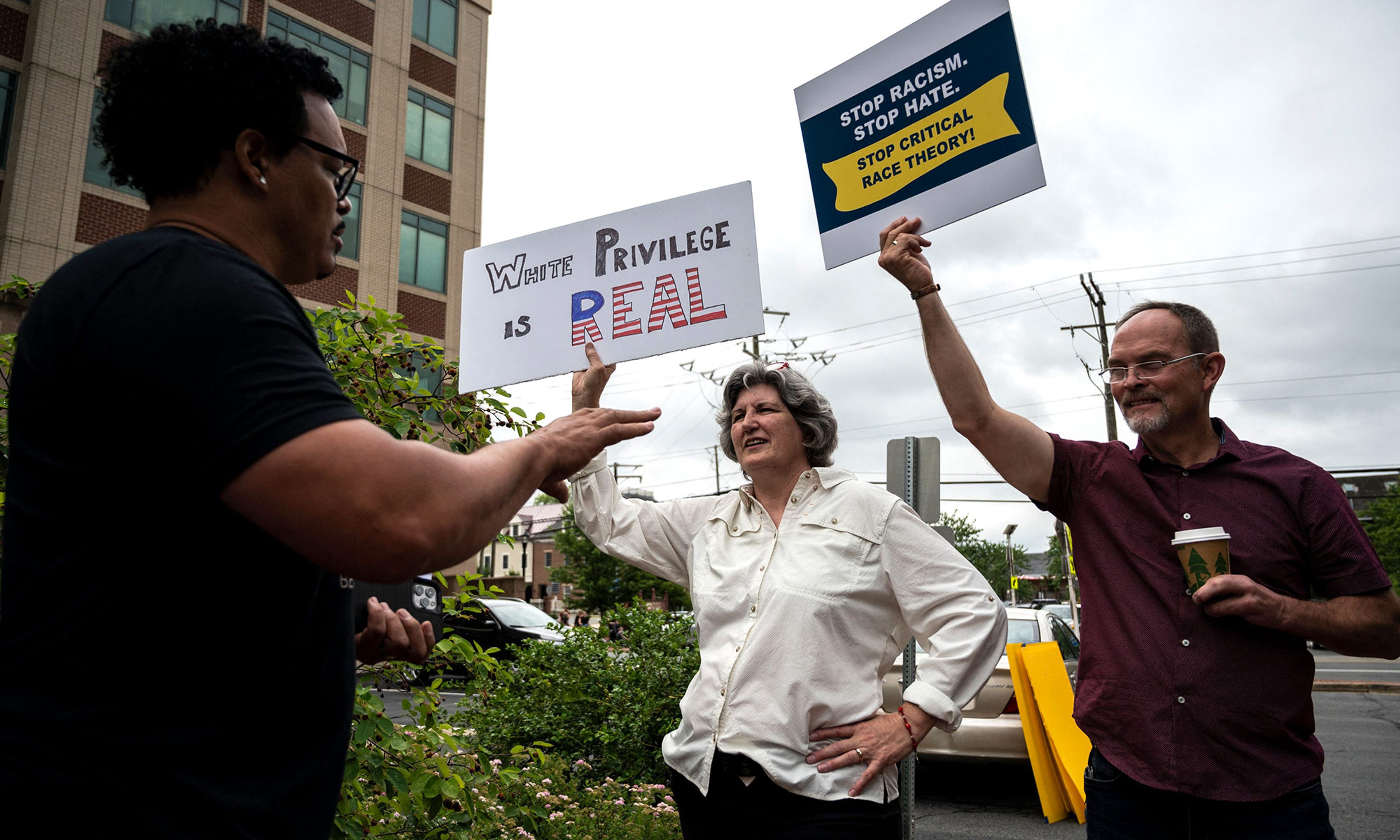
Last week, Republican Glenn Youngkin claimed an upset victory in Virginia’s closely watched gubernatorial race. Youngkin’s win was fueled by parental frustration with schooling, especially on the amorphous but controversial subject of critical race theory (CRT), an avowedly revolutionary doctrine. Don’t take it from me, take it from Richard Delgado and Jean Stefancic, who explained in Critical Race Theory: An Introduction, that “critical race theory questions the very foundations of the liberal order, including equality theory, legal reasoning, Enlightenment rationalism, and neutral principles of constitutional law.”
But you’d never know that from reading the coverage of the CRT debates. Instead, news accounts seem to suggest that the argument is really about whether “schools should teach slavery.” Meanwhile, they elide the troubling CRT-inspired practices that have spurred parental pushback, such as race-based affinity groups, “privilege walks,” “anti-racist” instruction (which holds, for instance, that “independence and individual achievement” are racist hallmarks of “white individualism”), demands that schools reject “colorblind” rules and norms, or history curricula which posit that the United States was founded not as a democracy but a “slavocracy.”



Comments