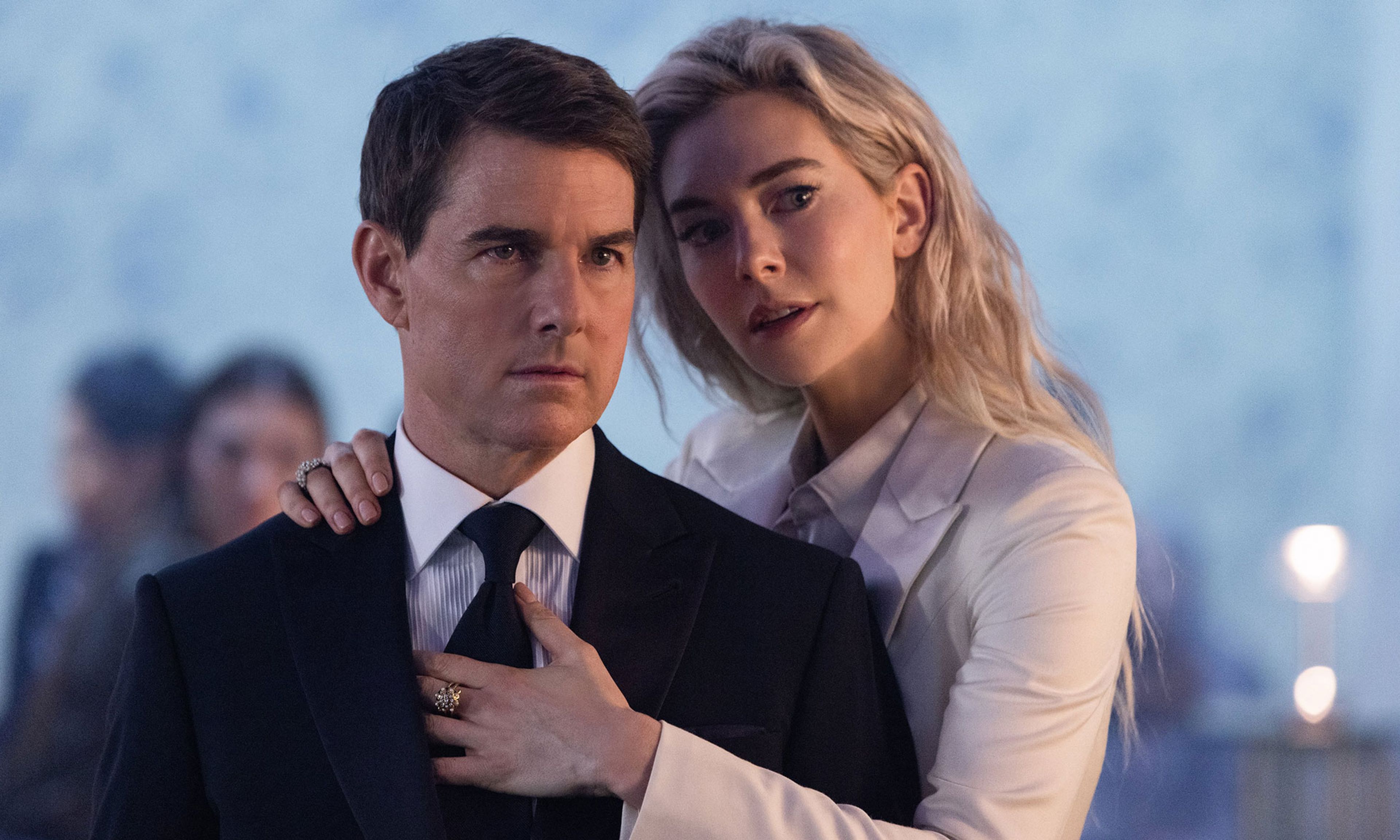
The first thing theatrical patrons of Mission: Impossible — Dead Reckoning Part One see, before even the movie itself, is a thank-you message from Christopher McQuarrie, its writer-director, and Tom Cruise, its star. It is well earned: The duo have taken the now decades-old Mission: Impossible franchise to unexpected and somewhat improbable commercial and critical heights, and they deserve to be front of mind as moviegoers enjoy the thrills that unfold. But it also serves as a tribute to Tom Cruise, now 61 yet possibly now the most important — the only? — true movie star left in a cinematic environment driven increasingly by preexisting brands.
Yes, Mission: Impossible is one such brand, having emerged from a popular 1960s–’70s TV show. But the films themselves have changed a great deal since Brian De Palma’s 1996 initial entry, a taut action thriller heavily laden with his style. Watching it quickly before Dead Reckoning (as I did) makes this especially clear. In subsequent entries, directors likewise bent the final product in their stylistic visions: John Woo in the second with his doves, J. J. Abrams in the third with his lens flares. Certain things they cannot avoid, however: twisty plotting, face masks, and cool stunts — usually at the climax, often atop vehicles.




Comments