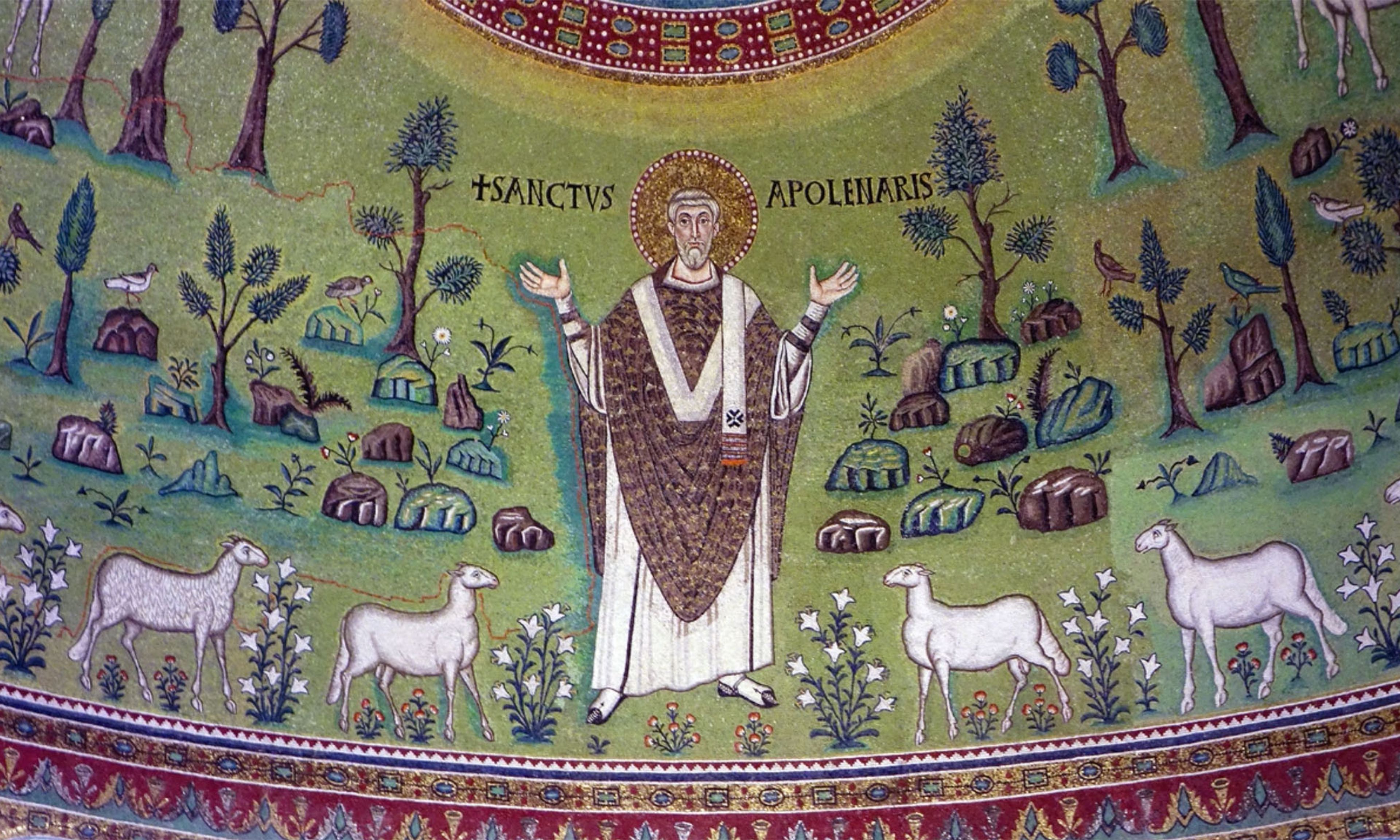
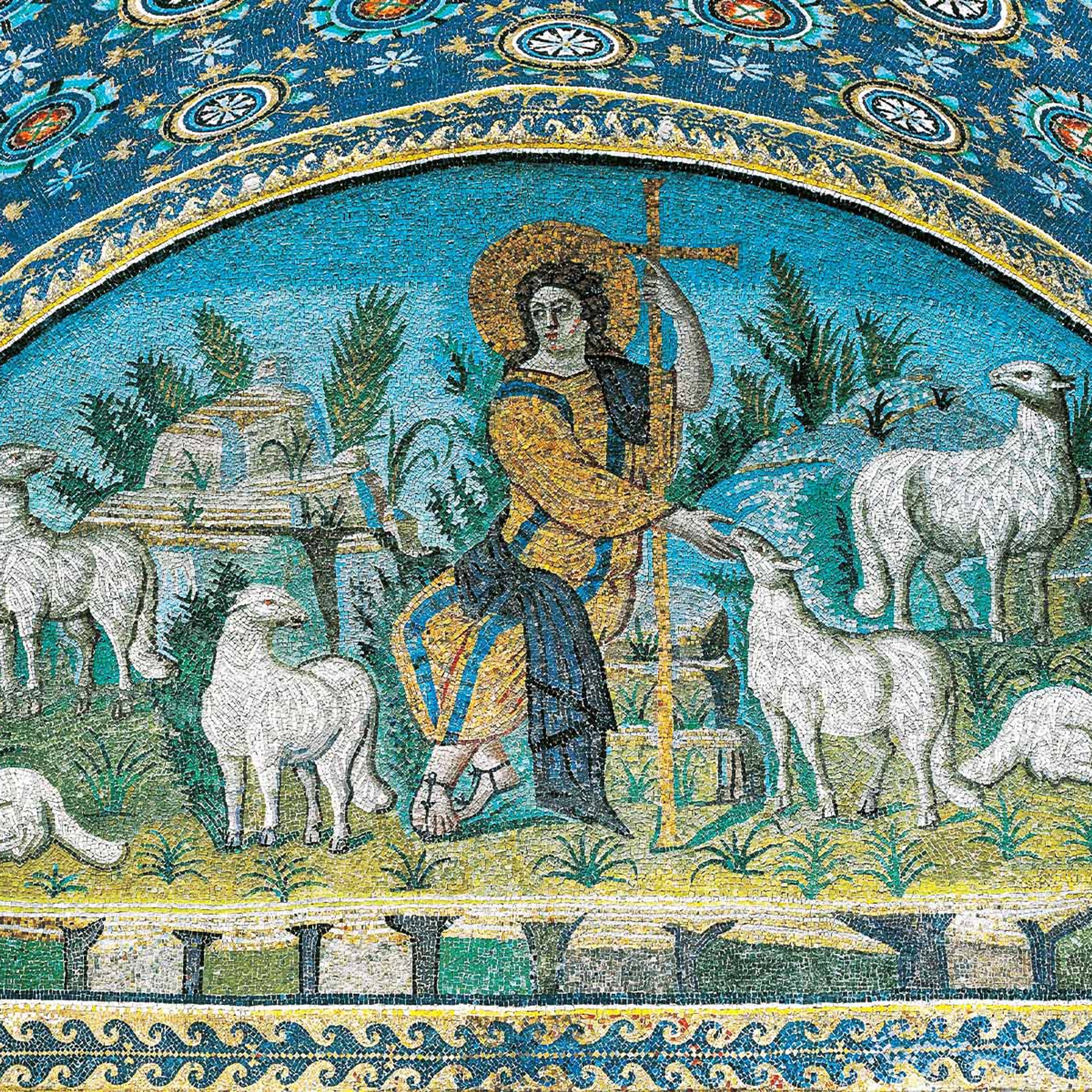
On Thursday I wrote about mosaics — not the best-known medium for art — and not any old mosaics but the ones in Ravenna in Emilia-Romagna, a hefty region in Italy wedged among Tuscany, Lombardy, the Veneto, and the Marche. From the tomb of Galla Placidia, the last of the Roman Empire’s femme fatales and premier intriguers, to Sant’Apollinare Nuovo and San Vitale — a scant 150 years or so — we see the end of Roman naturalism in art and the flower of Byzantium’s flat abstraction. It’s an evolution not only in style but in substance. Divinities no longer walked among us but existed as insubstantial, as symbols.
Whether you absorb them as theology or for their beauty, Galla Placidia’s tomb and Ravenna’s two baptisteries and three churches are among Europe’s great monuments. Today I’ll write about one last church in Ravenna and then jump across the sea, back home, and America’s mosaic treasures. The ne plus ultra are to be found in Lincoln, Neb., at the state capitol, but that’s Saturday’s story.




Comments