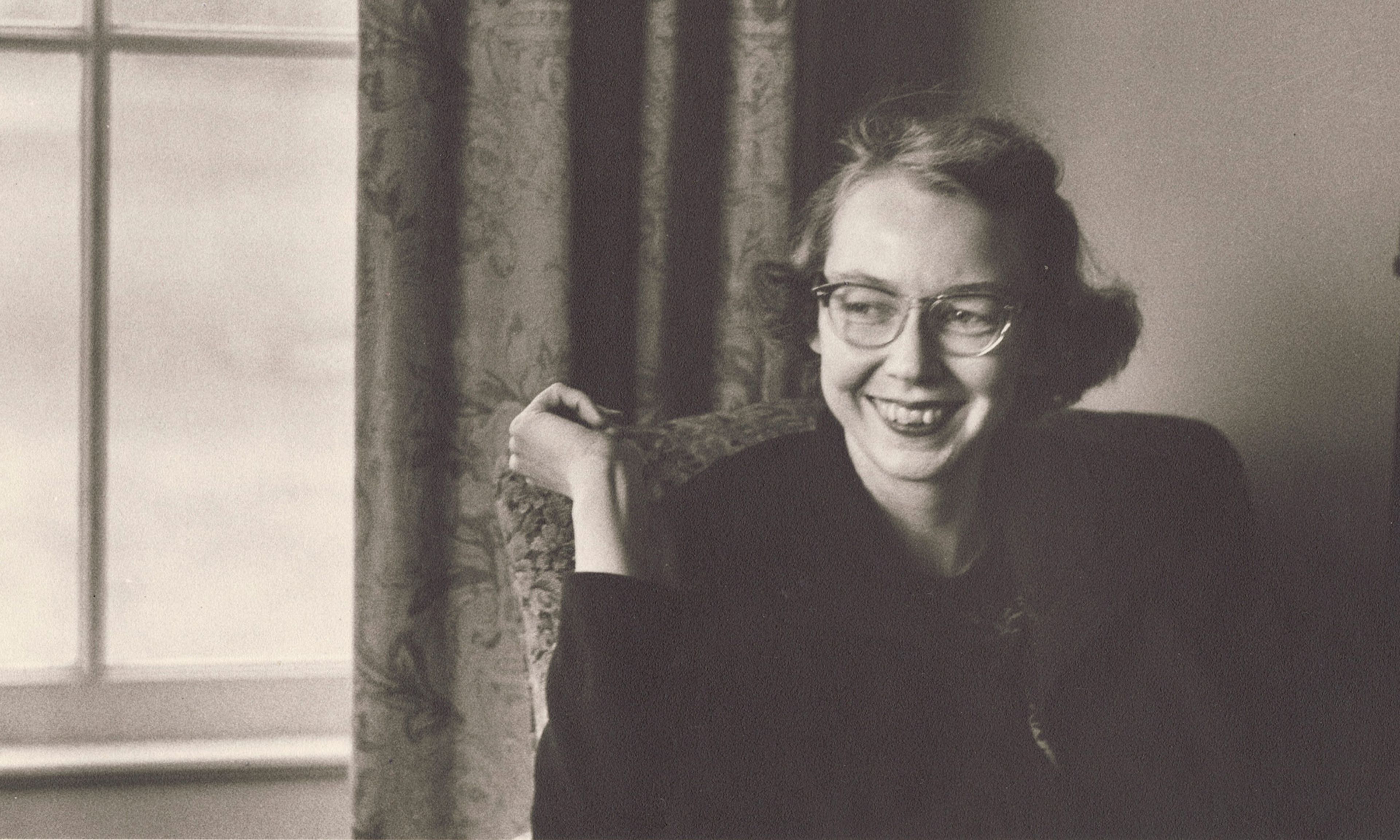
Few writers can say they even attempted to accomplish what Flannery O’Connor did: to carve out their own distinctive genre. O’Connor’s two novels and 32 short stories combined three factors — the Southern, the Catholic, and the grotesque — to create a black-comic effect like no other. “She just saw the mystery of the craziness,” says fellow novelist Alice Walker.
Biography is often a fallow field in which to search for clues to a writer’s imagination, but not so in this case, as the documentary Flannery ably shows us. Mary Flannery O’Connor had a sequestered, tormented, devout, and brief life, largely spent on a dairy farm in Georgia with a mother she hated and ruthlessly satirized. (Across the way lived the family of Walker, who would go on to write The Color Purple.) O’Connor never tired of lampooning the bitterness and cruelty of “old dirty Southland,” as she once called it in a letter. But she corrected the Northerners who considered her work Gothic fantasy. For her, fiction was a “plunge into reality,” not an escape.




Comments