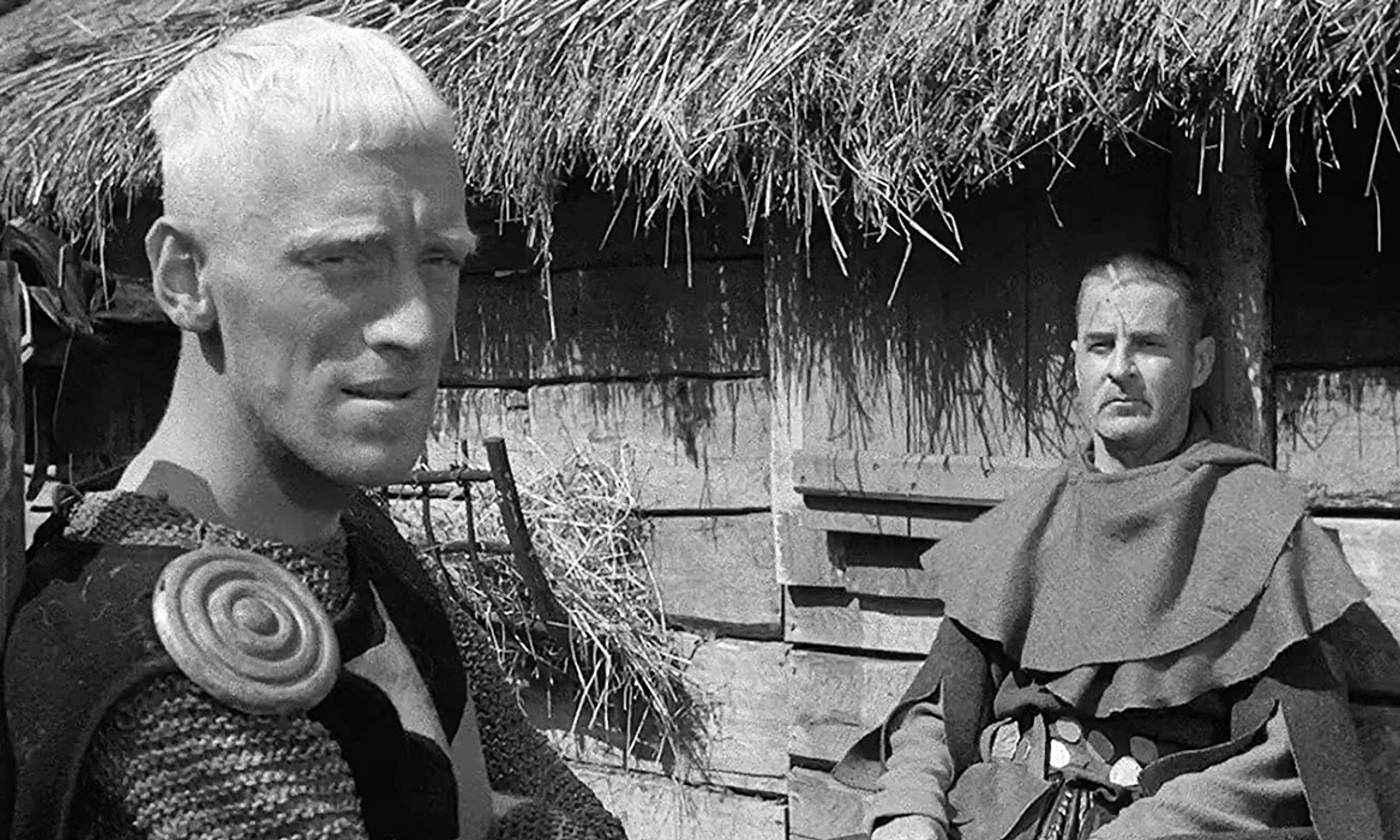
The Seventh Seal is famously one of the most dour, humorless, glum, and forbidding movies ever made. I’d say it’s the longest 90 minutes in cinema if it weren’t for all of the other dour, humorless, g. and f. 90-minute movies made by Ingmar “Chuckles” Bergman. The other day I cued up the movie, fell asleep, cued it up again, fell asleep again, rewound to the falling-asleep part and fell asleep again. Did I mention I made a point of watching it at noon, after drinking three cups of tea, because I remembered all the previous times I fell asleep when I tried to watch it at night? I’ll say this for Ingmar: His films were mostly not good, but they were certainly restful. (I like Smiles of a Summer Night and Fanny and Alexander, however. The latter is five hours long and not at all dull.)
The Seventh Seal (which is streaming on TCM through April 24) has no story to speak of, its characters wander around in a fug of existential dread, and (as Jack Butler writes) it’s frustratingly “ambiguous,” which is the fancy term for “vague.” A pulse-pounding thrill-ride it is not. In its opening minutes, it brings up an absolutely sensational idea, only to waste it: A clever knight (Max von Sydow) just returned from the Crusades staves off the stroke of the Grim Reaper by offering his Royal Deathness a chess match instead. Death loves chess, Death is maybe a little bored by reaping grimly, Death isn’t used to being offered something he actually likes, and Death can always cheat if things don’t go his way anyway. Death agrees to the opportunity, and we all settle in for a master allegorical showdown. And then what happens? There’s a cut, it’s later in the day, the knight wakes up his squire, and the two of them spend the rest of the movie trudging along encountering random people until Bergman finally gets back to the chess match we’ve been awaiting the entire movie.



Comments