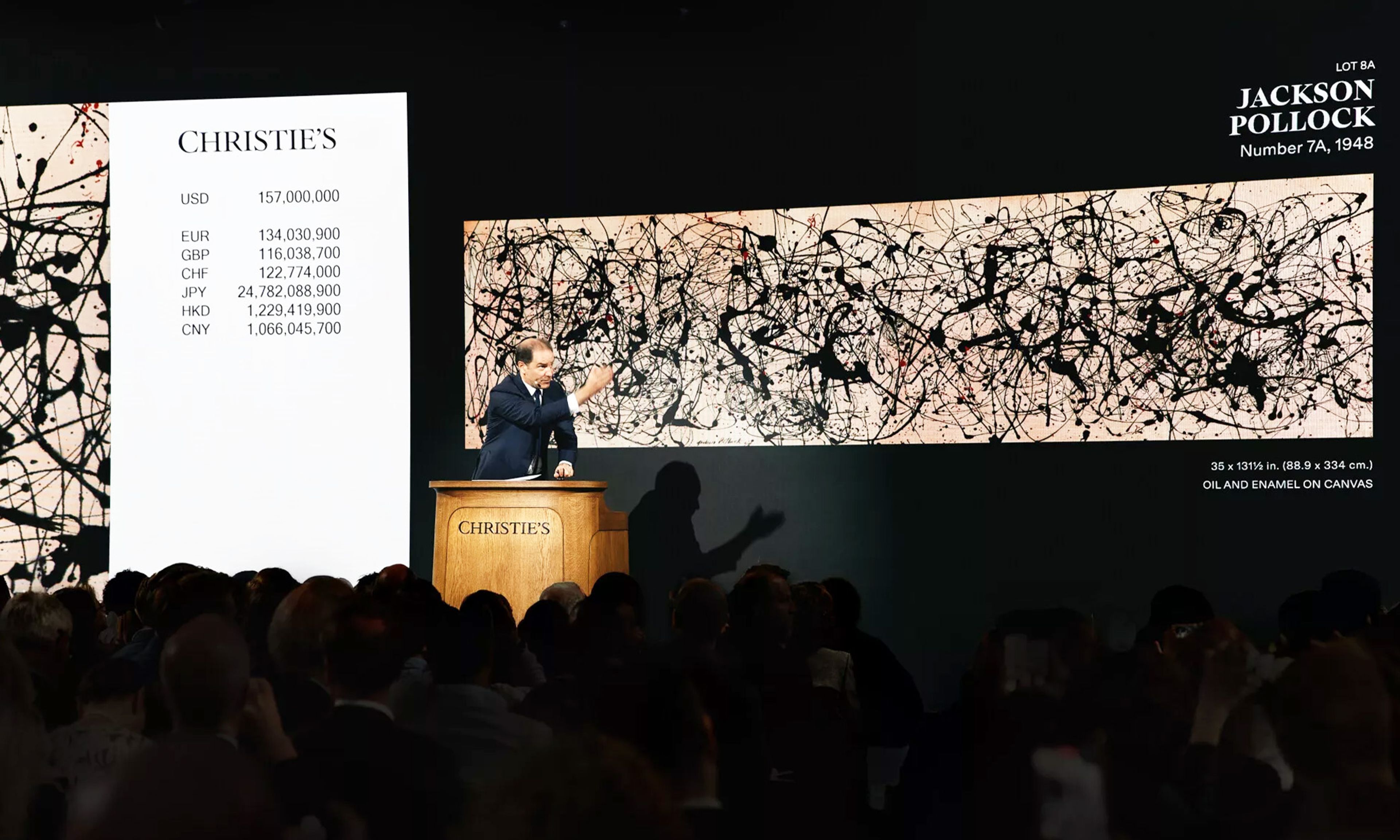
Over the past few days, I went to two art fairs and watched three auctions, my gimlet eye aimed at American art. I’ll start with Monday’s 20th Century Evening Sale at Christie’s, where Agnes Gund’s Rothko sold for $98.4 million, breaking Rothko records. I was very fond of Aggie (1938–2025) and not because of her politics. She was pure limousine liberal, but she was also a lady and a humanist, so she was never in-your-face about it. Her late-period Gilded Age millions came from her Cleveland real estate, bank, and brew-mogul family, and she loved Cleveland as much as New York.
Most of her collection was already dispersed — she gave nearly all of it to museums — but not her Rothko, Two Greens and Red Stripe, painted in 1964. Gund bought it directly from the artist. I’m not a Rothko partisan. I reviewed his massive retrospective in Paris and, after I left, was ready to stand atop the Eiffel Tower and shout “Enough of the stripes already!” Gund’s Rothko is pure magic, though, an emerald square dissolving into jade at the edges, with a royal violet and ultramarine background and a daredevil red stripe between them. In the mid-’60s, Rothko’s colors were darker and more saturated but not somber or sepulchral, as they became before his suicide in 1970.


Comments