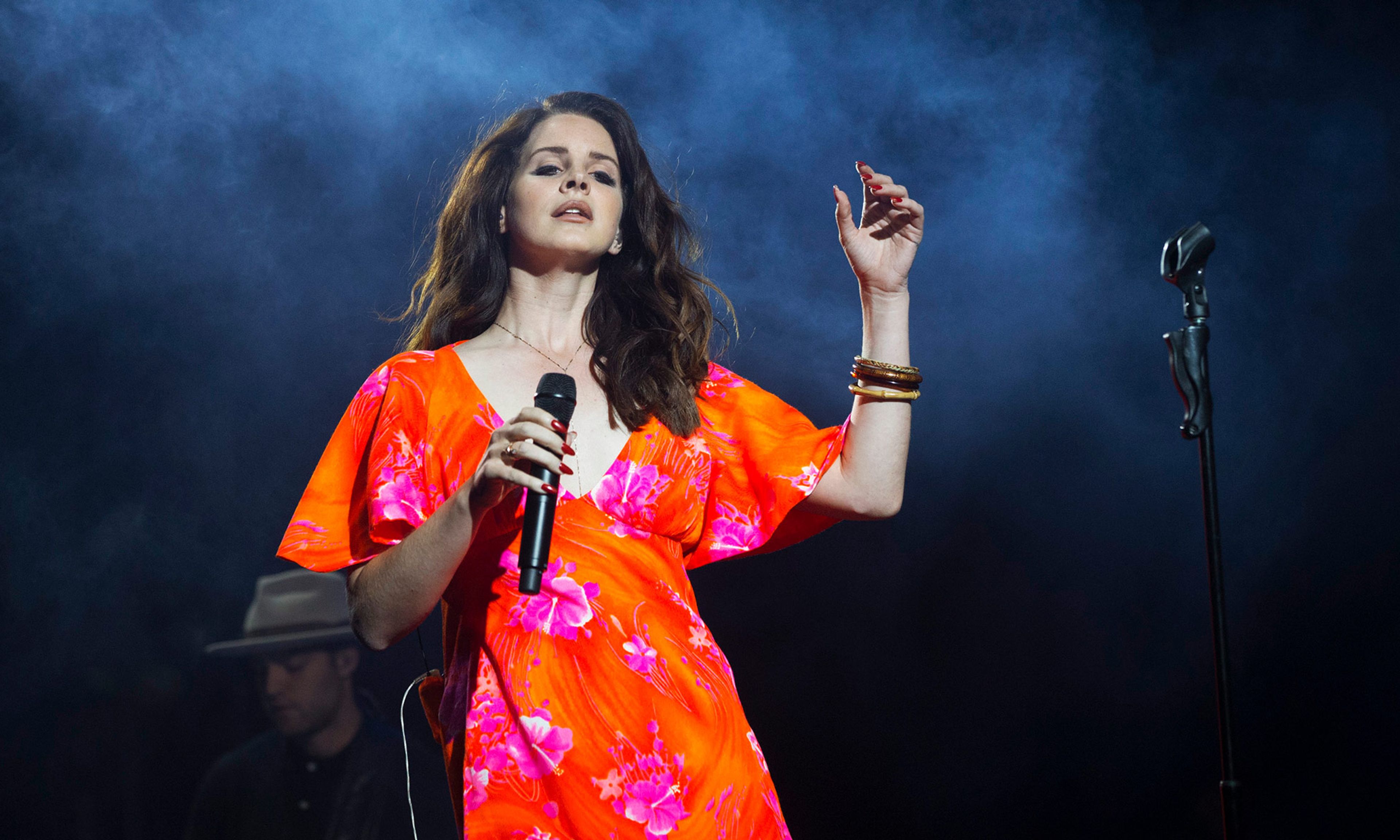
All Lana Del Rey sings about is America. The six-time Grammy nominee, whose eighth album was released earlier this month, is the nation’s last great patriotic pop star. America used to captivate its musicians: From Frank Sinatra’s 1945 The House That I Live In — “The howdy and the handshake / The air a feeling free / And the right to speak your mind out / That’s America to me” — to Jimi Hendrix’s famous 1969 rendition of the “Star Spangled Banner” at Woodstock — “I’m American, so I played it. . . . I thought it was beautiful,” Hendrix later told an interviewer — our nation’s frontier spirit has long captured the imagination of artists. But today’s popular art is entirely devoid of this joie de vivre. Even the cultural industry’s anti-Americanism seems dreary, bureaucratic, and played-out — more often a recitation of pre-written corporate lines than a genuine rebellion against the powers that be.
Del Rey is the exception to all of this. The 36-year-old’s breakout hit, a viral homemade music video for her 2011 single “Video Games,” was an early expression of the wistful kind of Americana that would come to define her brand. The single’s dreamy tone, which featured Del Rey’s operatic voice rising and falling over the swells of a background string quartet — “Singin’ in the old bars, swinging with the old stars / Livin’ for the fame / Kissin’ in the blue dark, Playin’ pool and wild darts / And video games” — is accompanied by a warm tapestry of fly-by vintage images that the singer had personally been collecting since she was 17 years old: fuzzy clips of two lovers speeding along an empty country road on a motorcycle, old shots of mid-century Hollywood celebrities, and grainy segments of small-town America. It is a feeling more than an articulable message, recognizable but not entirely accessible to words — a warm memory of an old lover, recollected in the quiet twilight of life. That’s Del Rey’s music. It’s Del Rey’s America, too; a poet’s America more than a politician’s.




Comments