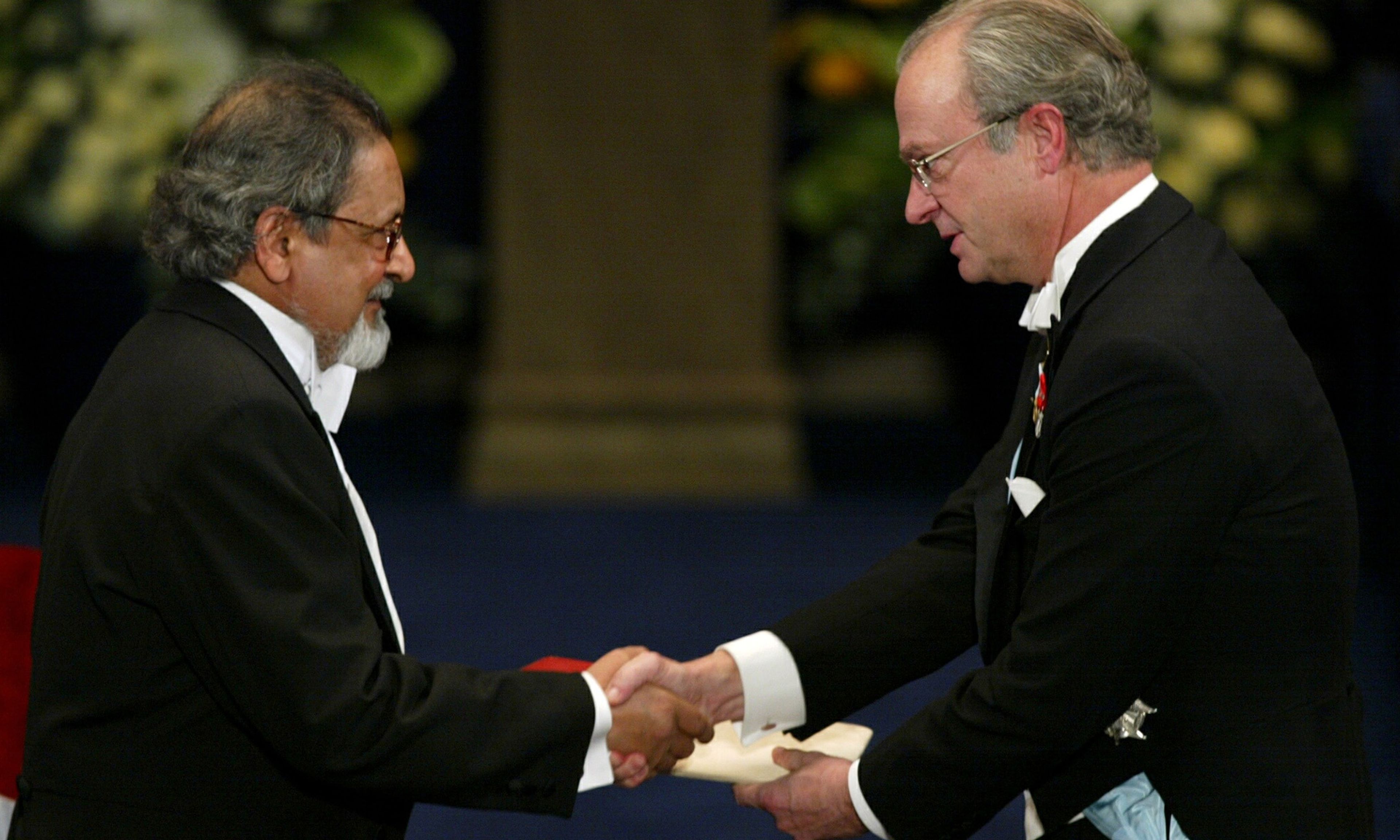
During last month’s remembrances for the 25th anniversary of the 9/11 terrorist attacks, many Americans reflected on the lingering effects of and reactions to the terrible event. One of the more gratifying subsequent events has been under-discussed. Exactly one month after the al-Qaeda attacks that killed nearly 3,000 people, the Swedish Academy announced that Sir V. S. Naipaul (1932–2018) was the recipient of the 2001 Nobel Prize in Literature.
Naipaul, born in Trinidad but a British resident for most of his life, had been nominated for the prize as early as 1972. By 2001, he had written several exceptional novels (A House for Mr. Biswas, 1961; A Bend in the River, 1979; The Enigma of Arrival, 1987) and remarkable nonfiction narratives (The Loss of El Dorado, 1969; Among the Believers, 1981; Beyond Belief, 1998). These works depict the demeaning and destructive elements of colonial rule yet also critique postcolonial activism and the dangers of fundamentalist Islam. In the wake of Islamism’s deadliest attacks, Naipaul’s perspective was particularly timely.





Comments