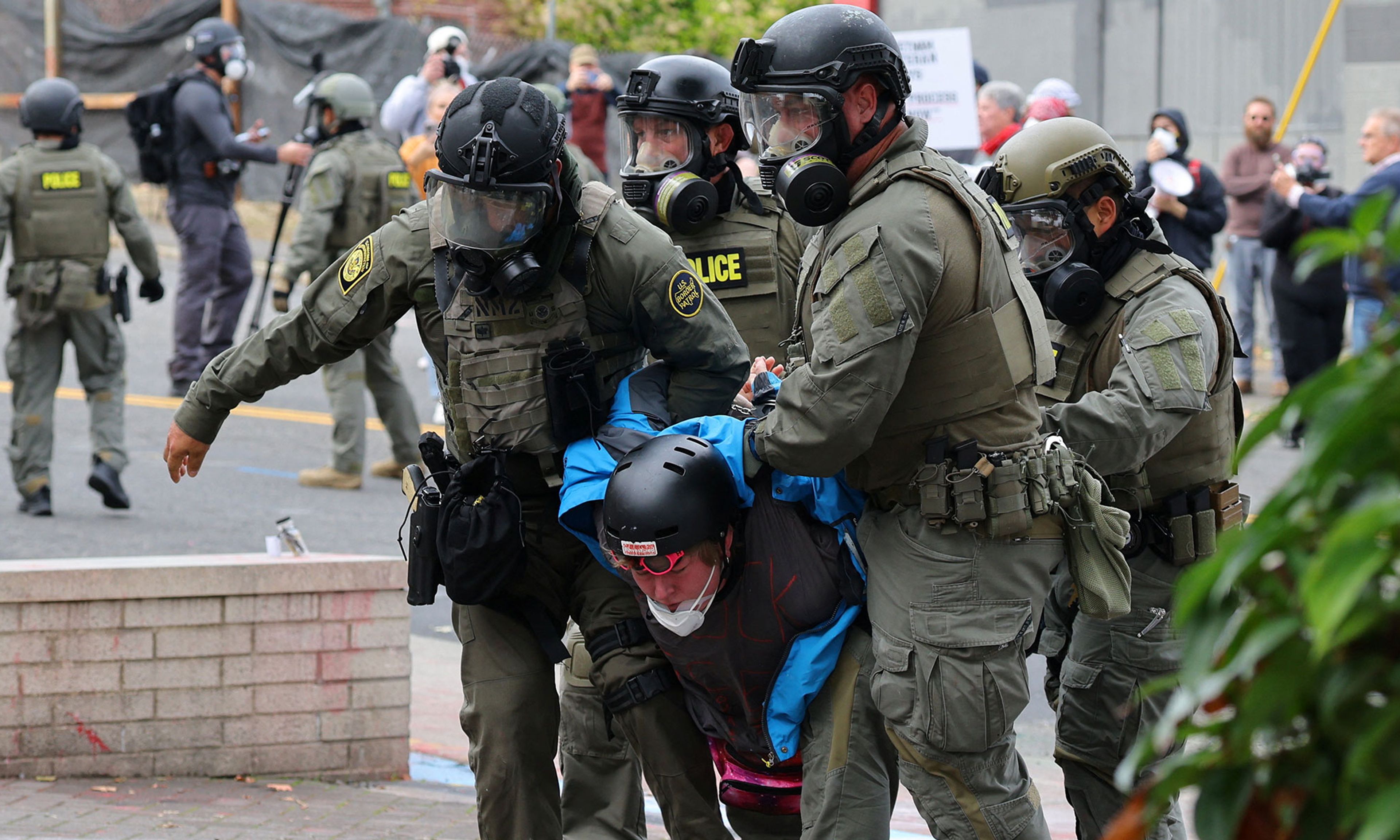
In a May memo titled “Helping people make their voices heard,” Portland, Ore., police officer Jessica Ruch — a “dialogue liaison officer” tasked with coordinating police actions with the professional protesters — made it clear that her sympathies are more with the protesters than her city.
“You don’t sound like a riot cop,” the imaginary interlocutor in her memo reacted after hearing Ruch heap praise on the protest movements of which she was once a part. “Right,” she replied to herself. “We don’t have a riot squad any more. That’s an antiquated model.” The Portland PD’s focus isn’t on proactively policing menacing elements in the streets. It’s on “safety,” including that of demonstrators, who may be as threatened by lawless elements as they are by law enforcement. “We don’t want to be the bad guys,” Ruch concluded.





Comments