‘We’re looking at a disaster in November,” predicts Rep. Jim Ramstad (R., Minn.), who’s retiring this year. “I’ve seen the predictions. I’ve seen the polls. I can only conclude it’s going to be a tsunami.”
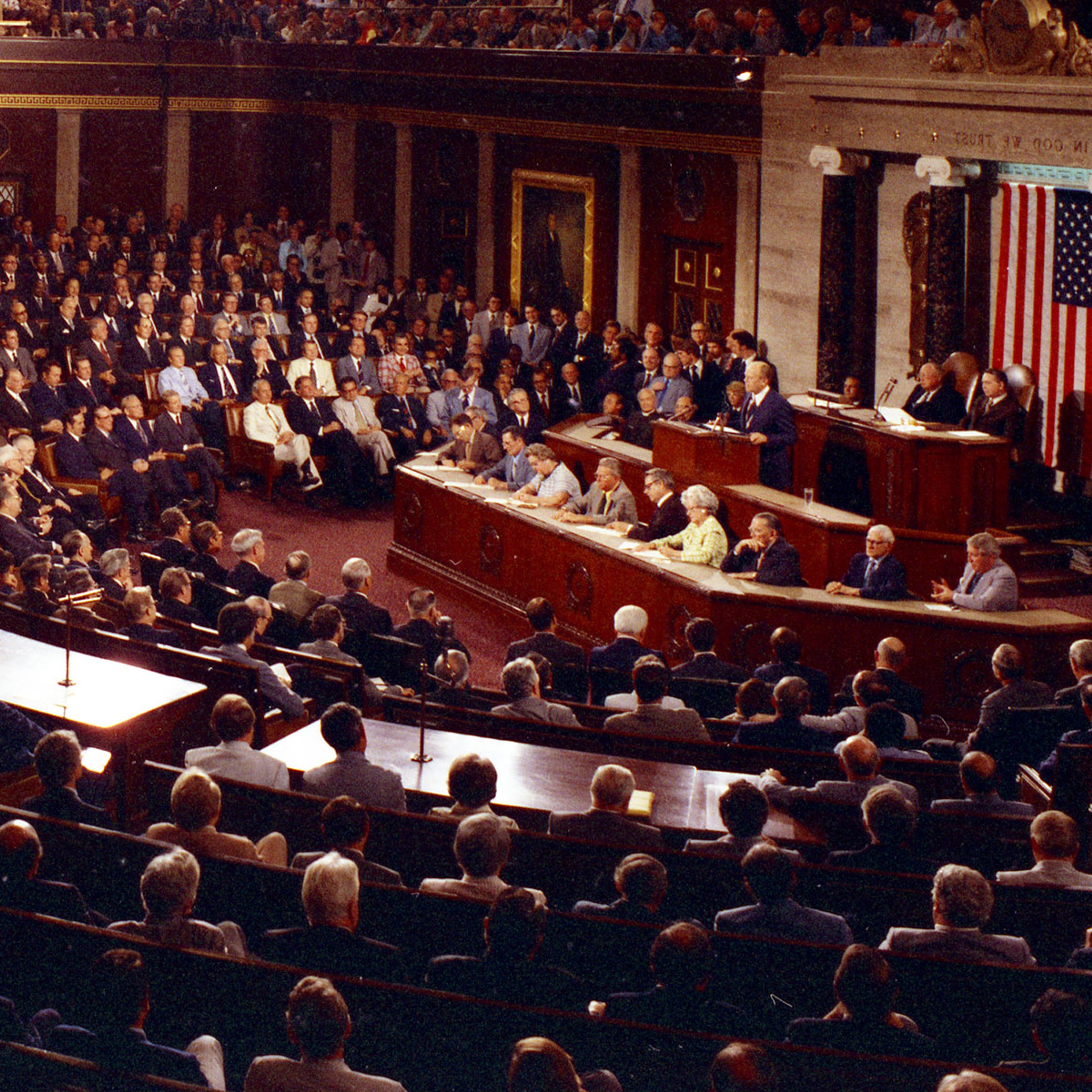
What do you do after a major storm? Rebuild. To do so, Republicans might look to their own past for guidance: In the 1974 midterm election, the GOP lost 49 seats in the House and four in the Senate. It was a long road back.
Or, they could ditch the time machine and look north to Canada, where the Conservative party recently picked up 16 seats in the country’s federal election. After suffering a string of electoral defeats in the last decade, the Conservatives under Prime Minister Stephen Harper are now in the ascendency, having won back-to-back elections.
“The Conservative party comeback was not only historic, but probably ranks up there with the Republican party’s comeback after Watergate,” says Christopher Sands, a senior fellow at the Hudson Institute in Washington who studies Canadian politics.
Fifteen years ago this month, the ruling Progressive Conservative party, as it was known then, lost all but two of its 151 seats in Canada’s House of Commons. Holding so few seats, they lost their “official party status.” The defeat effectively splintered conservatives into two parties, both of which failed to compete with the dominant Liberals. In the political wilderness, they experimented with a mix of issues, slogans, even party names.
In 2004, conservatives reemerged as a single party which emphasized economic issues over social ones. They became a broader, more popular coalition, Sands says. “They talked about lowering taxes, good fiscal management. … They were willing to talk about crime.”
Under Canada’s political system, each party selects a leader before the elections, and the leader of the party that wins the most seats in the House becomes prime minister. After Harper became the leader of the rebranded Conservative party four years ago, he promised a more open, democratic government. “He tried to position himself in a way that he was close to the public — he wasn’t an elite conservative,” Sands says.
In January 2006 Harper’s Conservatives won control of the House of Commons, ending more than a decade of Liberal-party rule. On October 14, Canadians quietly went to the polls and renewed his mandate. The Conservatives now hold 143 seats in the 308-seat House. The Liberal opposition has been reduced to 76.
In some ways, Republicans are moving in the same direction as their northern counterparts. Minnesota Gov. Tim Pawlenty (R.), once a contender for John McCain’s vice-presidential nod, is fond of talking about “Sam’s Club Republicans” and modernizing government. He told an audience at the National Press Club in August, “You have to have ideas that are relevant for these times.”
Representative Ramstad agrees. “Republicans need to get back to governing from the center,” he says. “We Republicans need to get away from the addiction to base politics. Karl Rove’s playbook isn’t working anymore.”
This means emphasizing social issues less and jobs more, Ramstad adds.
But Donald Devine, vice chairman of the American Conservative Union, sees things another way: “The moderates are always saying you need to build a new coalition.”
Devine agrees the GOP will have to rebuild after this cycle, but thinks “you have to start with the base and straighten that out before you go out and bring new people in.”
Moving to the center “means you’re moving closer to the other side,” Devine says. “I don’t think that’s where our problem is — we don’t have any answers on the economy and the war. To claim that we’ve been too far to the right is nuts.”
There’s little disagreement about how the Republican party will look on the morning of November 5 — it’ll be smaller. And those left in office will have to decide whether to chart a northern course.
— Sean J. Miller writes for National Journal and nationaljournal.com. He also blogs for The Hotline’s “On Call.”

Comments