Las Vegas — Shortly after 10 p.m., the fire alarm went off at Ted Cruz’s caucus-night party in a YMCA gym here.
By the time Cruz surrogate Glenn Beck took the stage about 30 seconds later, all was quiet. But with Donald Trump already assured of a crushing victory over the rest of his competitors in Nevada, the keening alarm seemed an almost too on-the-nose expression of how poorly the night — and the past few days — had gone for Cruz.
Nevada was supposed to be about who won the battle for second place: Cruz or Marco Rubio, each vying to emerge as the lone anti-Trump candidate. First place, as it was in South Carolina and New Hampshire before it, appeared a foregone conclusion — so much so that another Trump win hardly seemed noteworthy.
But on Tuesday night, the real-estate mogul broke 40 percent, winning his third nominating contest in a row and trouncing his two most serious competitors by almost 20 points. Instead of further clarifying who would be best able to take on Trump, the Nevada caucus raised doubts as to whether anyone could take him on at all.
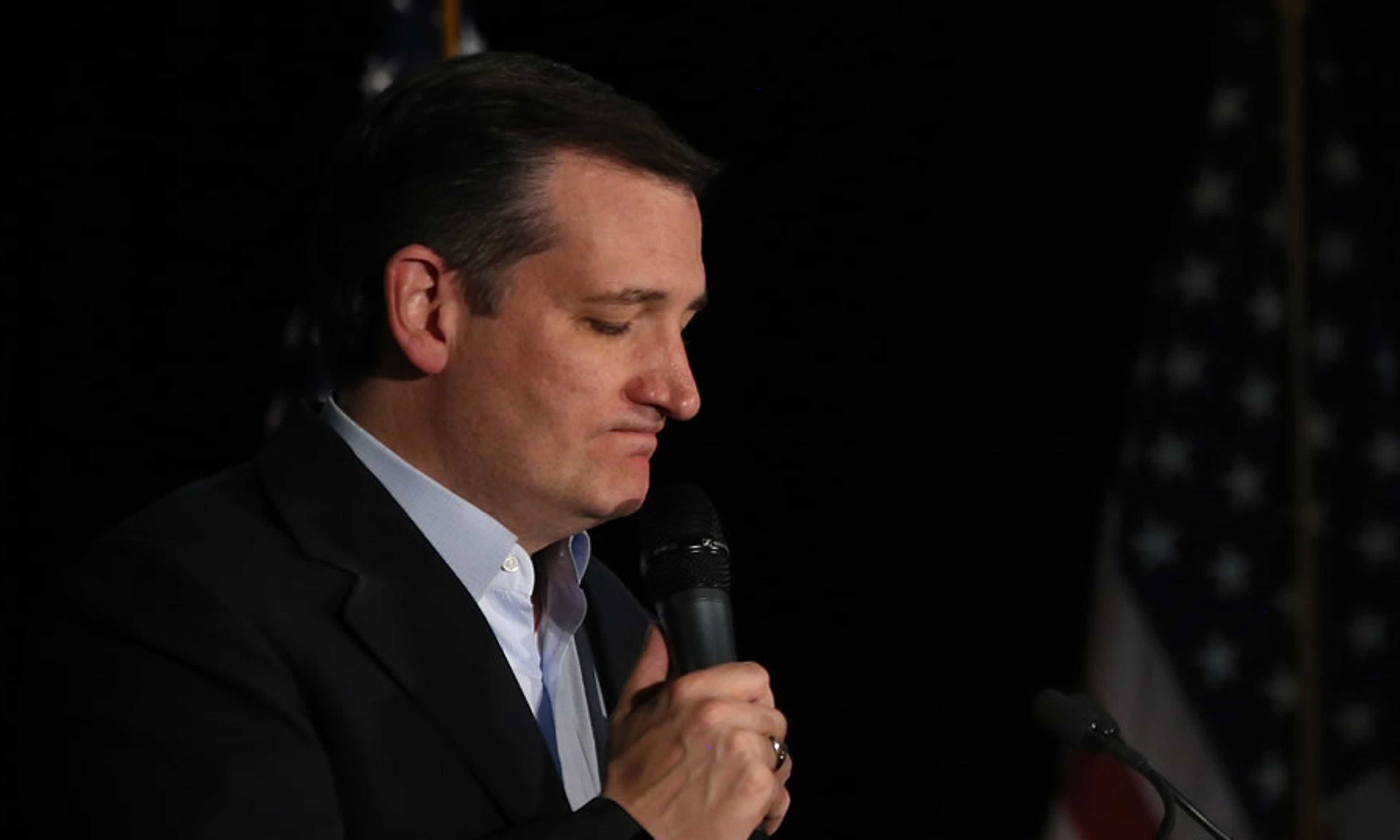
Late in the evening, a noticeably subdued Cruz took the stage before a small crowd gathered on the YMCA’s basketball court. Gone was the bravado with which he’d spun a disappointing third-place finish in South Carolina just three days earlier. There was no talk of how Nevada had helped the campaign “defy the expectations” of pundits, no claim to have “effectively tied for second.” In fact, there was almost no mention of Nevada at all. In the wake of a second straight loss, Cruz and his surrogates were looking forward: to Super Tuesday and the Texas primary.
“Tonight, I’ll sleep in my bed for the first time in a month,” Cruz told the crowd, before hopping a plane to Texas. “And then it is back in the campaign trail in Texas and all across Super Tuesday.
Rubio was about 12 hours ahead of Cruz in skipping out of the Silver State. The Florida senator had left earlier that morning, headed for Minnesota, a Super Tuesday contest, and Michigan, which votes on March 8.
But Trump’s win on Tuesday night poses problems for both Cruz and Rubio that cannot be left behind in Nevada.
Both senators have argued that Trump has a ceiling of support somewhere in the mid-30s. Trump has “got a ceiling where between 60 and 70 percent of primary voters don’t believe” he is the best person to be the Republican nominee, Cruz told reporters in Las Vegas Monday. But on Tuesday night, Trump blew right past that mark. With 88 percent of precincts reporting, Trump was earning 45 percent of the vote.
At events around Nevada in the past few days, Rubio had pitched himself as the best shot for Republicans to best a Democratic nominee in November. His message was one of inclusion: He promised to expand the party, and give Republicans a general-election shot in Latino-heavy swing states such as Nevada.
But according to CNN exit polls, 45 percent of Latino voters backed Trump on Tuesday. Rubio was a distant second with 28 percent. Exit polls aren’t entirely reliable, and the sample of Latino voters in question was very small. But it’s a feat that Trump proudly touted Tuesday night in his victory speech, and one that would seem to undercut the argument that he can’t win a general election.
Unsurprisingly, given the dysfunctional state of the Nevada GOP, chaos reigned supreme during the caucuses, with long lines, uninformed volunteers, reports of people being handed more than one ballot, and reports of ballots being improperly filed, among other things. But it appeared unlikely that either the Rubio or Cruz campaigns would contest the results and drag out the misery.
As the caucus madness was dying down, Nevada lieutenant governor Mark Hutchison, a top surrogate for Rubio, told reporters in Las Vegas that, despite what he had heard and seen of the chaos, he had “no reason now to believe [the results] won’t be” credible.
The Nevada Republican caucuses saw record turnout Tuesday night. With 88 percent of precincts reporting, nearly 67,000 votes had already been counted. The total dwarfed the 33,000 Republicans who caucused in 2012, and the 44,000 who caucused in 2008.
And that, despite the process’s embarrassing hiccups, makes it hard to dismiss the results as a fluke.
For most of the cycle, Nevada has largely been an afterthought. After tonight’s results, Cruz and Rubio likely wish it had remained one.
— Alexis Levinson is the senior political reporter for National Review.






Comments