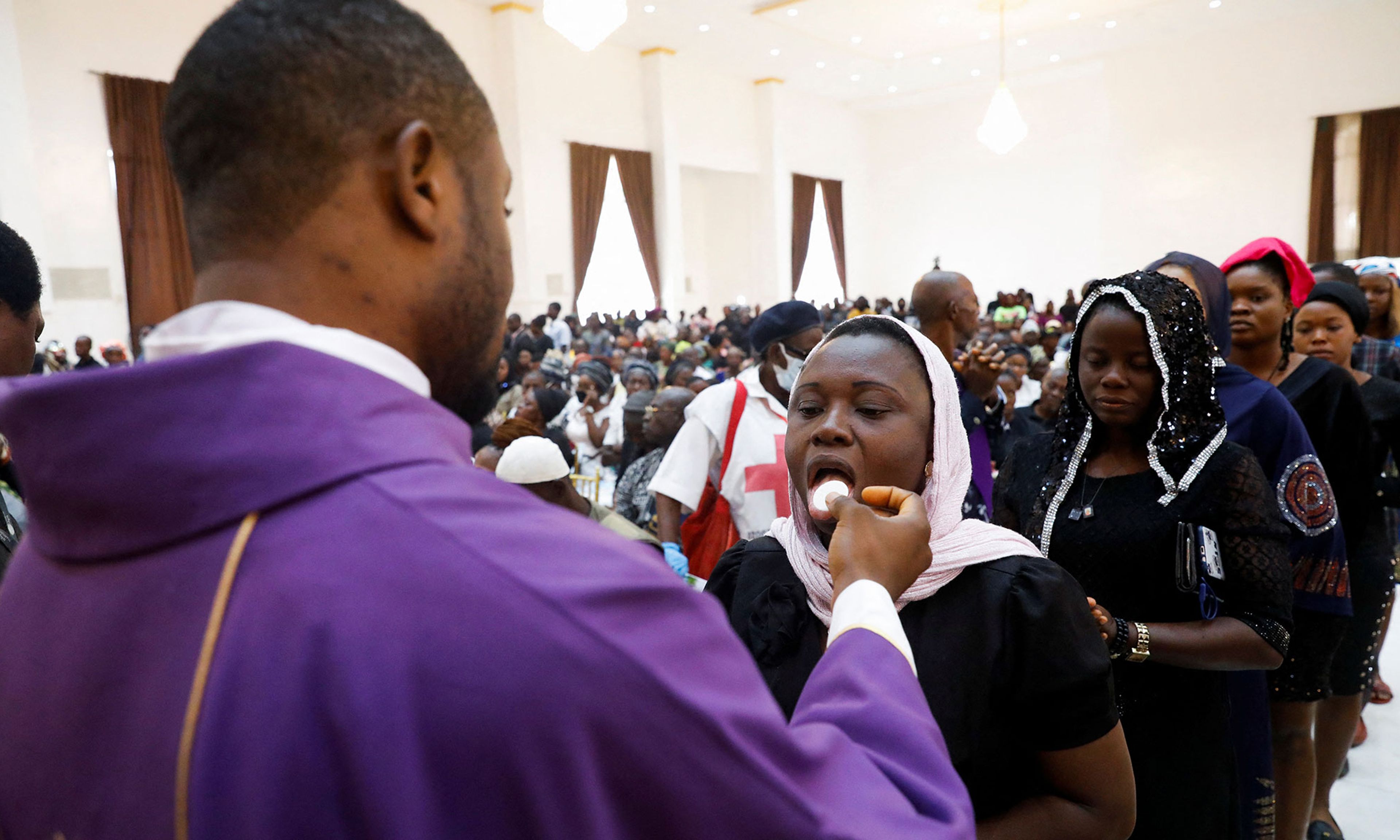
Sixteen days after the massacre on Pentecost Sunday in Nigeria, at St. Francis Xavier Catholic Church in Ondo state, we know one thing for certain: Nigeria’s government is letting the attackers get away with it. No one has been arrested in the murders of the 40 congregants and the maiming of scores more. Despite an onslaught in which the terrorists surrounded and shot up the city church for 25 minutes, the government has failed to identify a single suspect. That fits with the general pattern of impunity for Islamists who target Nigerian Christians, and it is why there is no end to it in sight.
On June 14, I spoke with Ondo’s Bishop Jude Arogundade about the attack. He elaborated on his widely quoted statements in which he took issue with Western leaders who attribute this and other unprovoked attacks on Christians by militant Fulani Muslim herdsmen to climate-change-driven communal disputes over resources. That position has long been held by the State Department and influenced Secretary Antony Blinken’s delisting last fall of Nigeria as a “country of particular concern” for religious persecution.





Comments