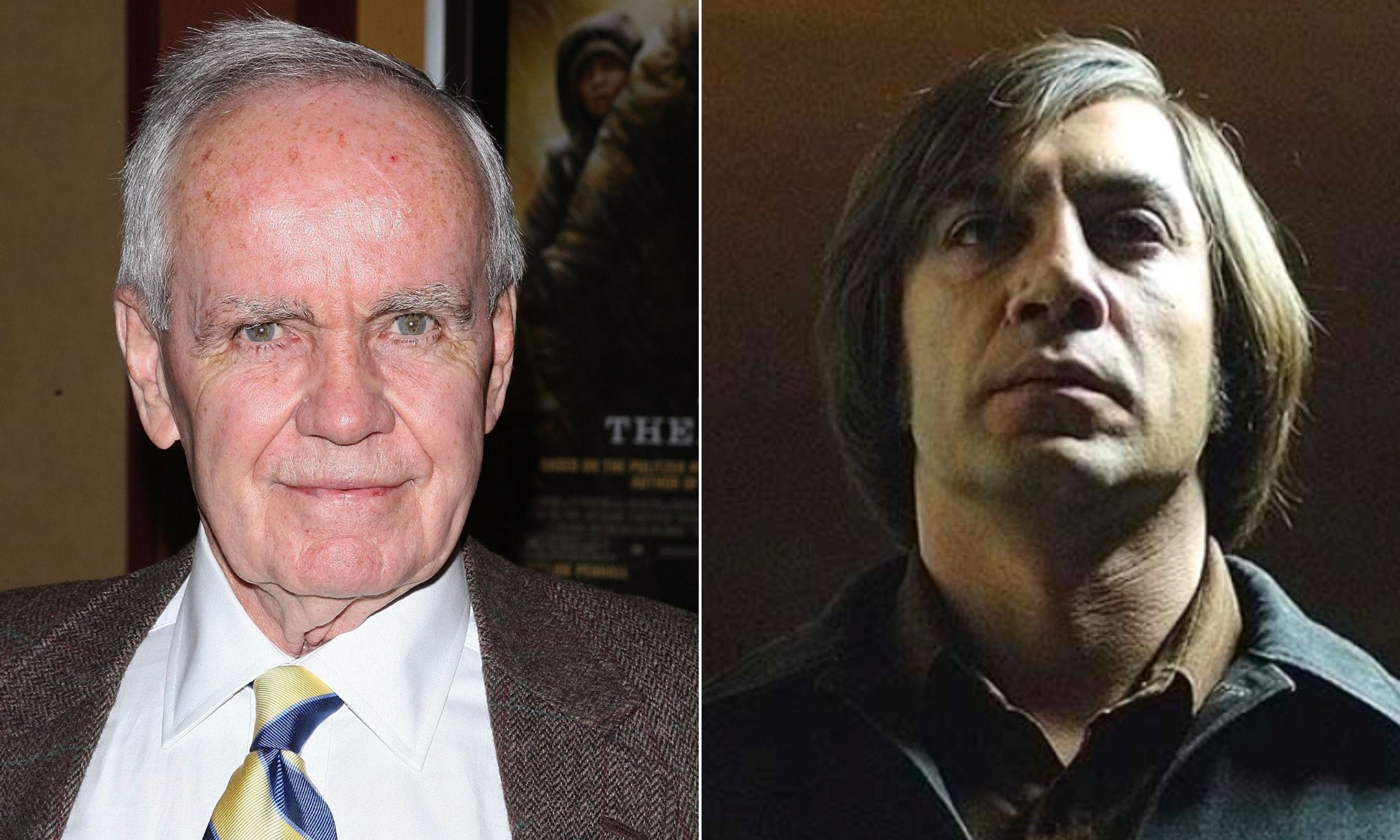
‘The coin don’t have no say. It’s just you,” Carla Jean Moss says to the psychopathic killer Anton Chigurh. He demands she play his game and call the coin flip that will determine whether he kills her. The coin allows Chigurh to view himself as an instrument of destiny. But Moss, sensible and grieving, exposes the pretense. In the film, directors Joel and Ethan Coen follow this verbal scene not with a cut to black and the sound of gunfire. Instead, we see Chigurh silently exit the home he invaded. When he checks his boots, the theater audience sighs, realizing that he is checking for blood, evidence. He killed her.
The extremely effective portrayal of evil in No Country for Old Men, both in Cormac McCarthy’s lapidary prose and in the Coen brothers’ film adaptation, has misled most literary critics and many viewers to see the story as one of total disenchantment. The cat-and-mouse chase between Anton Chigurh and Llewelyn Moss ends with murder done “off-stage.” (In the book, Moss is also unfairly disgraced in death.) The lawman Sheriff Bell (played in the film by Tommy Lee Jones), who intends to stop the murder, moves through the scenes bewildered at the rise of drug crime and immorality, eventually retiring, having failed to save a good man from evil. In the end, Chigurh leaves, after having murdered the widow, and is himself subjected to what seems like the random violence of a car crash. Yet, he still escapes the responding police.





Comments