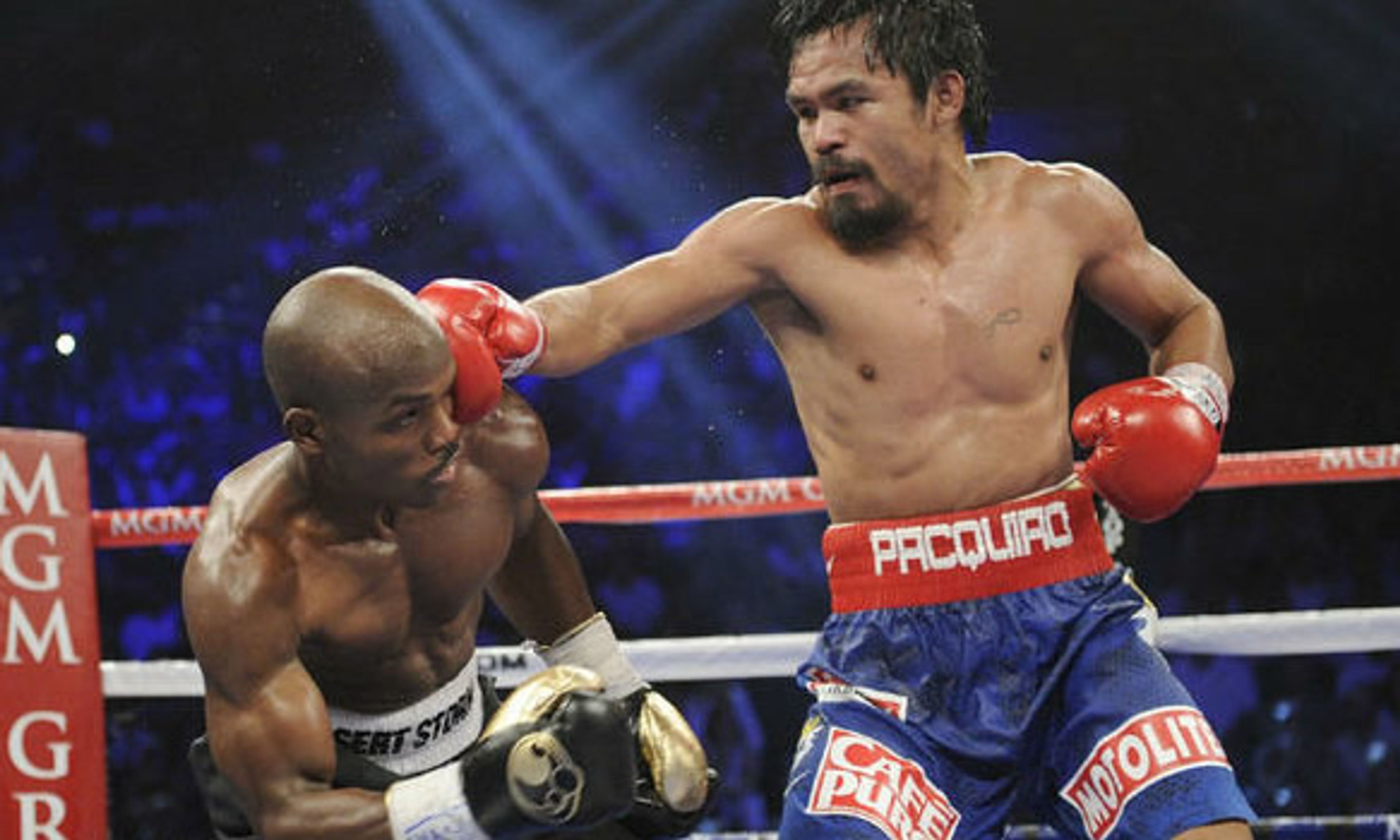
On June 9, Manny Pacquiao, perhaps the finest boxer of this generation, faced a relatively unknown fighter named Timothy Bradley. Most people thought Pacquiao dominated Bradley, as he landed far more punches, and landed them more accurately. It may be that the only people who thought Bradley won were two of the three official judges. This fight, critics say, illustrates a crisis that will kill boxing as a major professional sport unless government intervenes to fix it.
On June 18, Senator John McCain introduced the Professional Boxing Amendments Act of 2012, co-sponsored by Harry Reid. Its stated goal is to “better protect professional boxing from the fraud, corruption, and ineffective regulation that has plagued the sport for too many years, and that has devastated physically and financially many of our nation’s professional boxers.”
“This legislation would establish the United States Boxing Commission,” McCain explained, to provide “much-needed oversight” and “oversee all professional boxing matches in the United States.” But even leaving aside some crucial questions — is the regulation of boxing an appropriate function of the federal government? does the federal government have functions that are more important and take priority? is it equipped to handle the task? — the senators’ proposal misses the mark.
Boxing doesn’t need government intervention to dispel the cloud hanging over it. The sport can recover if two things happen. First, Pacquiao needs to beat Bradley in their rematch in November. Few boxers are as dynamic as Pacquiao, and his grace in defeat (even if handed to him unfairly) was noble; the sport’s popularity would suffer without a star of his caliber. Second, if Pacquiao wins, he must go on to fight Floyd Mayweather. Sports seasons typically culminate in a contest between the two best competitors. How long can the two best boxers avoid each other before fans stop caring?
There still is no evidence of wrongdoing by the judges, although boxing promoter Bob Arum, infuriated by their decision, has called for an investigation by Nevada’s attorney general. “The only way to restore fans’ confidence in boxing is by letting an independent body investigate every detail of the fight,” he contended. A separate investigation by the World Boxing Organization has concluded that Pacquaio won the match, demonstrating that boxing can regulate itself, contrary to the assumptions of McCain and Reid. The WBO has ordered a rematch, which is scheduled for November.
Arum’s actions follow logically from his self-interest, which dovetails with that of professional boxing as a whole. Since his payday is determined largely by the public’s interest in following the sport, his incentive to remove any perception of impropriety is strong. Those who want to watch staged performances can always tune in to professional wrestling; the rest of us prefer boxing.
History suggests that boxing will be best served if it reforms itself. Congressional investigations into professional baseball and football did not lead to their reformation with respect to performance-enhancing drugs and concussions. Rather, MLB and the NFL took charge of their own affairs, instituting change with a view toward their long-term success. To the extent that Congress had any effect, it only made things worse. (See: Clemens, Roger.) Likewise, boxing has to clean its house itself.
Which is to say that professional boxing does indeed have problems. It has far too many official organizations—the World Boxing Association, the World Boxing Council, the International Boxing Federation, the WBO, The Ring magazine. Each has its own champion per weight class. This makes the sport unnecessarily complicated and difficult to follow. Imagine five World Series champions.
Even worse is boxing’s inaccessibility on television. Because all big fights are pay-per-view, many who would probably appreciate boxing never get the chance to watch them . The NFL, MLB, the NBA, and the NHL consistently draw more viewers than does professional boxing.
Harry Reid’s and John McCain’s hearts are in the right place. They genuinely enjoy the sport and wish it well. But good intentions often lead to bad policies, and their proposal to nationalize boxing would almost certainly do no good. McCain and Reid’s plan would not eradicate human fallibility, streamline boxing’s organizational structure, or force ESPN to air the big fights. It’s a solution to problems boxing doesn’t actually face, while the problems it does face are still waiting to be fixed.
— Noah Glyn is an editorial intern at National Review.





Comments