In the glossy pages of The New Yorker, in graceful prose and with good reporting, the dreams and nightmares of the admirers of Barack Obama and his policies lie exposed.
The dreams include Ryan Lizza’s report last April in which he quoted an Obama adviser as saying the president’s policy on Libya was “leading from behind.” This week, as Tripoli seemed about to fall, the magazine’s editor, David Remnick, hailed Obama’s “calculated modesty.”
The nightmare appears in last week’s issue, in Jeffrey Toobin’s lengthy article on Supreme Court jurisprudence, titled “Partners” and subtitled “Will Clarence and Virginia Thomas succeed in killing Obama’s health-care plan?”
It’s possible to read Toobin’s article as a partisan hit job, echoing the demands of 74 Democratic congressmen that Justice Clarence Thomas recuse himself from sitting on a case challenging the constitutionality of Obamacare because of his wife’s involvement in the Tea Party movement.
Never mind that this is a standard neither Toobin nor the Democrats apply to other public officials with spouses active in public affairs — or that they’re not asking justice Elena Kagan to recuse herself because of her work in the Justice Department on the issue.
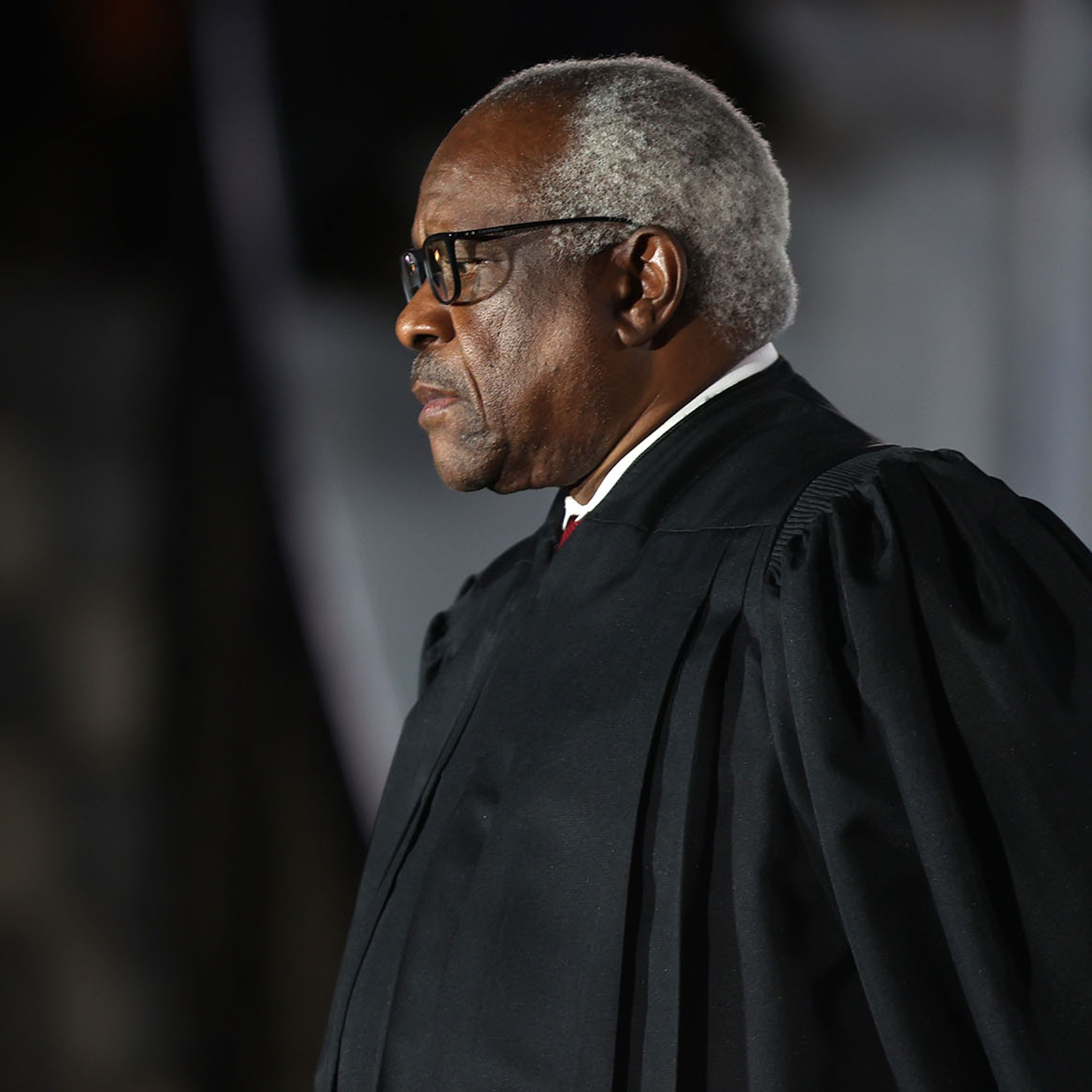
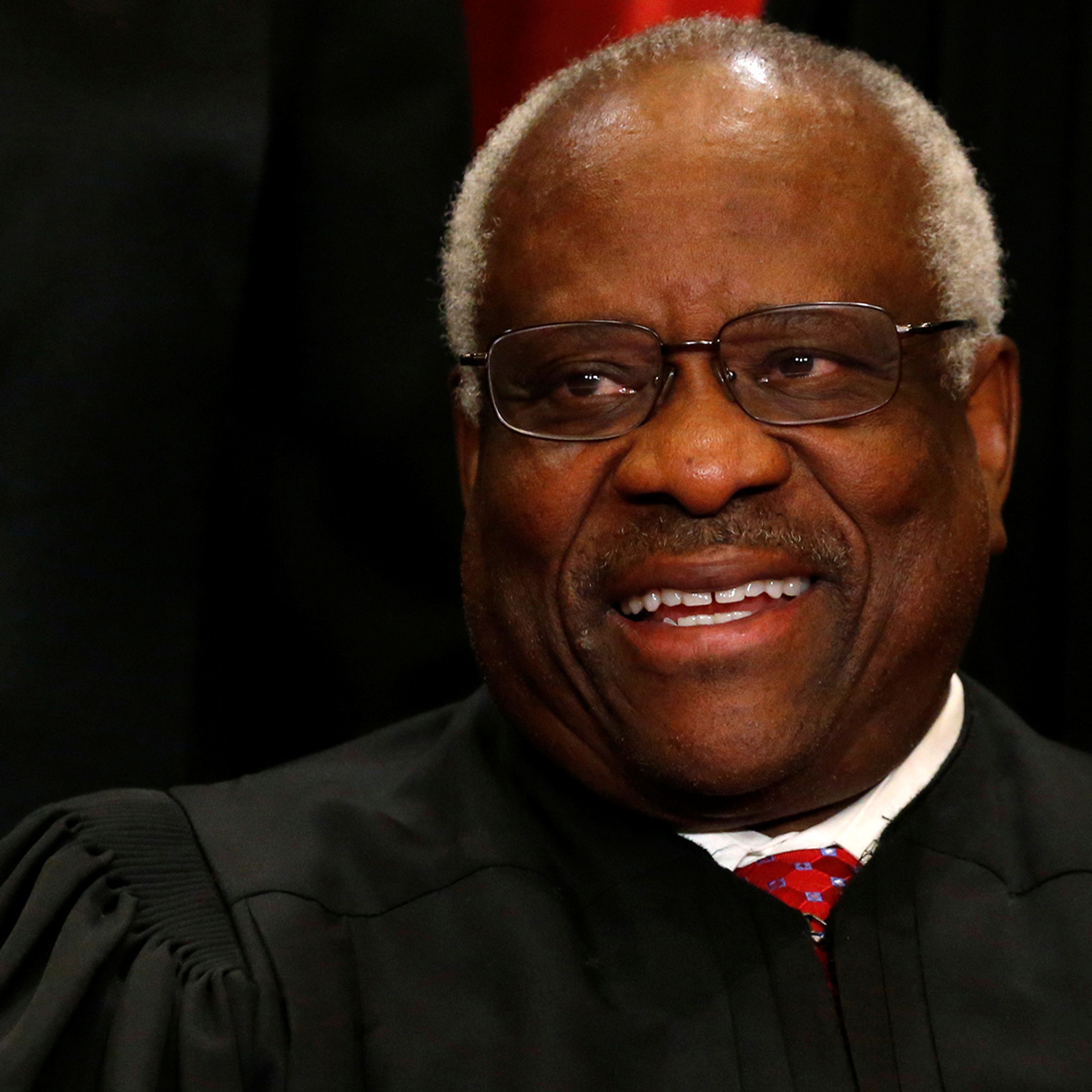
The bulk of the article is worthy of attention because Toobin, despite his obvious distaste for Justice Thomas’s views, takes him seriously as a judicial thinker and pathfinder.
“In several of the most important areas of constitutional law, Thomas has emerged as an intellectual leader of the Supreme Court,” Toobin writes. “Rarely has a Supreme Court Justice enjoyed such broad or significant vindication.”
Toobin is on particularly strong ground when he discusses the Second Amendment’s right to keep and bear arms. For years, it was considered a dead letter in sophisticated legal circles, protecting only the right to bear arms as a member of the National Guard.
But in 1997, Thomas wrote a concurring opinion in a case invalidating one provision in a 1993 gun-control law. Thomas agreed with the emerging legal scholarship — some of it the product of liberal law professors, such as Sanford Levinson — and argued that the Second Amendment was intended to protect a personal right to own guns.
Toobin notes that Thomas’s concurrence was cited in a 1999 federal appeals court opinion and helped inspire the legal challenge to Washington, D.C.’s, effective ban on handgun possession. In June 2008, the Supreme Court overturned that law as a violation of the Second Amendment, with Justice Antonin Scalia’s opinion closely following Thomas’s reasoning.
Thomas’s leadership on the Second Amendment reflects his frequent forays into history. Many of his opinions track the development of the law from the 18th or even the 17th century, and in many such cases, all or almost all his colleagues concur.
In addition, as Toobin accurately reports, Thomas is the strongest “originalist” on the court, the justice who most consistently seeks to apply the provisions of the Constitution as they originally were understood.
This has led him to take positions, sometimes in lonely dissent, that most New Yorker readers abhor. The 18th-century understanding of what constituted the “cruel and unusual punishments” banned by the Eighth Amendment is not widely shared these days on the Upper East Side of Manhattan.
And Thomas’s interpretation that the three post–Civil War amendments ban all racial quotas and preferences is anathema to the university administrators and corporate apparatchiks who employ them every day.
They might be embarrassed, however, if they actually read the parts of his opinions in which, with searing prose, he draws on his own experiences growing up in segregated Georgia and on his considerable knowledge of the history of oppression of black Americans.
And he brings up the embarrassing fact that the first gun-control laws and limits on corporate campaign contributions were advanced by those who sought to deny rights to blacks.
Toobin’s article represents the end of the fashionable Left’s attempt to portray Thomas as an intellectual lightweight. He admits that Thomas’s silence on the bench, while colleagues pepper lawyers with questions, doesn’t mean he’s stupid.
Instead, he paints Thomas as a brilliant Svengali, ready to disregard precedent and — the president’s nightmare — overturn Obamacare.
Congress has never before passed, and the court has never upheld, a law requiring individuals to buy a commercial product, as Obamacare does. On this, the Obama Democrats, not Clarence Thomas or judges following his lead, are the ones sweeping aside precedent.
— Michael Barone, senior political analyst for the Washington Examiner, is a resident fellow at the American Enterprise Institute, a Fox News Channel contributor and a co-author of The Almanac of American Politics. © 2011 the Washington Examiner



Comments