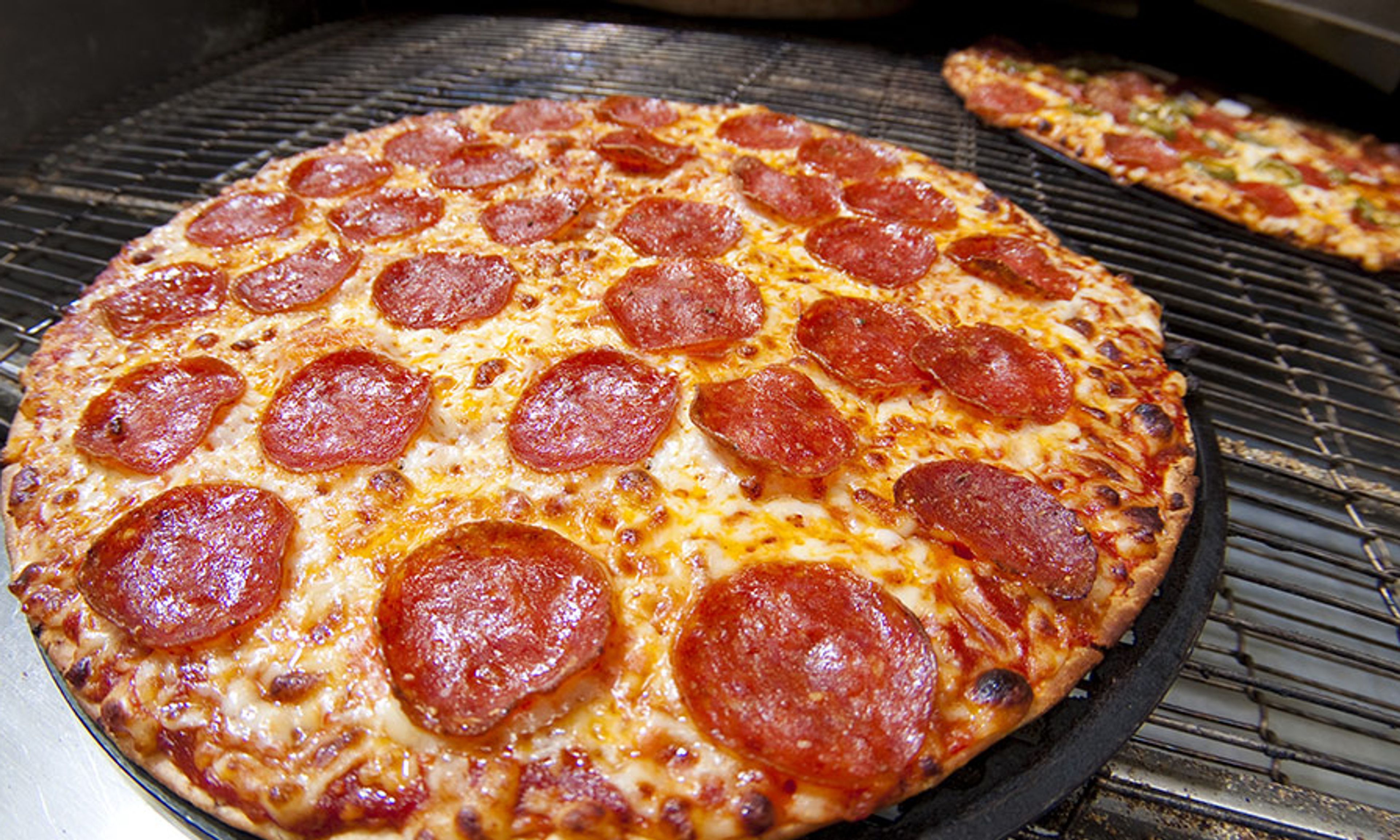
How many different ways are there to make a Domino’s pizza? The answer might interest you.
It might also interest the Food and Drug Administration — at least, it should.
The nation’s franchise restaurants are about one month away from the imposition of new nutritional-labeling rules dreamed up by the Obama administration, another gift of the grievously misnamed Affordable Care Act. For outlets of brands with 20 or more locations, that means posting signs in the shop with calorie counts for every item on the menu and for every variation on that item.
That’s probably not such a big deal if you are, say, Raising Cane’s, and your menu ranges from one chicken finger to 100 chicken fingers. It’s a little different if you are a pizza shop, because pizza has a lot of variables.
A lot.
“We did the math,” says Tim McIntyre, an executive at Domino’s and chairman of (not making this up) the American Pizza Community, a thing that exists. “With gluten-free crusts to thick to hand-tossed to pan pizza, multiple sizes, cheeses, toppings . . . there are about 34 million possible combinations.” He does a pretty good deadpan delivery: “That is difficult to put on a menu.”
That’s going to be a big sign.
Not that anybody is ever going to use it. The great majority of Domino’s orders are placed over the Internet and almost all the rest are placed by phone. The number of people who walk into a Domino’s outlet, look at a menu, and order a pizza is relatively small, representing only a few percentage points of Domino’s customers. Other pizza chains see roughly the same thing.
So the signs are going to be largely useless, but they’re also kind of expensive, “Useless + Expensive” being the classic federal regulatory equation. McIntyre estimates a price between $3,500 and $5,000 per location. That isn’t very much to a big corporation like Domino’s, but the Domino’s corporation doesn’t operate all those Domino’s shops: Those are franchises, run by independent owner-operators. The profit margins are low, and five grand is a lot to put on a business that might only be throwing off $40,000 or $50,000 in profit a year. Or less: Franchise chains are pretty tight-lipped about what their stores actually earn, but if we assume a 5 percent profit margin, typical of such restaurants, and an average sales volume of about $730,000, as reported in 2013 by the Motley Fool, then that’s only $36,500 per store, meaning that a $3,500–$5,000 sign could easily eat up a tenth of a year’s profit.
What’s especially dumb about all this is that the store signage is replicating information that is widely available on the Internet. Domino’s, in fact, has a nifty little feature that no one uses (“very limited,” McIntyre says, diplomatically) called the Cal-O-Meter, which totals up your order’s caloric hit as you go. If you happen to be in that very small subset of people who both are very interested in Friday night’s carb load and are determined to eat takeout pizza for dinner, there’s an app for that.
There are lots of them, in fact. There are dozens of different smartphone apps (and smartphones are emerging as the dominant tool for ordering food deliveries) that provide nutritional data far in excess of anything required by food-labeling rules. There are even apps that turn your phone into a bar-code scanner so that you can get up-to-date information on every can of baked beans during your Saturday-morning Kroger run. The real problem in these early days of the 21st century isn’t scarcity of information but overabundance of it.
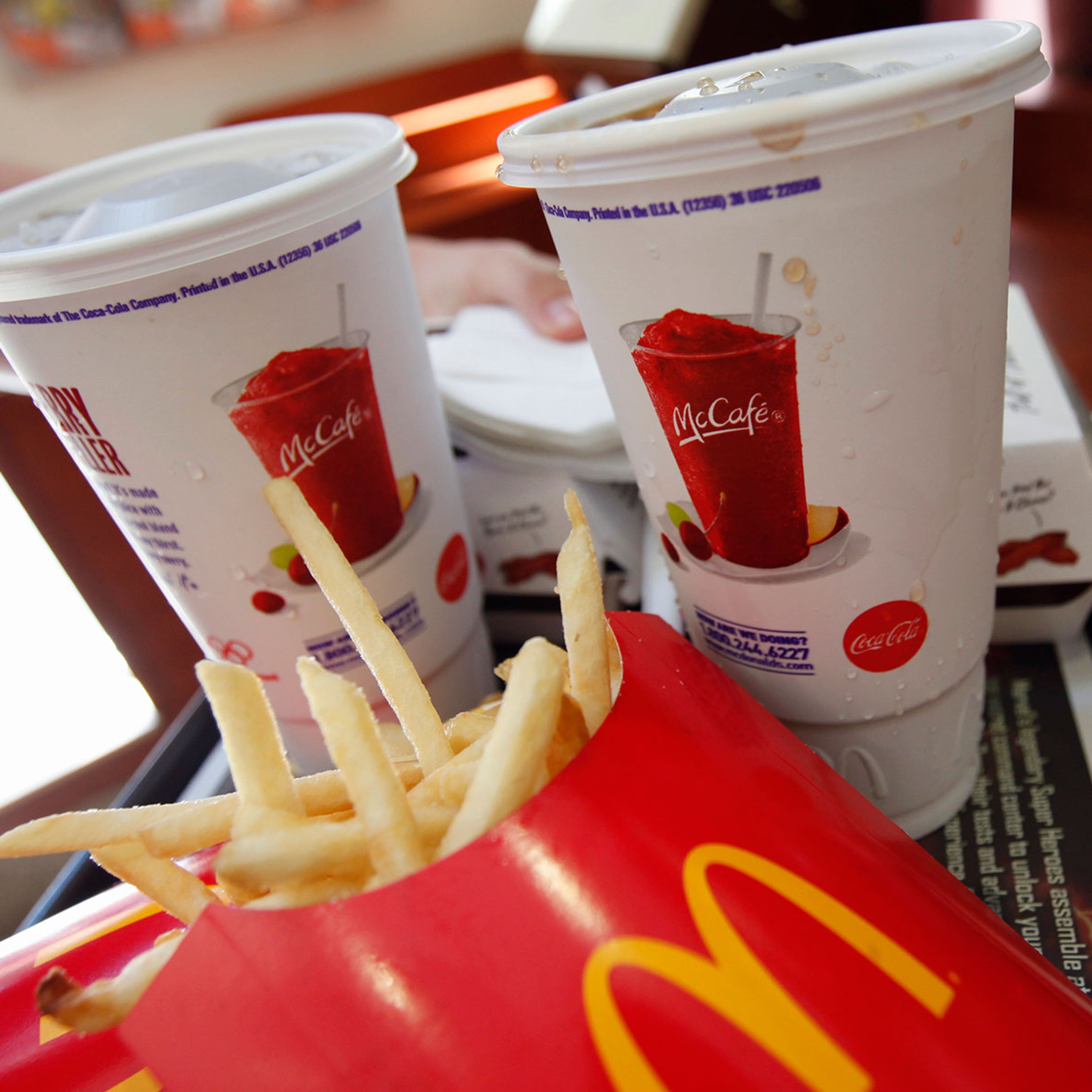
Not that anybody cares, really. The sort of people who count calories and total up their daily carbs and protein and monounsaturated fats already moved beyond government-mandated food labels ages ago. As for everybody else: There is basically no evidence that food labeling actually results in consumers’ making healthier choices about their food. The belief that people who are given better information will make better choices is intuitively persuasive, but it does not stand up to empirical scrutiny. In fact, a study of McDonald’s customers found that those who were provided with supplemental information about recommended daily caloric intake ordered lunches with 50 calories more on average than those who were not advised of expert opinion.
Similar regulatory backfires have been observed in mandatory labeling for non-food items, especially cigarettes and alcohol.
Domino’s and other members of the American Pizza Community (seriously!) are asking for a delay of the rule’s implementation. What’s notable here is that they do not oppose the rule per se. They are all on board with disclosure. And, like most major industries, Big Pizza prefers one consistent federal regulation to a patchwork of sundry state and local rules, because it is cheaper and easier to comply with one rule than 598 of them. They have some complaints about how the rule is to be implemented, particularly about the fact that if a Domino’s franchise operator with 15 shops is competing with a regional chain that also has 15 shops, the rule applies to him but not to his competition simply because his sign says “Domino’s” on it.
But, mostly, they don’t want to see their franchisees forced to spend thousands of dollars per location to put up signage that is of no use to anybody.
“It’s a 20th-century approach to a 21st-century question,” McIntyre says.
But Uncle Stupid is dead serious about this: Violating the new federal pizza rules is not a civil offense but a criminal one. A pimply-faced teen-ager who throws an extra handful of cheese onto a large Cali Chicken Bacon Ranch pizza could be thrown in the federal lockup for a year.
And you thought that zany Icelandic president who wanted to ban pineapple pizza had big ideas.
— Kevin D. Williamson is National Review’s roving correspondent.
READ MORE:




Comments