On Immunity, Trump Dubiously Relies on the Impeachment Clause

Trump’s lawyers are straining to find a constitutional clause that could be their peg. The impeachment clause does not serve the purpose.

Share this story

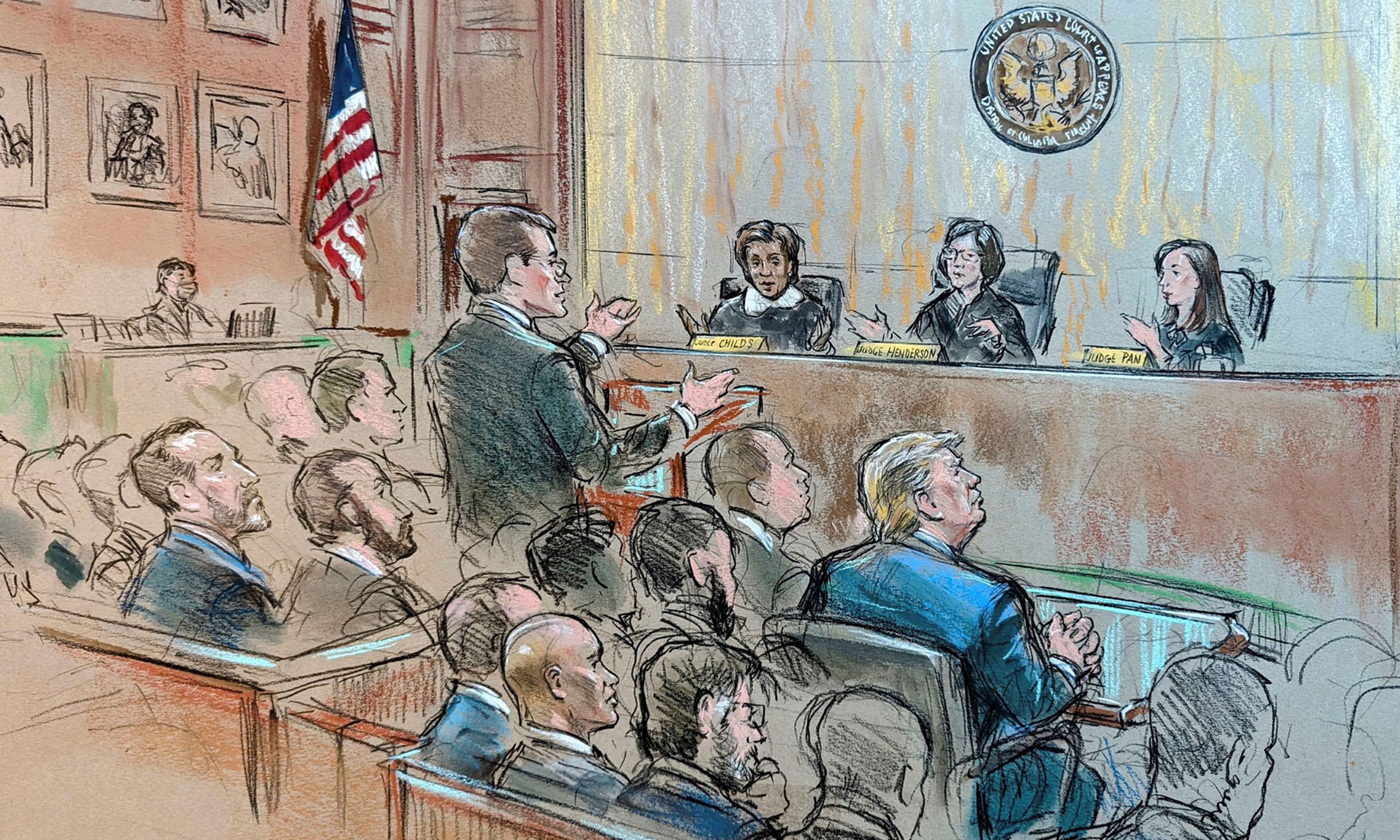
Former president Donald Trump and Justice Department special counsel Jack Smith sit as Trump’s attorney John Sauer speaks during an appeals hearing on Trump’s claim of immunity in the federal case accusing him of illegally attempting to overturn his 2020 election defeat, in a courtroom at U.S. District Court in Washington, D.C., January 9, 2024.

Courtroom Sketch/Bill Hennessy/Reuters

Former president Trump’s lawyers argue that he is immune from criminal prosecution for official acts taken as president. Of the several theories they advance for this proposition, I have maintained that the weakest is the one they rely on as if it were their strongest. Toward the end of oral argument Tuesday morning, D.C. Circuit judge Florence Y. Pan illustrated the folly of Trump’s position. Pan is one of three circuit judges on the panel that is considering Trump’s appeal of District Judge Tanya Chutkan’s ruling that he lacks immunity.

As argued vigorously — if not very persuasively — by D. John Sauer, the Trump team posits that the Constitution creates presidential immunity from prosecution that is akin to double jeopardy. The defense argument rests on one of the Constitution’s impeachment clauses (art. I, §3, cl. 7), which provides:

Andrew C. McCarthy

About the Author

Andrew C. McCarthy

Andrew C. McCarthy is a senior fellow at National Review Institute, an NR contributing editor, and author of Ball of Collusion: The Plot to Rig an Election and Destroy a Presidency.

Comments

Advertisement

Advertisement


