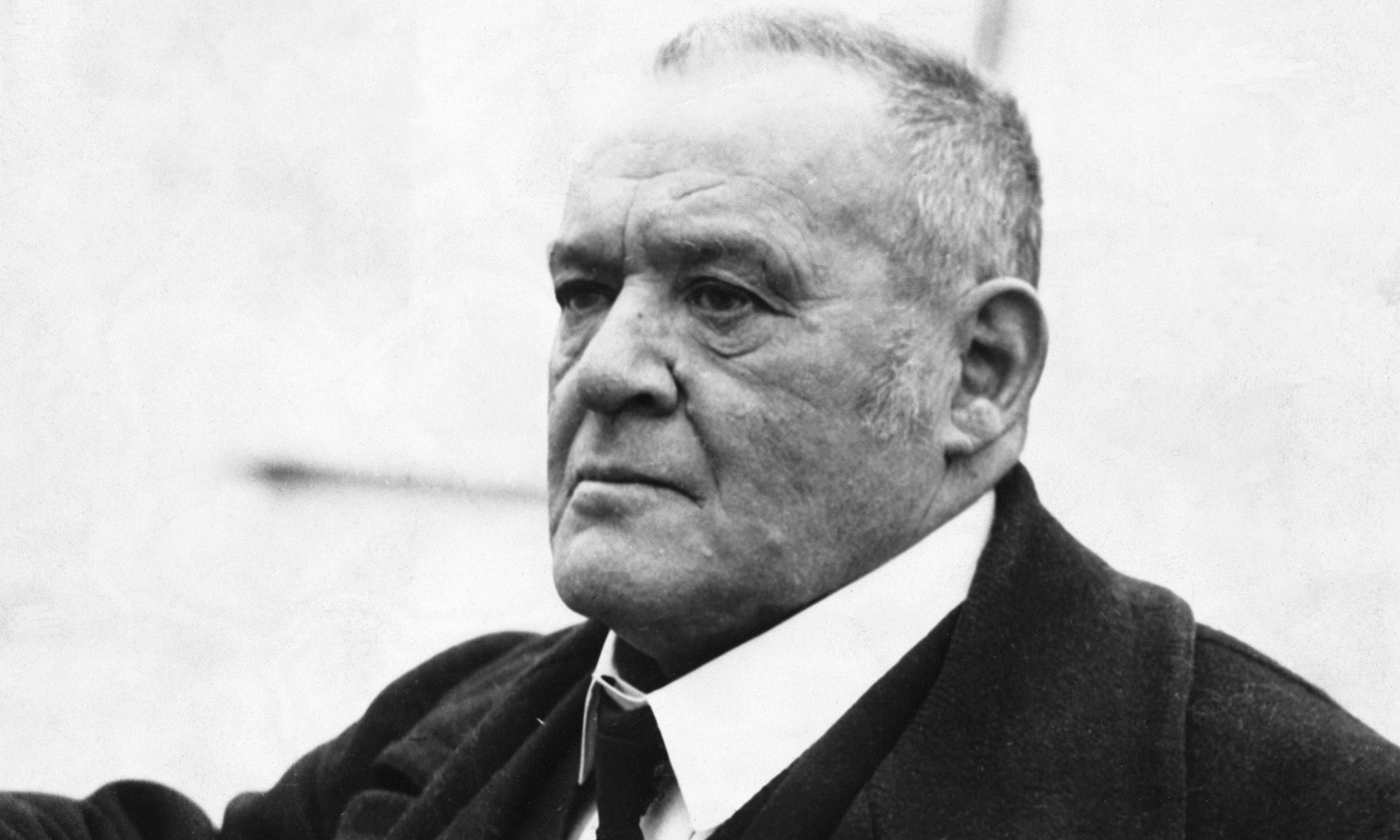
From the autumn through the spring of 1890–91, the recent English high-school graduate Hilaire Belloc (1870–1953), of French and English parentage, took cheap transatlantic passage to the New World and ended up hiking about two-thirds of the way across the American continent to California in pursuit of an Irish-American girl, Elodie Hogan, with whom he had fallen in love in London, and whom he would marry several years later. In pre-automobile America, he occasionally rode the train or steamboats in the eastern third of the country but, lacking money, ultimately hiked most of the rest of it by foot until he reached San Francisco. On the way he often got room and board by sketching personal figures and landscapes or doing odd jobs. He found the Rockies particularly bleak and inhuman (as did my soldier-mountaineer father 50 years later when he helped establish Camp Hale for the U.S. Army’s Tenth Mountain Division).
Belloc thus saw the United States during the closing of the frontier era, only about 20 years after the Scottish immigrant John Muir went to live in Yosemite. Belloc also established a habit of walking, sketching, and writing. A strong man of great physical endurance (he later walked 54 miles from Oxford to London in about eleven hours), he came back to Europe in 1891, served in the French army (his father had been French), in Lorraine, at what was then near the German border, and subsequently attended Oxford, where he graduated from Balliol College with a first-class degree in history and served as president of the debating society, the Oxford Union.



Comments