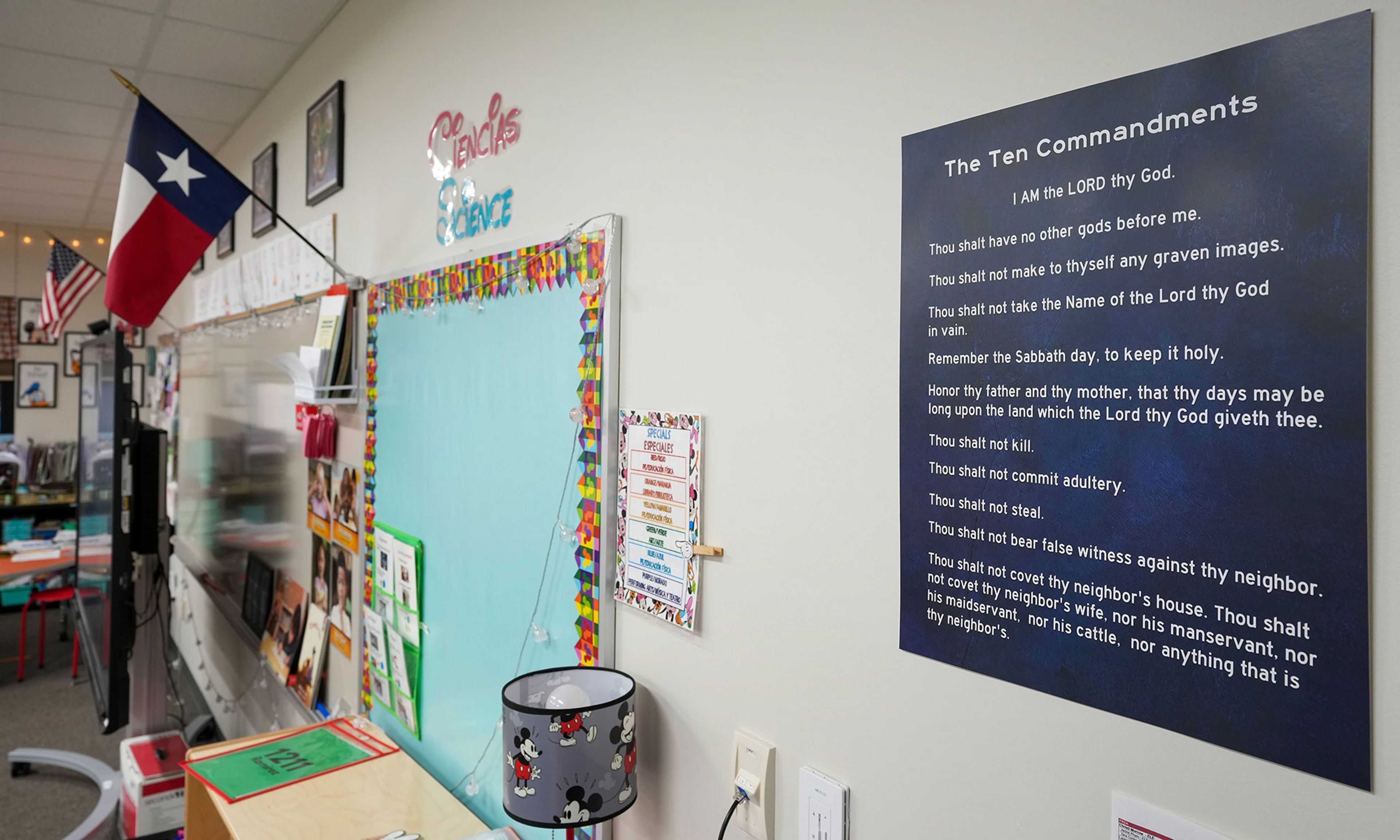
The Ten Commandments have been carved in stone for millennia. Now, thanks to a landmark en banc ruling by the United States Court of Appeals for the Fifth Circuit in Rabbi Nathan v. Alamo Heights Independent School District, they may finally be safe from the chisels of separationist litigants. That court rejected claims that a Texas law mandating passive displays of the Ten Commandments in public school classrooms violated the religion clauses of the First Amendment.
The opinion, authored by Judge Kyle Duncan of Louisiana, is a masterwork of originalist jurisprudence. Long before ascending to the federal bench, Duncan stood before the Supreme Court as counsel for Hobby Lobby, successfully vindicating the rights of a family-owned business under the Religious Freedom Restoration Act. His scholarship on the anti-Catholic Blaine amendments further established him as one of the foremost religious freedom minds of his generation. He knows this terrain as well as anyone who has ever worn a robe. The court, sitting with all active members, concluded that passive displays of the Ten Commandments in Texas public school classrooms raise no viable establishment clause or free exercise clause concern.




Comments