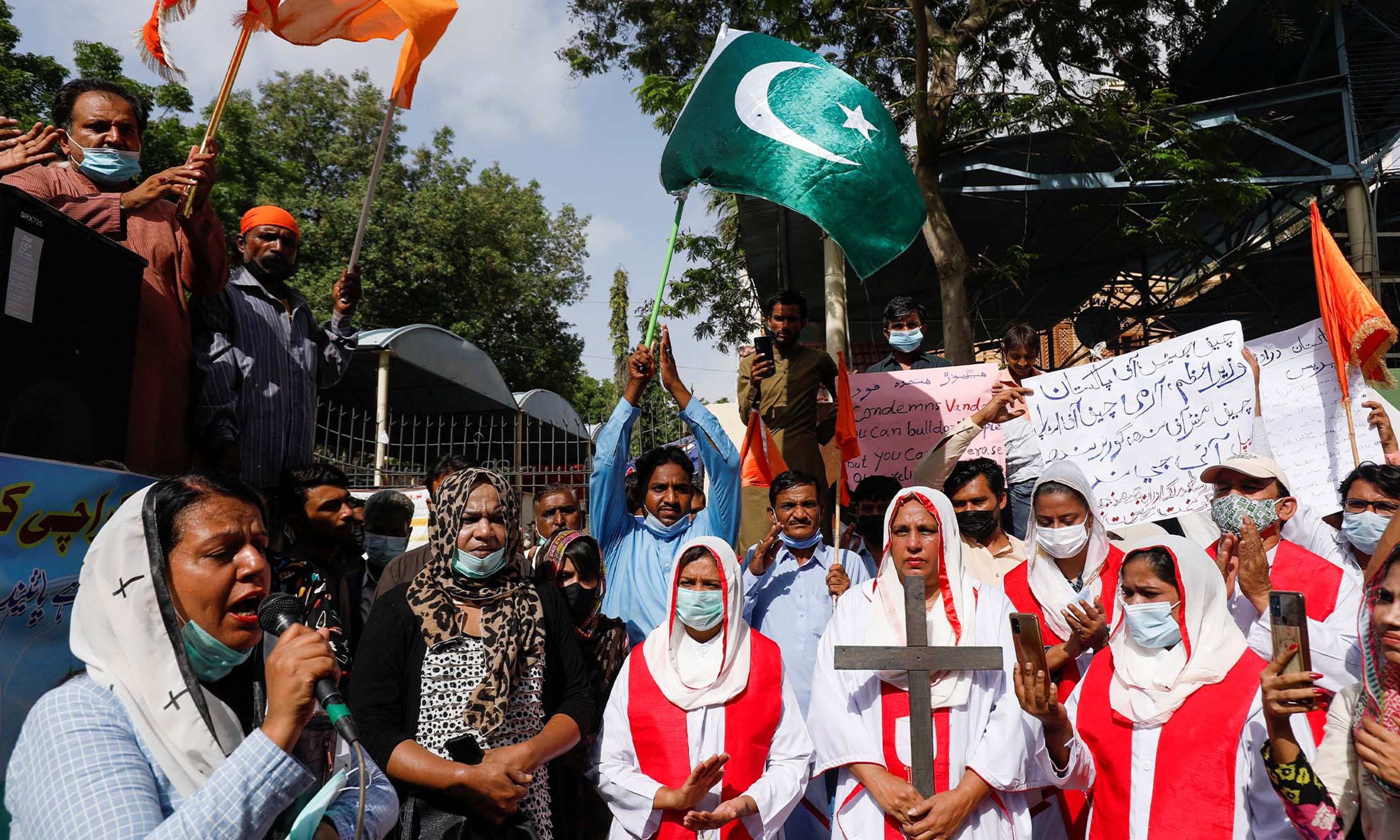
In the early days of the summer, residents living along Pakistan’s Jhelum River in northern Punjab faced the frustration of standstill traffic and disconnected phone and internet lines. It didn’t take long for them to discover that this was a result of trenches being dug, at the direction of the federal government, to prevent the “Save Pakistan” march from advancing to the nation’s capital. In Pakistan, the long-march model of public protest is often used by political parties to decry government corruption. But this time, the march was primarily focused on one aim: strengthening blasphemy laws.
Pakistan’s blasphemy laws are already some of the harshest in the world — it is one of only seven countries that makes the crime of blasphemy punishable by death. Even so, the organizers of the march — Tehreek-e-Labbaik (TLP), an extremist political party — felt that the scope of the existing laws was still not broad enough and that it ought to be expanded.


Comments