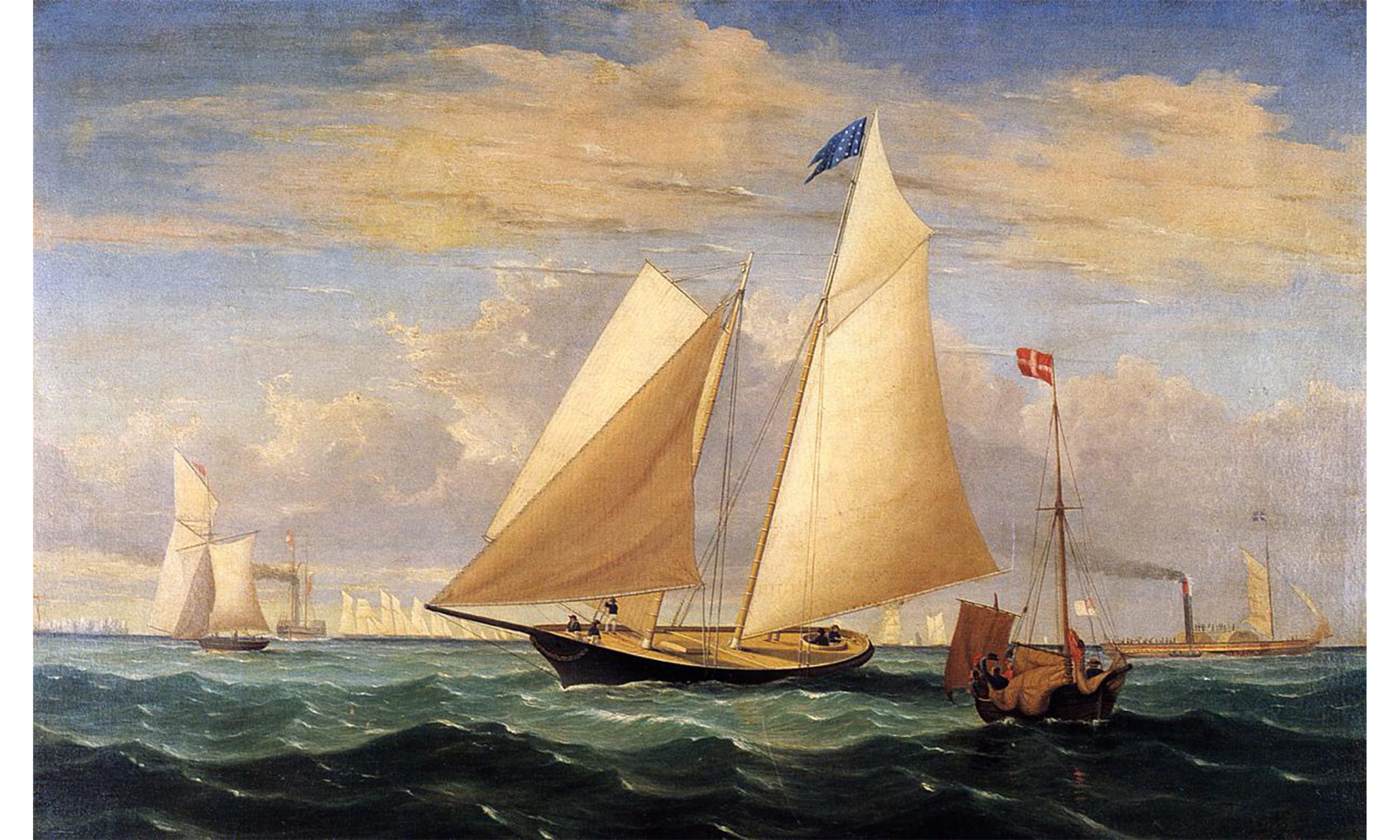
What’s happening at the Peabody Essex Museum? It’s one of my favorite museums, not a precious gem but a trove of treasures and not at all well known. Branded as the PEM, it’s in Salem on the North Shore in Massachusetts, not poised on the Atlantic like nearby Gloucester, but a harbor town wedded to the ocean. It’s both peerless and exemplary. Its collection — more than a million works of art — is strong in maritime art and artifacts, Asian textiles, calligraphy, ceramics, Oceanic art, Asian export art, American portraits, furniture, silver, porcelain, Native American art, fashion, and photography. It’s got a good, offbeat contemporary collection, too. Its library has tens of thousands of rare books and manuscripts, most relating to New England. And it owns more than 20 historic buildings and gardens in ye olde Salem, founded in 1626 as a fishing town and only a tad younger than Plymouth.
Little Salem, now having 44,000 people, is notorious for the 1692 witchcraft hysteria and hypnosis, America’s beacon light of prosecutorial abuse of power. Halloween is fun time in Salem, but, aside from that, 1692 still chills and darkens the vibe. Putting aside this hoax-like-no-other and the dangling corpses it left behind, Salem was, years later, a hub in the China trade.


Comments