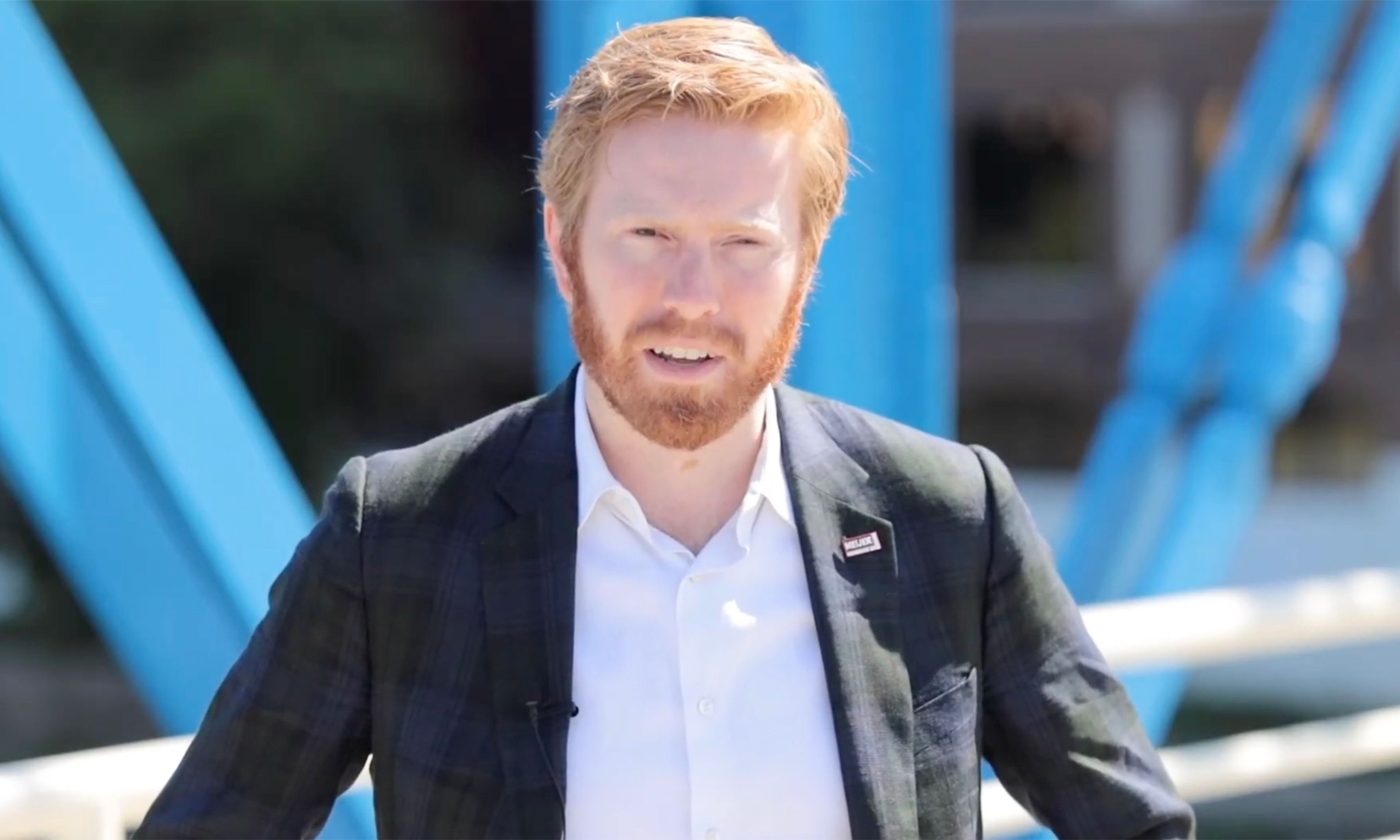
On Friday, Representative Seth Moulton (D., Mass.) said of Peter Meijer, “I think Peter is exactly the kind of Republican we want to have around, but at the end of the day we have to win the majority, and that is the bigger concern.” That saying encapsulates Democrats’ entire strategy in Republican primary campaigns, one that trades principle and devotion to American democracy for political expediency. In an interview with National Review back in June, Meijer predicted that Democrats would continue their campaign of meddling in GOP primaries to nominate Trump-endorsed candidates who embraced the “stop the steal” movement. They would “wait until the last minute, until it’s too late to counter,” he said.
How right he was. A mere week before his primary for the Republican nomination in Michigan’s third congressional district — which he lost to MAGA challenger John Gibbs on Tuesday — the Democratic Congressional Campaign Committee (DCCC) ran a TV ad in the district, calling Gibbs “too conservative for west Michigan.” Though the ad was critical of Gibbs, the intent behind it was clear. Republican voters would likely gravitate toward the candidate whom Democrats hated the most. The DCCC knew this, and that is why it spent $435,000 to boost Gibbs in the race. That is more than the Gibbs campaign raised for the entirety of his campaign. The DCCC even spent more money to help Gibbs than did former president Donald Trump, whose Save America Super PAC gave only $5,000 to his campaign. Meijer best described Democrats’ support of Gibbs in an op-ed he published the day before the primary: “They are subsidizing his entire campaign.”

Comments