On one of my bookcases at National Review World Headquarters, there’s a book titled “New Ways of Making Babies.” After clearly walking past it in silence way too many times, a colleague finally blurted out, “What’s wrong with the old way?”
Good question!
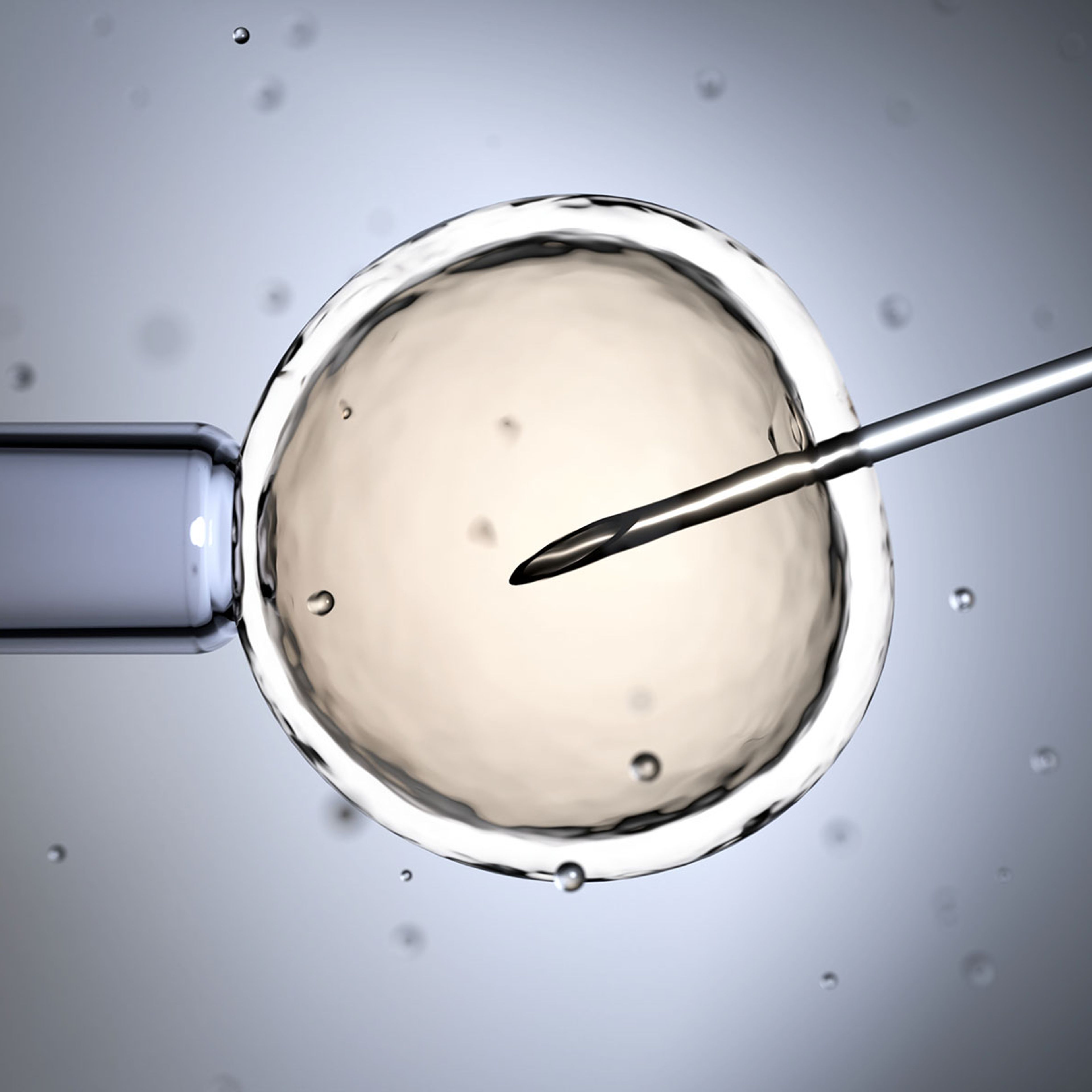
Thirty years ago this weekend, Louise Brown was born. Miss Brown was the first baby born via in vitro fertilization. Thirty years later, we’re a society in denial.
That’s, at least, how an oped in the Los Angeles Times on Thursday read.
As frequently happens in such cases, the article’s author attacked the Vatican. Gregory Pence, who teaches bioethics at the University of Alabama’s medical school, said that in looking down on the procedure, the Church showed a lack of compassion. “Perhaps no children in history have been so wanted,” he wrote.
But sometimes what we want isn’t what is best for us — or for the children. And sometimes the more compassionate thing — as anyone who has ever gone through or watched a couple go through the grueling, expensive emotional and biological rollercoaster of assisted reproduction knows all too painfully well — is not to opt for IVF. And certainly the compassionate position for a society grappling with issues of life and death is not to pretend that there aren’t heavy ethical problems involved with making children in labs.
Instead, Pence arrogantly insists that we all “embrace (don’t fear) new ways of making babies.” “Discount alarmism,” he writes. “Whether it is with sperm donations from geniuses, egg donation, babies from thawed eggs, babies from frozen embryos or a baby from a medically twinned embryo, alarmists always predict that the next new technique will take us down the dreaded slippery slope.”
Are we all supposed to embrace all those things? Because I know I don’t, and I’m not alone. Having babies from frozen embryos and thawed eggs are life-affirming solutions to problems we’ve created on our Brave New World, yes, slippery slope. But if we had to do it all again, if we really thought about it, would we do IVF, the most common method of assisted fertilization? Would a society taking into consideration what the mechanization and laboratorization of sex has done to marriage and families, do it again? Surely, if you’re a lesbian couple who have a child because of IVF, you would probably answer “yes.” Surely, if you’re a married couple who successfully had children through IVF, you might say “yes.” But if you’ve tried again and again and have gotten nowhere, you might have other thoughts. If you are a college student who hyperactivated your egg-production for some good money in the service of IVF, you might have a different answer now that you’re having your own problems. If you stop and think about the fetuses eliminated via “fetal reduction” during assisted reproduction, to eliminate multiple pregnancies, you might have real-life reservations, too.
Pence glosses over and/or ignores these issues. “Last year, Louise Brown had her own baby, without assisted reproduction, proving yet again how natural she is.” He wants you to believe there’s nothing to question about assisted reproduction — it’s as natural as shopping for arugula at Whole Foods! — and in doing so ignores important realities of IVF, is doing his readers a serious disservice.”
He also glosses over issues of regulation. The IVF industry, and the market for assisted reproduction, is highly unregulated — an issue, among others, that the president’s bioethics commission took seriously in a report a few years ago. He, further, doesn’t even mention the word “adoption” — an option all too often disregarded, but a generous, beautiful, needed option for infertile couples.
I’m delighted Louise Brown is having a healthy productive life. But while we wish her all the best, that should not keep us from making an honest assessment of the ethics of what we’re doing.
Ten years before Louise Brown came to be, Pope Paul VI issued an encyclical that’s also marking its anniversary this weekend. In Humanae Vitae, he wrote:
Unless we are willing that the responsibility of procreating life should be left to the arbitrary decision of men, we must accept that there are certain limits, beyond which it is wrong to go, to the power of man over his own body and its natural functions—limits, let it be said, which no one, whether as a private individual or as a public authority, can lawfully exceed. These limits are expressly imposed because of the reverence due to the whole human organism and its natural functions, in the light of the principles We stated earlier, and in accordance with a correct understanding of the “principle of totality” enunciated by Our predecessor Pope Pius XII.
This position is much maligned, but if you actually think about it, you don’t have to be Catholic to notice that there is some wisdom in totality, the idea that there is something very good about giving yourself totally to your spouse — not putting up barriers and introducing artificial methods and procedures into your reproductive lives.
We’ve come a long way in the last 30 and 40 years. And while we celebrate the ingenuity of science, we also owe it to ourselves — to human dignity — to stop and think about where we have been, where we are, and where we are going. Pence says slippery-slope warnings have been discredited during the lifetime of Louise Brown. But have they, really? Would we ever be funding human-cloning research (as, in some states, we actually are) if we had never taken those earlier steps? Have we dehumanized that which is most human? With the utmost compassion, these are questions it’s only human to ask.
— Kathryn Jean Lopez is the editor of National Review Online.




Comments