‘I can’t believe we blew this.”
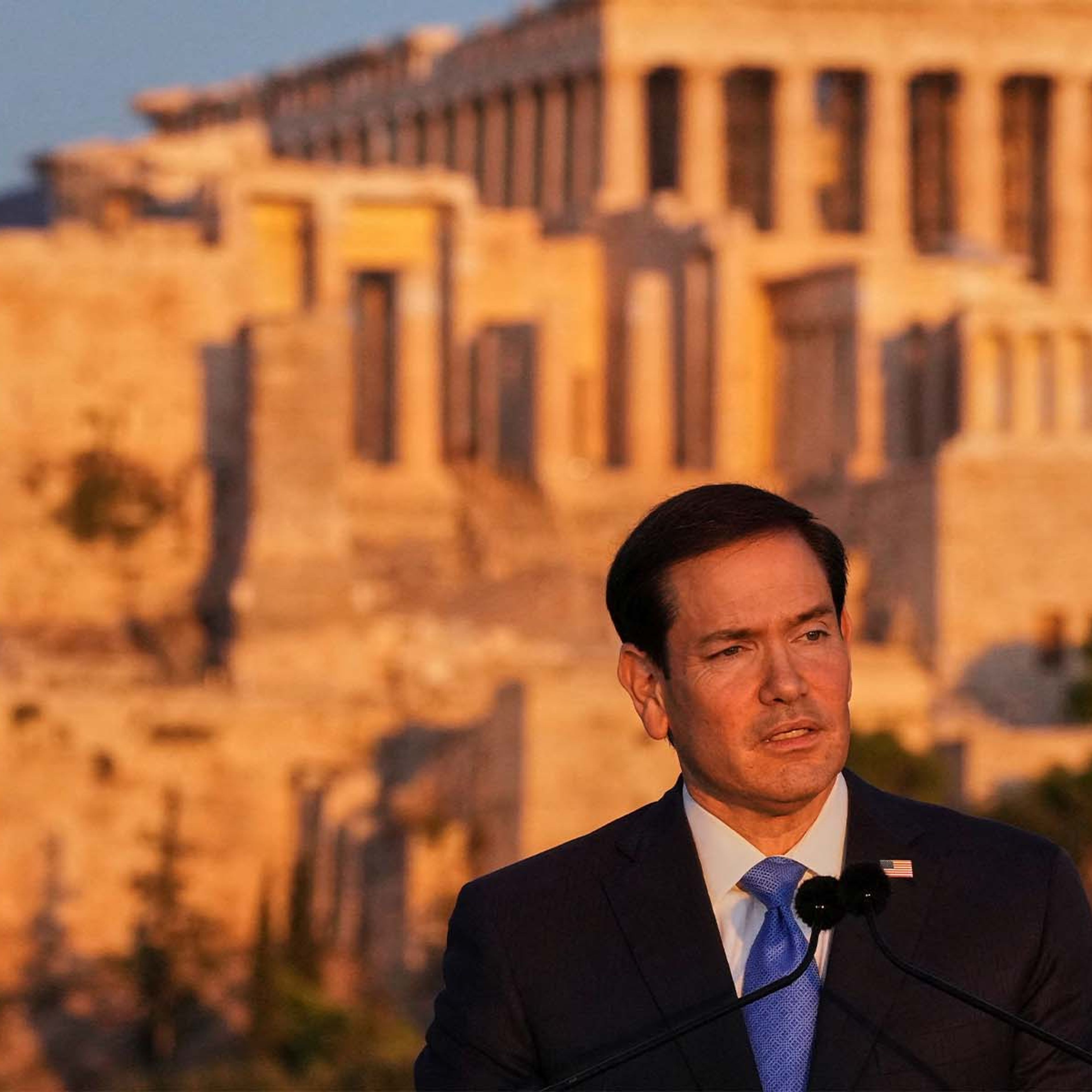
Marco Rubio had just spoken to a group of pastors and other faith leaders. And the overwhelming reaction was to think of him as “the one that got away.” He seemed to perfectly diagnose the problems of our times — including hostility toward real religion and failure to give the family top priority and to cherish the dignity of work. But the pining for an alternative to Donald Trump may have missed one thing: The problems America is facing won’t be cured by any one man or woman. The group Rubio addressed wasn’t really looking for a political savior. But that’s what all too many in our society are doing: Just wait and see when he makes America great again. The revolution is what we need.
Yuval Levin begins his new book, The Fractured Republic: Renewing America’s Social Contract in the Age of Individualism, with a quote from a Frenchman, Alexis de Tocqueville, in his Democracy in America. Tocqueville saw the best of America and a caution. “Placed in the middle of a rapid river, we obstinately fix our eyes on some debris we still perceive on the bank, while the current carries us away and takes us backward toward the abyss.”
If you’re seeing the abyss on the horizon, of feel like an eyewitness already, Yuval starts with a bit of a pep talk. He does a little bit of “it was the best of times, it was the worst of times.” And like a Choose Your Own Adventure book, we are in the driver’s seat. Levin writes:
Life in America is always getting better and worse at the same time. Progress comes at a cost, even if it is often worth that cost. Misery beckons relief, so that our virtues often turn up where our vices have been. Decay and decadence almost always trail behind success, while renewal chases ruin. And in a vast society like ours, all of this is always happening at once. That means there are no simple stories to tell about the state of our country, and that upbeat and downcast social analyses are often just partial descriptions of one complex whole.
So the politics of elect-me-and-everything-will-be-different is so simplistic and unrealistic as to be comic. “Liberals and conservatives both frequently insist not only that the path to the America of their (somewhat different) dreams is easy to see, but also that our country was once on that very path and has been thrown off course by the foolishness and wickedness of those on the other side of the aisle.”
He goes on to say:
Each side wants desperately to recover its lost ideal, believes the bulk of the country does, too, and is endlessly frustrated by the political resistance that holds it back. The broader public, meanwhile, finds in the resulting political debates little evidence of real engagement with contemporary problems and few attractive solutions. In the absence of relief from their own resulting frustration, a growing number of voters opt for leaders who simply embody or articulate that frustration.
He points to the “promise” of our time as “diversity and choice” and the danger is “polarization and division.” And our politics “lags behind our culture and economy,” living more in the realm of the latter than the former. We saw this in the eyes of many of the politicians who came and went this election cycle: “Most of our political leaders, on the Left and the Right alike, . . . find themselves hard pressed to understand the polarization of our politics, even as they must play by the rules it has created. And they find it very difficult to grasp the diffusion transforming other facets of our society.”
#share#Rubio, keeping people guessing about his political future, points to a truth: His most important role in life is as husband and father. Diversifying is one way to put it. Subsidiarity is another. No government bureaucracy will ever love a family the way a neighbor or a dad does. Our renewal is not in a president who gets things right, but in people who serve and lead in the most fundamental of ways, in their homes and in their communities.
As Tocqueville put it:
Christian nations in our day appear to me to offer a frightening spectacle: The movement that carries them along is already strong enough that it cannot be suspended, and it is not yet rapid enough to despair of directing it. Their fate is in their hands, but soon it will escape them. To instruct democracy, if possible to reanimate its beliefs, to purify its mores, to moderate its movements, to substitute little by little an understanding of affairs for its inexperience, and knowledge of its true interests for its blind instincts; to adapt its government to time and place; to modify it according to circumstances and men—such is the first duty imposed on those who would guide society in our day.
There are common values many of us share, even still. A Muslim college president on a panel with Christian leaders recently described some of the things we’re debating right now as appearing insane to his people. Polling continuously reports that most of America is opposed to abortion — we just want to make sure that women in difficult situations have options and support. If we start looking around and asking people what they want and need, we may just find America has great servant leaders still. The hard part is for the rest of us to support them — and certainly not make it harder for them to serve, in ways the Little Sisters of the Poor, among others, know too well. That is where we will find our renewal.



Comments